
I’m floating 2,000 feet above vineyard rows at 6:35 AM in a hot air balloon when the pilot tells me that most Napa visitors never experience the valley like this—they spend entire weekends driving between tasting rooms without realizing that some of wine country’s best experiences have nothing to do with wine. After twenty-nine visits to Napa Valley over the past thirteen years, I’ve learned that this region offers far more than Cabernet Sauvignon and château tastings, though those certainly have their place.
Most Napa Valley guides focus exclusively on wine without explaining the incredible food scene beyond winery restaurants, the outdoor adventures hiding in the surrounding mountains, or how to experience this sophisticated region without spending $200 per person on tasting fees. This complete guide provides 19 tested Napa activities with honest assessments of what’s worth the premium prices, budget-friendly alternatives to expensive experiences, and practical details about timing, reservations, and realistic costs. Whether you’re seeking wine education, culinary adventures, outdoor activities, or simply understanding why Napa commands the prices it does, you’ll discover everything this California wine country icon offers beyond the obvious.
Understanding Napa Valley’s Geography
Napa Valley stretches 30 miles from the city of Napa in the south to Calistoga in the north, with five distinct towns along Highway 29 and the parallel Silverado Trail. Each area offers different character and appeal. Downtown Napa anchors the south with the Oxbow Public Market, riverfront restaurants, and urban tasting rooms. Yountville, just 9 miles north, concentrates Michelin-starred restaurants in a tiny village. St. Helena brings classic wine country charm with
Victorian buildings and boutiques. Calistoga at the northern end offers hot springs, mud baths, and a more casual vibe.
The valley floor between Highway 29 and Silverado Trail contains hundreds of wineries with famous names like Robert Mondavi, Opus One, and Caymus. The hillsides rising on both sides—the Mayacamas Mountains to the west and Vaca Range to the east—hold smaller, often family-owned wineries producing exceptional wines at higher elevations.
Weather runs warmer than San Francisco, 60 miles south. Summer days reach 85-95°F with cool evenings. Spring and fall offer ideal temperatures in the 70s. Winter stays mild at 50-65°F with occasional rain. The Mediterranean climate creates perfect grape-growing conditions and pleasant visiting weather most of the year.
Things to Do in Napa Valley (Beyond Wine Tasting)
Hot Air Ballooning
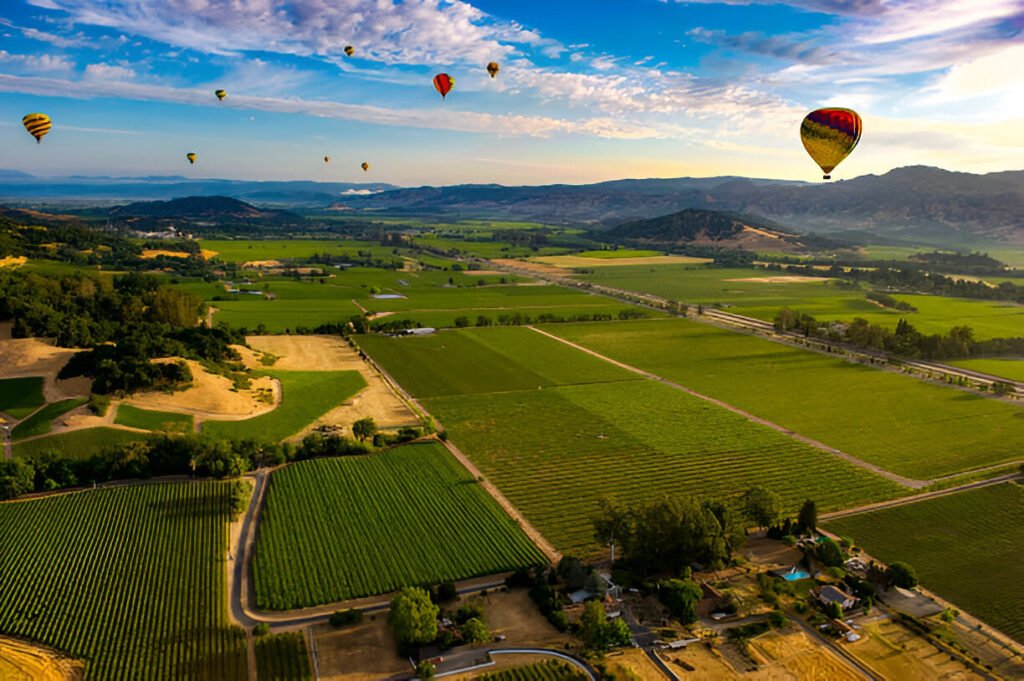
Hot air balloon rides over Napa Valley provide the region’s most spectacular perspective. Dozens of balloons launch at dawn, floating silently above vineyard rows as morning light illuminates the valley. The one-hour flights typically include champagne breakfast after landing.
Several companies operate balloon rides including Napa Valley Balloons, Balloons Above the Valley, and Calistoga Balloons. Flights cost $250-350 per person and depart around 6-7 AM depending on season. The early start is necessary for calm morning winds—balloons don’t fly in afternoon conditions.
Book at least 2-3 weeks ahead for weekend flights, especially during harvest season (August-October). Weather cancellations happen frequently, so build schedule flexibility. Most companies offer reschedule options if your flight cancels.
The experience justifies the cost if your budget allows. Nothing else provides this perspective on Napa’s landscape—the patchwork of vineyards, the mountains rising on both sides, and the scale of wine country becomes clear from altitude. Morning light creates beautiful photography conditions.
Budget travelers can watch balloons launch for free from various valley locations. Drive Silverado Trail or Highway 29 early morning (6:30-7:30 AM) and you’ll see dozens ascending. Pull over safely to photograph them—it’s surprisingly beautiful even from ground level.
Oxbow Public Market
Oxbow Public Market in downtown Napa brings together local food vendors, restaurants, and specialty shops in a modern market hall. This is Napa’s best destination for grazing, food shopping, and experiencing local culinary culture without formal restaurant reservations.
The market houses about 20 vendors including excellent options: Model Bakery for morning pastries and bread, Hog Island Oyster Co. for fresh oysters, The Fatted Calf for house-made charcuterie, C Casa for tacos, and Ritual Coffee for specialty coffee. The Oxbow Cheese Merchant offers tastings of local and imported cheeses.
Visit weekday mornings (9-11 AM) for the most relaxed experience with vendors ready to chat and provide samples. Weekend afternoons get crowded. Most vendors accept cards but bring cash for easier transactions at smaller stalls.
Budget 1-2 hours for exploring and eating. You can assemble an excellent meal by grazing—a few oysters here, charcuterie there, cheese and bread, finished with ice cream. This costs $25-40 per person compared to $75-150 for a full restaurant lunch.
The Oxbow Wine Merchant operates a tasting bar where you can sample Napa wines by the glass without driving to wineries. It’s perfect for learning about different varietals and regions before committing to winery visits. Tastings run $12-25 for flights of 4-5 wines.
Napa Valley Wine Train
The Napa Valley Wine Train offers a unique wine country experience aboard restored vintage Pullman dining cars. The train travels 18 miles from downtown Napa to St. Helena and back over 3 hours, serving multi-course meals while passing through vineyards.
Several service levels exist ranging from lunch in basic dining cars ($150-180 per person) to the Vista Dome with panoramic windows ($250-300) to premium experiences with winery stops ($350-450). All include multi-course meals and wines selected to pair with each course.
The experience delivers more as nostalgic train travel and elegant dining than essential wine education. You’ll see vineyards from train windows but won’t learn much about winemaking. The food quality is good to excellent depending on service level, and the restored antique cars create genuine 1920s luxury atmosphere.
Book at least a month ahead for weekend trips, especially during harvest season. The most popular experiences are the Grgich Hills Estate tour that includes a winery stop and the Castle Winery experience visiting Castello di Amorosa.
Whether it’s worth the cost depends on your priorities. Train enthusiasts and those seeking elegant dining will love it. Wine education seekers should spend that money at actual wineries instead. It’s undeniably romantic and makes special occasions feel more special.
Castello di Amorosa
Castello di Amorosa stands out even in a valley full of impressive wineries. This 121,000-square-foot, authentically styled 13th-century Tuscan castle took 15 years to build using traditional methods and materials. It’s equal parts winery, architectural marvel, and medieval theme experience.
Tours range from basic tastings ($35-50) to comprehensive castle tours with wine tasting ($65-85) to premium experiences including the dungeon, torture chamber, and reserve wines ($125+). The Great Hall tour covers two upper levels and underground chambers while explaining both winemaking and castle construction.
The castle appeals to families with older children who enjoy exploring the architecture and learning medieval history alongside wine education. Many Napa wineries exclude children, making Castello one of few family-friendly options. Children under 21 can tour the castle without tasting wine.
Reserve several weeks ahead, especially for weekend visits. Summer Saturdays book months in advance. The castle sits in Calistoga at the valley’s north end, about 30 minutes from downtown Napa.
The wines are good though not exceptional compared to top Napa producers. You’re paying for the experience and architecture as much as the wine. If medieval castles intrigue you, it’s worth visiting. If you’re focused purely on wine quality, better options exist at lower prices.
Culinary Institute of America at Greystone
The Culinary Institute of America operates a campus in a historic 1889 stone building in St. Helena. The CIA offers cooking demonstrations, wine education classes, and a teaching restaurant where students prepare meals under chef supervision.
Public cooking demonstrations happen Friday-Sunday ($35-50 per person) covering topics like knife skills, sauce making, or wine and food pairing. The demonstrations last 1-2 hours and include tastings of prepared dishes. Check the schedule online as topics and times vary.
The teaching restaurant serves lunch and dinner with menus created by students in the final stages of their culinary education. Meals cost $45-75 per person for 3-4 courses—significantly less than similar quality elsewhere in Napa. Reservations are essential, especially for weekend dinners.
The Spice Islands Marketplace on-site sells specialty cooking tools, ingredients, and CIA-branded items. It’s worth browsing even if not taking a class or dining at the restaurant.
The CIA provides wine education without the tasting room formality. You’ll learn practical information about wine and food pairing, cooking techniques, and culinary skills. It’s perfect for food enthusiasts who want experiences beyond eating at restaurants.
Biking the Napa Valley Vine Trail
The Napa Valley Vine Trail provides 12.5 miles (expanding to 47 miles eventually) of paved multi-use path through the valley. The flat, car-free route connects Vallejo in the south through Napa, Yountville, and eventually to Calistoga, passing vineyards and offering safe cycling for all abilities.
Multiple bike rental shops in Napa and Yountville rent standard bikes ($40-60 per day), electric bikes ($80-120), and tandems. Most provide helmets, locks, and route maps. Some offer guided winery tours combining cycling with tasting stops.
The most popular section runs from Napa to Yountville (9 miles one-way). You can ride to Yountville for lunch, explore the town, and return to Napa. Electric bikes make this easy even for casual cyclists. The trail passes through vineyards with Mayacamas Mountain views rising to the west.
Ride morning or late afternoon to avoid midday heat in summer. Spring and fall offer ideal cycling temperatures. Winter is mild enough for cycling most days. The trail can be crowded on perfect-weather weekends but remains manageable weekdays.
This provides free exercise and wine country views without spending money on winery visits. Pack a picnic from Oxbow Market, cycle to a scenic spot, and enjoy lunch with vineyard views. It’s among Napa’s best budget activities.
Skyline Wilderness Park
Skyline Wilderness Park protects 850 acres of oak woodlands and grasslands in the hills above Napa. The park offers 25 miles of hiking and mountain biking trails with minimal crowds compared to valley floor attractions.
The Skyline Trail climbs to ridgetop views overlooking Napa Valley, San Pablo Bay, and on clear days, San Francisco. The moderate 5-mile loop takes 2-3 hours and gains about 1,000 feet elevation. Other trails range from easy lakeside walks to challenging climbs.
The park entrance sits on the east edge of Napa city at 2201 Imola Avenue. Admission costs $5 per vehicle. The park opens 8 AM-sunset daily. Bring water as no services exist beyond the entrance area.
Visit early morning for cooler temperatures and best wildlife viewing. Spring brings green hills and wildflowers. Summer hills turn golden brown but offer clear views. Fall and winter provide the best distant visibility.
This free (or nearly free) outdoor option provides escape from Napa’s wine-focused tourism. You’ll see few tourists on these trails despite being minutes from downtown Napa. It’s perfect for exercising, clearing your head between wine tastings, or simply enjoying nature.
Calistoga Mud Baths and Hot Springs
Calistoga’s geothermal activity creates natural hot springs that have supported spa culture since the 1860s. Multiple resorts and spas offer mud baths, mineral pools, and spa treatments using the area’s volcanic ash and hot spring water.
The classic Calistoga experience involves a mud bath—lying in warm volcanic ash mud for 10-15 minutes, followed by a mineral bath, steam room, and massage. Packages typically cost $150-250 per person for 2-3 hour experiences.
Dr. Wilkinson’s Hot Springs Resort offers the most old-school mud bath experience in facilities that haven’t changed much since the 1950s. Indian Springs Resort provides a more upscale version with beautiful grounds and a large mineral pool. The Four Seasons Resort Napa Valley brings luxury spa treatments to Calistoga at premium prices.
You can access some hot springs without full spa packages. Indian Springs allows pool use for $75-100 per person without staying overnight. Sam’s Social Club at Indian Springs serves food and drinks poolside, creating a resort day-pass experience.
The mud bath novelty wears off quickly—it’s interesting once but probably not worth repeated visits. The mineral pools provide more lasting appeal and genuine relaxation. If budget is tight, skip the full spa package and just use mineral pools.
Hiking Bothe-Napa Valley State Park
Bothe-Napa Valley State Park protects 1,900 acres of redwood and Douglas fir forest in the hills west of St. Helena. The park offers hiking trails through forests that provide complete escape from wine country tourism just minutes from Highway 29.
The Redwood Trail and Ritchey Canyon Trail loop combines for about 4 miles of hiking through impressive redwood groves. The History Trail connects to a pioneer cemetery. All trails are well-maintained and moderately easy with some elevation gain.
The park also operates a small swimming pool (summer only) and campground. Day-use fees are $10 per vehicle. The park entrance sits on Highway 29/128 about 4 miles north of St. Helena.
Visit spring when wildflowers bloom and creeks run full. Summer brings warm hiking with the pool available for cooling off afterward. Fall colors appear in late October and November. Winter is quiet with occasional rain.
This provides free (beyond parking) outdoor experiences minutes from expensive valley floor attractions. The redwood groves rival anything farther north while being far more accessible. It’s Napa’s best hiking for those seeking forest rather than vineyard views.
Downtown Napa Riverfront
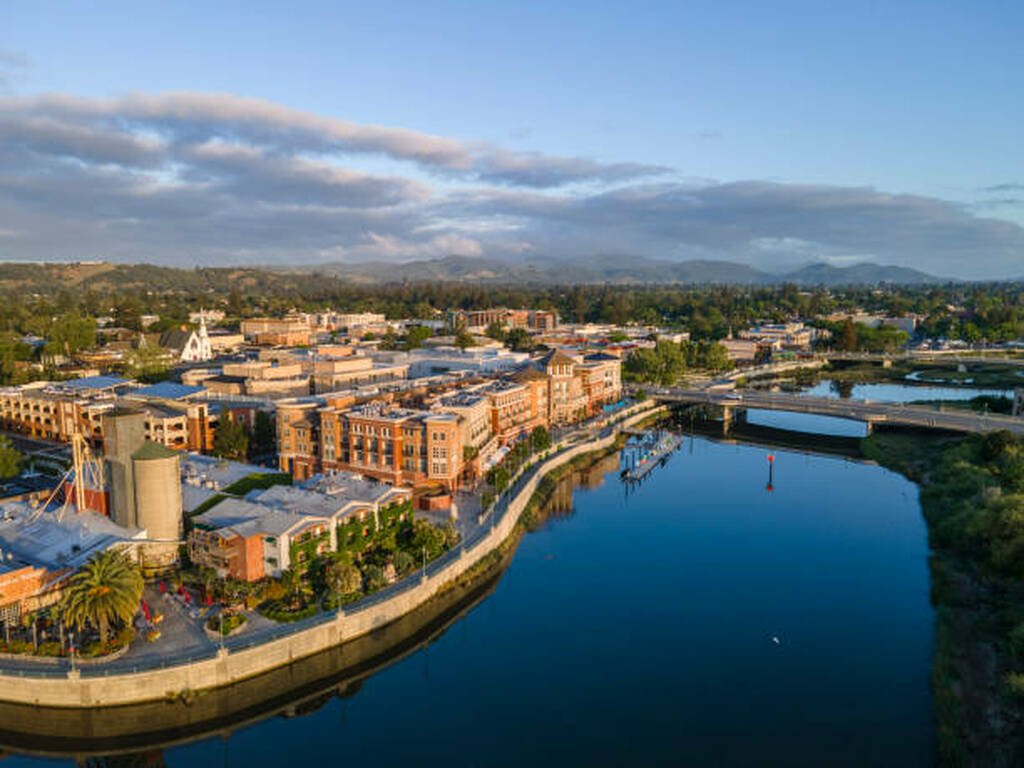
Downtown Napa has transformed over the past 15 years from forgettable to genuinely pleasant. The Napa River runs through downtown, and the restored riverfront features walking paths, restaurants, and a surprisingly vibrant urban environment.
Walk the Napa River Trail from Veterans Memorial Park through downtown. The paved path follows the river for about 2 miles one-way, passing restaurants, wine tasting rooms, and public art installations. It’s flat, scenic, and provides pleasant walking or cycling.
The riverfront concentrates excellent restaurants including Angele serving French bistro fare, Compline for wine-focused dining, and Morimoto for upscale Japanese cuisine. These offer sophisticated dining without requiring drives to wineries or Yountville.
First Street Napa shopping district features boutiques, galleries, and wine tasting rooms in restored historic buildings. It’s pleasant for window shopping even if not buying. The Archer Hotel’s rooftop bar provides excellent valley views with craft cocktails.
Downtown Napa works well for visitors without cars or those tired of driving valley backroads. You can base here, walk to restaurants and tasting rooms, and take Uber to wineries. It’s more urban than wine country romantic but offers better values than Yountville or St. Helena.
Sterling Vineyards Aerial Tramway
Sterling Vineyards sits 300 feet above Calistoga on a hilltop accessed by aerial tramway. The white Mediterranean-style buildings visible from throughout the valley create iconic imagery, and the tram ride provides unique winery access.
The basic tour ($49) includes round-trip tram and self-guided winery tour with views from multiple terraces. You can upgrade to reserve tastings ($79-99) or premium experiences ($125+). The tram runs continuously, and you explore the winery at your own pace.
The architecture and views justify visiting even if the wines don’t excite serious wine enthusiasts. From the terraces, you see the entire valley from Calistoga south toward Napa. The tram ride itself appeals to families and anyone seeking different winery experiences.
Reserve timed entry tickets online to guarantee admission, especially summer and fall weekends. The winery gets crowded midday—visit early morning or late afternoon for better experiences. Plan at least 90 minutes for the complete visit.
Sterling works well for visitors with children since the tram and terraces provide entertainment beyond just wine tasting. The self-guided format means you move at your own pace without formal tour schedules.
Petrified Forest
The Petrified Forest west of Calistoga preserves ancient redwoods turned to stone by volcanic eruption 3.4 million years ago. This geological oddity provides unique outdoor experience and family-friendly activity near wine country.
The half-mile interpretive trail loops through the forest passing massive petrified tree trunks, some over 100 feet long and 8 feet in diameter. Educational displays explain the petrification process. The trail is mostly level and takes 45-60 minutes at a relaxed pace.
Admission costs $12 for adults, $5 for children 5-11, free for kids under 5. The site opens 9 AM-5 PM daily with extended summer hours. It sits on Petrified Forest Road about 5 miles west of Calistoga—the drive takes 15 minutes.
This makes excellent family activity for those visiting Napa with children. Kids find the giant stone trees fascinating, and the short trail doesn’t exhaust attention spans. It provides change of pace from adult-focused wine tasting.
Combine this with Calistoga visits or as a scenic drive alternative to Highway 29. The rural road winds through hills offering valley views different from main valley floor routes.
Art Galleries and Di Rosa Center
Napa Valley supports an active arts community beyond its wine reputation. Yountville and St. Helena both feature multiple galleries showing contemporary art, sculpture, and photography.
The di Rosa Center in Carneros preserves a 217-acre art preserve with 2,000+ works of contemporary art displayed in indoor galleries and throughout the grounds. Guided tours ($15-25 per person) explore the collection and property. Reserve ahead as tours run limited schedules.
Gallery Lulo in Yountville represents contemporary painters and sculptors in a gallery space right on Washington Street. It’s free to browse and provides pleasant cultural break between restaurants.
Ma(i)sonry in St. Helena shows contemporary art in a converted winery building. The industrial space enhances modern art presentations. Free admission makes it worth stopping while exploring St. Helena.
These cultural options provide sophisticated experiences beyond wine and food. They’re free or low-cost compared to most Napa activities. Art enthusiasts will appreciate the quality on display—serious contemporary work comparable to urban gallery scenes.
Lake Hennessey Recreation Area
Lake Hennessey offers 8 miles of hiking and mountain biking trails in the hills east of Rutherford. This Napa water supply reservoir sits in oak woodlands with trails circling the lake and climbing to ridgetop viewpoints.
The Lake Trail follows the shoreline for 4 miles one-way through oak groves with lake views. The more challenging North Ridge Trail climbs to panoramic views of Napa Valley and surrounding mountains. Both trails see light use compared to valley floor attractions.
The recreation area sits on Highway 128 about 10 minutes east of Rutherford. Parking is free at the main trailhead. No facilities exist beyond the parking area, so bring water and snacks. The area opens sunrise to sunset daily.
Visit spring when the lake is fullest and wildflowers bloom on the hillsides. Summer brings warm weather perfect for shaded oak woodland hiking. Fall and winter offer clear valley views from ridge trails. Avoid midday summer heat—early morning or evening works best.
This provides completely free outdoor recreation minutes from expensive valley attractions. You’ll encounter few tourists despite excellent hiking. It’s ideal for morning exercise before the day’s activities or escaping wine country crowds entirely.
Napa Valley Museum
The Napa Valley Museum in Yountville explores the region’s cultural and environmental history beyond just wine. Rotating exhibits cover topics from local art to agricultural heritage to environmental conservation in wine country.
The permanent collection includes photography, painting, and sculpture by regional artists. Special exhibitions change quarterly and have covered topics ranging from Ansel Adams photography to local architectural history to native plant restoration. Check their website for current exhibitions.
The museum occupies a modern building at 55 Presidents Circle in Yountville, easily walkable from downtown restaurants and shops. Admission costs $10 for adults, $7 for seniors, and $5 for students. Children under 17 enter free. The museum opens Wednesday-Sunday from 11 AM to 4 PM.
Plan 45-90 minutes for a thorough visit depending on current exhibitions. The museum isn’t large, but quality exhibitions deserve attention. It provides air-conditioned cultural refuge on hot summer afternoons and genuine education about Napa Valley beyond wine industry marketing.
This works particularly well for visitors interested in the region’s broader context—how wine country developed, environmental challenges, artistic communities, and cultural evolution. The modest admission makes it accessible compared to expensive winery visits.
Bale Grist Mill State Historic Park
Bale Grist Mill preserves a water-powered flour mill built in 1846, one of the oldest structures in Napa Valley. The 36-foot wooden waterwheel still operates, and demonstrations show traditional grain milling using 19th-century equipment.
The mill operates on weekends from 10 AM to 5 PM, weather permitting. Rangers provide tours explaining the mill’s history and demonstrating the milling process when water flow allows operation. The mill grounds include picnic areas under huge oak trees and access to the History Trail connecting to Bothe-Napa Valley State Park.
The site sits on Highway 29 about 3 miles north of St. Helena. Day-use parking costs $10 per vehicle. The grounds are open daily even when the mill building is closed, allowing picnic access and trail hiking.
This provides genuine historical experience showing Napa before wine dominated the economy. The mill served the agricultural community that eventually evolved into wine country. Children find the working waterwheel fascinating, making this one of Napa’s better family activities.
Combine this with hiking at Bothe-Napa Valley State Park via the connecting trail, or simply enjoy shaded picnic areas that see far fewer visitors than valley floor attractions. It’s peaceful, educational, and affordable.
Skyline Park Disc Golf Course
Skyline Wilderness Park includes an 18-hole disc golf course that winds through oak woodlands with elevation changes and technical shots. The course attracts local players but sees minimal tourist traffic despite being free to play.
Disc golf (frisbee golf) uses flying discs thrown at elevated metal baskets on courses laid out similar to traditional golf. The Skyline course challenges players with wooded shots, elevation changes, and distances ranging from 150 to 550 feet. It’s fun for beginners and challenging for experienced players.
Bring your own discs or check if the park office has loaner discs available. The course sits within Skyline Wilderness Park at 2201 Imola Avenue in Napa. Park admission is $5 per vehicle. The course is always open during park hours (8 AM to sunset).
This provides free athletic activity in beautiful setting. Even non-disc golfers enjoy walking the course and watching players navigate challenging shots through oak trees. It’s quirky, fun, and completely different from typical Napa tourism.
The surrounding park offers 25 miles of additional hiking and mountain biking trails if disc golf doesn’t appeal. The entire park sees remarkably few visitors given its proximity to downtown Napa and quality trails.
Farmers Markets
Napa Valley hosts multiple farmers markets offering local produce, prepared foods, flowers, and artisan goods. These markets provide authentic local experiences and excellent lunch or picnic shopping without restaurant prices.
The Napa Farmers Market runs year-round on Tuesdays and Saturdays from 8 AM to noon at the Oxbow Public Market parking area and Napa Valley College campus respectively. The Saturday market is larger with 40+ vendors. The St. Helena Farmers Market operates Fridays from May through October from 7:30 AM to noon in Crane Park.
Markets feature seasonal produce from valley farms, fresh flowers, local honey, artisan breads, prepared foods from tacos to pizza, and often live music. The social atmosphere with locals shopping and chatting creates genuine community experience rather than tourist attraction.
Visit markets for breakfast or lunch from vendor food stalls—breakfast burritos, fresh pastries, fruit, coffee—for $10-15 per person. Stock up on picnic supplies including fresh bread, cheese, fruits, and locally made snacks. Many vendors offer samples, and farmers enjoy discussing their products.
The markets provide affordable authentic Napa experiences. You’ll interact with locals, see what actually grows in the valley, and eat excellent food at reasonable prices. They capture wine country’s agricultural foundation better than commercialized winery experiences.
Lake Berryessa
Lake Berryessa sits 20 minutes east of Napa city in the coastal mountains, offering water recreation completely different from valley wine tourism. This massive reservoir provides boating, swimming, fishing, and lakeside camping in a setting that feels remote despite proximity to Napa.
The lake stretches 15 miles with multiple public access points including Markley Cove Resort for boat rentals ($200-400 per day for ski boats or pontoon boats), Oak Shores Day Use Area for swimming and picnicking ($10 parking), and Pleasure Cove Marina for kayak and paddleboard rentals ($40-80 per day).
Summer weekends bring crowds of Bay Area residents seeking water recreation. Weekdays remain quieter. Spring and fall offer pleasant weather with minimal crowds—water stays swimmable through October. Winter is quiet with colder water but fine for hiking trails around the lake.
Drive Highway 121 to Highway 128 east from Napa—the scenic route takes about 30 minutes. The lake area offers basic services including marina convenience stores and snack bars but little else. Bring coolers with food and drinks for full-day visits.
Lake Berryessa provides complete escape from wine country’s wine-focused tourism. Families with children particularly appreciate water activities when kids tire of adult-oriented valley attractions. It’s remarkably uncrowded for such quality recreation close to major tourist areas.
When to Visit Napa Valley
Each season offers distinct advantages despite popular beliefs that harvest season (August-October) is ideal. In reality, harvest brings the worst crowds, highest prices, and stressed winemakers too busy to provide good visitor experiences.
Spring (March-May) is exceptional with green hillsides, blooming mustard flowers between vine rows, and moderate temperatures perfect for outdoor activities. Easter weekend gets busy, but most spring weekends see manageable crowds. This is when locals prefer to visit wineries.
Summer (June-August) brings hot weather (85-95°F), heavy traffic, and maximum tourist density. Everything costs more and books farther ahead. However, long days allow early morning and evening activities with midday pool time. Downtown Napa summer concerts provide free entertainment.
Fall (September-October) offers beautiful weather and dramatic harvest activity but also maximum crowding and prices. If you visit during harvest, focus on non-wine activities during the day and visit wineries early morning or late afternoon when crowds thin.
Winter (November-March, excluding holidays) provides the best values with lodging 30-40% cheaper than summer and restaurants easier to book. Calistoga and St. Helena run passport programs offering discounted winery access. The trade-off is occasional rain and shorter days, but temperatures stay mild (50-65°F).
Budget Reality
Napa Valley ranks among California’s most expensive destinations. Understanding where costs accumulate helps manage expectations and spending.
Accommodations run $200-400 per night for decent hotels, $500-1,000 for upscale properties, and $1,000+ for luxury resorts. Budget options under $150 exist in Napa city or American Canyon but sacrifice the wine country setting.
Wine tasting costs $40-150 per person per winery. Visiting three wineries daily costs $240-900 per couple before lunch. Many wineries waive tasting fees with wine purchases, but bottles range from $40-150+ each.
Dining runs expensive with lunch at casual spots costing $25-40 per person and dinner at nice restaurants $75-150 per person before wine. Michelin-starred restaurants like The French Laundry require $450 per person before beverages, taxes, and gratuity.
A weekend in Napa (Friday-Sunday, two nights) costs approximately $1,500-3,000 per couple at mid-range spending levels, or $3,000-6,000+ for luxury experiences. Budget options exist but require compromises—staying in cheaper locations, limiting winery visits, and cooking some meals.
Ways to reduce costs include visiting winter weekdays when hotels drop rates significantly, focusing on free activities like hiking and biking, tasting at downtown Napa rooms instead of famous wineries, eating at Oxbow Market instead of restaurants, and staying in American Canyon or Vallejo rather than wine country proper.
Final Thoughts
After twenty-nine visits to Napa Valley, I’ve learned that this region’s greatest strength beyond producing exceptional wine is offering experiences that engage multiple senses and interests. Floating above vineyards at sunrise in a hot air balloon, soaking in volcanic mud baths, cycling car-free trails through wine country, and hiking redwood forests all exist within this compact valley famous primarily for Cabernet Sauvignon.
My favorite Napa memories aren’t from the most expensive or famous wineries. They’re watching sunrise from a balloon basket while champagne bubbles up in my glass afterward. They’re discovering that downtown Napa riverfront offers excellent dining without driving winding roads after wine tasting. They’re hiking Skyline Wilderness Park on a spring morning when wildflowers bloom and realizing I haven’t seen another person in two hours despite being minutes from tourist mobs.
What separates memorable Napa visits from disappointing ones is balancing wine experiences with everything else the valley offers. Spending entire weekends driving between tasting rooms burns money quickly and becomes monotonous. Mixing winery visits with cycling, hiking, culinary experiences, and simply being present in beautiful surroundings creates richer memories and often costs less.
The 19 activities in this guide provide options beyond the obvious wine focus. But also understand that wine remains central to Napa’s identity and economy—this region produces some of the world’s finest wines, and experiencing that heritage through thoughtful, moderate tasting enhances any visit. Just remember that Napa offers far more than what’s in the bottle, and the best visits embrace that complete experience.
