
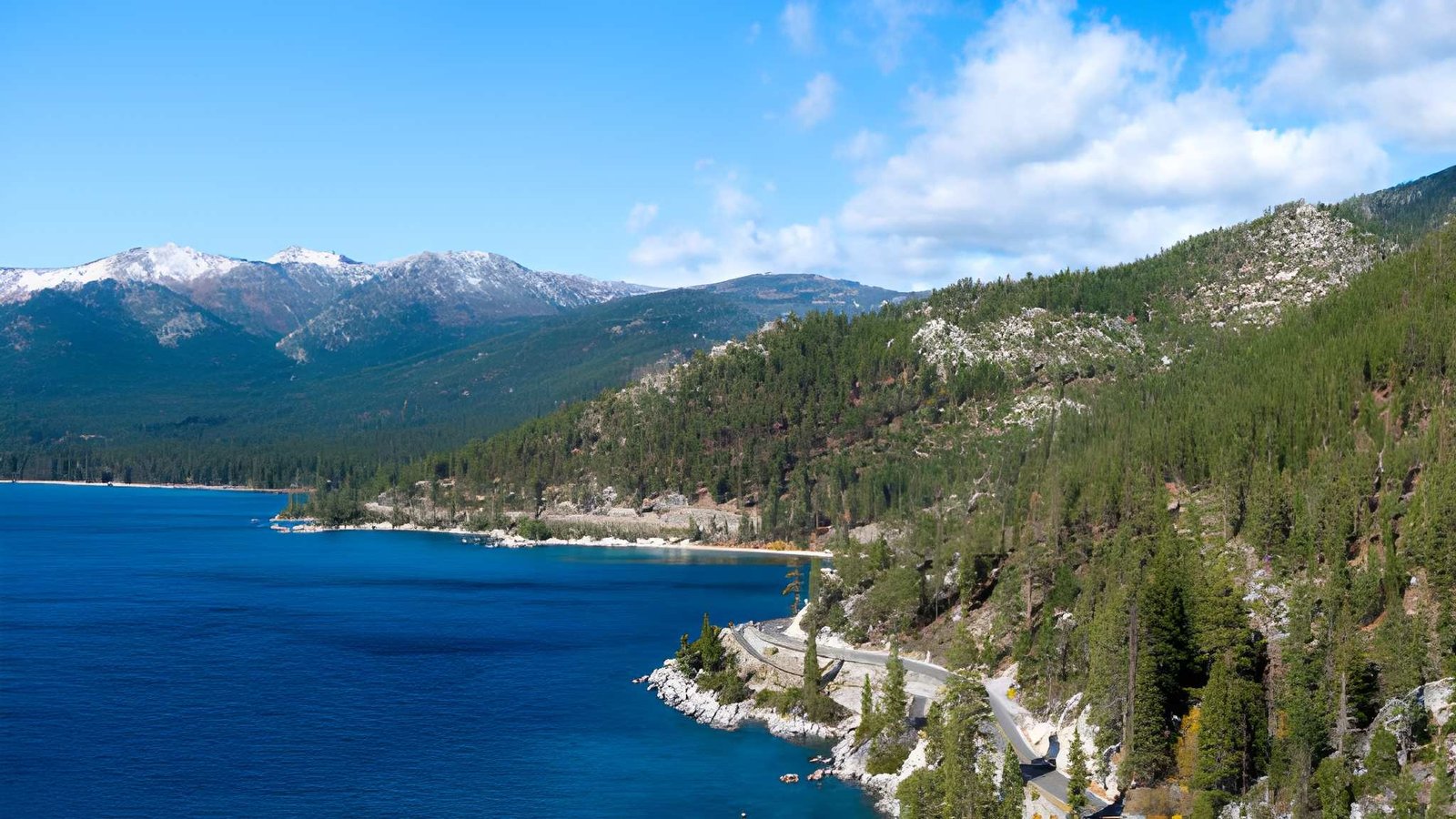
I’m standing at Inspiration Point above Emerald Bay, watching morning light transform Lake Tahoe’s impossible blue waters into liquid sapphire while granite peaks cast long shadows across Fannette Island’s tiny tea house. After twenty-three visits to Lake Tahoe over the past fourteen years—exploring everything from summer kayaking expeditions through crystalline coves to winter sunrise snowshoe treks across silent forests, I’ve discovered that this alpine lake’s 6,225-foot elevation and 72-mile shoreline create an adventure playground that shifts dramatically with seasons, yet never stops delivering those jaw-dropping moments that make you understand why Mark Twain called Tahoe’s air “the same the angels breathe.”
The typical Lake Tahoe experience involves driving around the lake taking photos from scenic pullouts, maybe swimming at a crowded beach, and leaving without experiencing the activities that make locals return year after year. That works fine for a quick visit, but it means missing the soul of Lake Tahoe—the sunrise paddle through Emerald Bay’s glass-calm waters before tour groups arrive, the winter moonlight snowshoe trek through silent pine forests, the hidden coves accessible only by kayak where granite boulders create perfect diving platforms into 65-degree summer waters. Whether you’re planning your first Lake Tahoe trip and trying to prioritize activities, returning for your tenth visit seeking new experiences, or trying to understand how a single destination transforms so completely between ski season and summer lake season, this comprehensive guide reveals which Lake Tahoe activities deliver on their promises, how much they actually cost, and the timing strategies that separate magical experiences from frustrated ones.
Quick Reference: Best Lake Tahoe Activities by Season
| Activity | Season | Cost | Time Needed | Difficulty | Best For |
|---|---|---|---|---|---|
| Emerald Bay Kayaking | May-Oct | $30-70 | 2-4 hours | Easy-Moderate | Scenic paddling, photos |
| Sand Harbor Beach | June-Sept | $15-20 entry | 2-6 hours | Easy | Swimming, families |
| Heavenly Gondola | Year-round | $65-75 | 2-3 hours | Easy | Views, sightseeing |
| Rubicon Trail Hiking | May-Oct | Free | 3-5 hours | Moderate | Coastal views, solitude |
| Vikingsholm Castle | May-Sept | $10 | 1.5-2 hours | Easy | History, architecture |
| Tahoe Rim Trail | May-Oct | Free | 2-8 hours | Moderate-Hard | Serious hiking |
| Skiing (Heavenly/Palisades) | Dec-April | $180-220 | Full day | Varies | Winter sports |
| Snowshoeing | Dec-March | $30-60 rental | 2-4 hours | Easy-Moderate | Winter scenery |
| Eagle Point Campground | June-Sept | $35-45 | Overnight | Easy | Camping with views |
| Cave Rock Cliff Jumping | July-Aug | Free | 1-2 hours | Advanced | Thrill seekers |
| Kings Beach Sunset | Year-round | Free | 1 hour | Easy | Photography, romance |
| Tallac Historic Site | May-Oct | $5 | 1-2 hours | Easy | History, architecture |
Peak Season: July-August (warmest water, maximum crowds) Shoulder Season: May-June, Sept-Oct (better weather:crowd ratio) Winter Season: Dec-March (skiing, snow activities) Drive Time from SF Bay Area: 3.5-4.5 hours | From Sacramento: 2-2.5 hours
Understanding Lake Tahoe’s Two Personalities (Summer vs Winter)
Before diving into specific activities, let me explain why Lake Tahoe functions as two completely different destinations depending on season—a reality that trips up countless first-time visitors who arrive expecting one experience and encounter something else entirely.
Summer Lake Tahoe (June-September) centers on that impossible-blue water. The lake’s famous clarity (you can see objects 70+ feet deep in many areas) creates a sapphire hue that photographs struggle to capture accurately. People told me the water looked “too blue to be real,” and I didn’t believe them until I stood at Cave Rock watching sunlight penetrate sixty feet down through crystal water to granite boulders below. Summer activities revolve around beaches, kayaking, paddleboarding, boat cruises, hiking coastal trails, and generally doing everything possible to spend time on or near water that stays surprisingly cold (mid-60s at warmest) despite summer heat.
Winter Lake Tahoe (December-March) becomes a completely different creature. That same blue water turns steel-gray beneath snow-covered peaks, and the action moves to slopes, where Lake Tahoe’s ski resorts consistently rank among North America’s best. The unique feature: skiing with lake views. I’ve taken countless lift rides at Heavenly Mountain where I’m simultaneously looking at snowy slopes ahead and that massive blue lake stretching to the horizon behind me—it creates this surreal combination of mountain and beach aesthetics that exists almost nowhere else.
The shoulder seasons (April-May, October-November) get overlooked but often deliver the best experiences. May brings spring wildflowers, flowing waterfalls, and warm days without summer crowds. October offers golden aspen colors, crisp mountain air, and that perfect combination of warm afternoons and cool evenings ideal for campfires. During my October 2023 visit, I hiked the Rubicon Trail in 70-degree sunshine and had entire sections completely to myself—something impossible during summer.
The 6,225-foot elevation matters more than most visitors expect. This height means cooler temperatures than lowland California (typically 15-25 degrees cooler), sudden afternoon thunderstorms during summer, and significant snowfall during winter. I’ve experienced all four seasons in a single May weekend—sunshine, rain, hail, and snow flurries—within 36 hours. Layer your clothing, check weather forecasts obsessively, and maintain flexibility in your daily plans.
Emerald Bay Kayaking: The Signature Experience
Season: May-October | Cost: $30-70 for rentals, $80-120 for tours | Time: 2-4 hours | Difficulty: Easy to Moderate
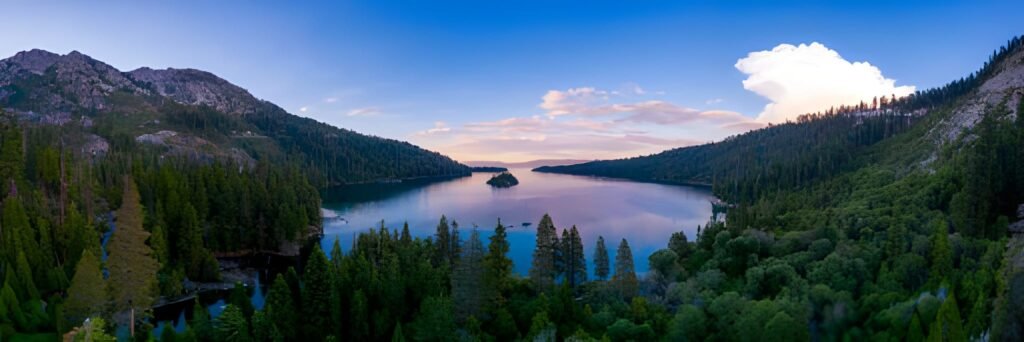
Emerald Bay State Park ranks as Lake Tahoe’s most photographed location, and paddling your kayak through its turquoise waters toward Fannette Island’s tiny stone tea house creates one of those pinch-me moments where you can’t believe this place actually exists. After six kayaking trips to Emerald Bay spanning different seasons and times of day, I maintain that this single activity captures everything special about Lake Tahoe—pristine water, dramatic granite cliffs, Sierra Nevada peaks reflecting in glass-calm surfaces, and that sense of accessing places cars simply cannot reach.
The bay itself measures about one mile across and nearly as deep, created where glaciers carved a bowl into the mountainside that later filled with Tahoe’s remarkably clear water. Fannette Island sits in the bay’s center, Lake Tahoe’s only island—topped with the ruins of a 1920s stone tea house built by eccentric heiress Lora Josephine Knight (who also built Vikingsholm Castle on the shore). Paddling around the island while examining the tea house ruins from water level provides completely different perspectives than the standard Emerald Bay overlook viewpoint sees.
Launch points include Meeks Bay (4 miles north) or D.L. Bliss State Park (adjacent to Emerald Bay). The Emerald Bay boat ramp technically allows kayak launching but involves a steep carry from parking. I prefer launching from D.L. Bliss’s Calawee Cove Beach or Rubicon Bay, then paddling south into Emerald Bay—this approach keeps you close to shore with easy bailout points if weather changes or fatigue sets in.
Timing matters critically. Early morning (7-9 AM) provides the calmest water, fewest powerboats, and best light for photos. During my July 2024 sunrise paddle, the bay’s surface looked like polished glass, creating perfect reflections of surrounding peaks. By 11 AM, afternoon winds kick up 1-2 foot chop that makes paddling significantly harder and less pleasant. Summer weekends bring dozens of kayakers, paddleboarders, and tour groups, arriving early means experiencing Emerald Bay in relative solitude before crowds arrive.
The paddle from D.L. Bliss to Fannette Island covers about 1.5 miles one-way, taking 45-60 minutes depending on conditions and paddling speed. Intermediate paddlers can circle the entire bay (3.5 miles, 2-2.5 hours), while beginners should stick to shorter routes hugging the shoreline. The water stays cold (55-65°F) even during summer—if you capsize, hypothermia becomes a real concern within minutes. Wear or bring a wetsuit if you’re not a confident swimmer.
Rental options include South Lake Tahoe Kayak Rentals ($30-50 for 2-hour single kayak, $50-70 for tandem), Tahoe Adventure Company ($40-60), and numerous other operators around the lake. Guided tours ($80-120 per person) provide kayaks, safety gear, local knowledge, and typically visit Vikingsholm Castle, making them worthwhile for first-timers. I’ve done both self-guided and tour experiences, and while I prefer the freedom of self-guiding, tours teach techniques and share historical context that enhances the experience significantly.
What makes it special: Paddling your own kayak gives you complete control over pace and exploration. You can linger at Fannette Island examining rock formations, detour into side coves impossible for larger boats to access, and stop anywhere that captures your attention. During my September 2023 paddle, I spent twenty minutes floating beside granite cliffs watching Steller’s jays and exploring underwater boulders through Tahoe’s impossibly clear water, experiences tour groups rushing through scheduled itineraries simply cannot match.
Practical tips: Book rentals or tours at least 2-3 days ahead during summer. Bring waterproof bags for phones/cameras, reef-safe sunscreen (regular sunscreen damages Tahoe’s clarity), water bottles, and snacks. The bay has no facilities—plan bathroom stops before launching. Check wind forecasts obsessively; afternoon winds can turn a pleasant paddle into an exhausting slog against whitecaps.
Sand Harbor Beach: Tahoe’s Postcard Perfect Shore
Season: Year-round (best June-Sept) | Cost: $10-15 vehicle entry + $5 reservation (April-Oct) | Time: 2-6 hours | Difficulty: Easy
Sand Harbor State Park delivers exactly what most visitors imagine when they picture Lake Tahoe beaches—soft sandy shore, massive granite boulders creating natural sculptures in crystalline water, and those iconic views across the lake toward snow-capped peaks. Located on Tahoe’s northeast shore about three miles south of Incline Village, Sand Harbor combines genuine beauty with excellent facilities, making it Lake Tahoe’s most popular beach and, consequently, its most challenging to access during peak season.
The main beach stretches 2,500 feet along a gently curving shoreline, with massive weathered granite boulders emerging from sand and water creating that distinctive Tahoe beach aesthetic. Swimmers enjoy relatively shallow entry (gradual depth increase perfect for kids), while the boulders create excellent platforms for sunbathing, jumping, and photography. During my August 2024 visit, I spent an entire afternoon alternating between swimming, exploring tidepool-like formations between boulders, and lounging in perfect beach conditions.
The new reservation system (implemented fully in 2025) requires advance bookings for vehicle entry between 8 AM-10:30 AM daily from April 15-October 15. Reservations cost $5 processing fee plus $10 (Nevada plates) or $15 (out-of-state plates) entrance fee, booked through ReserveNevada.com up to 90 days in advance. After 10:30 AM, any unreserved spots open first-come/first-served, but the parking lot fills quickly, often by 9 AM on summer weekends.
Facilities include clean restrooms, outdoor showers for rinsing off, picnic areas with BBQ grills (propane only, no charcoal), a visitor center, and concession stand selling snacks and drinks. The park also offers an all-terrain wheelchair available first-come/first-served, making this Tahoe’s most accessible beach for visitors with mobility limitations.
Diver’s Cove sits just below the visitor center, offering a smaller protected swimming area popular with snorkelers and scuba divers exploring underwater rock formations. The clarity makes snorkeling surprisingly rewarding—I’ve watched rainbow trout, Lahontan redside shiners, and occasionally crawfish moving through crystal water where visibility extends 40-60 feet.
The Lake Tahoe Shakespeare Festival operates here mid-July through August, staging plays on a beach-side stage with the lake as backdrop. Performances sell out months ahead, and Shakespeare Festival ticket holders arriving before 10:30 AM need separate day-use reservations—plan accordingly if combining beach visits with evening theater.
What makes it worthwhile: Sand Harbor delivers reliable beach quality. Unlike some Tahoe beaches with rocky entries or limited sand, Sand Harbor provides exactly what families expect—soft sand, safe swimming, and that iconic Tahoe scenery. The boulder formations create natural playgrounds for kids and dramatic backdrops for photos. During my nineteen visits here, Sand Harbor has never disappointed, though it has frequently frustrated with parking challenges and crowds.
Timing strategy: For summer visits without reservations, arrive after 4 PM when the beach empties significantly. Late afternoon light creates gorgeous photography conditions, and you’ll still get 3-4 hours before sunset. Winter visits (October 15-April 15) require no reservations, allow leashed dogs, and offer serene snow-covered beach walks with minimal crowds, though swimming obviously isn’t happening.
What to skip: Don’t fight summer weekend crowds if you hate crowded beaches. The reservation system helps but doesn’t eliminate the reality that Sand Harbor attracts 1.2 million annual visitors. Consider alternatives like Meeks Bay, Kings Beach, or Nevada Beach if solitude matters more than iconic scenery.
Heavenly Gondola: Views Without the Hiking
Season: Year-round (daily summer/winter, weekends only spring/fall) | Cost: $65-75 adults, $45-55 kids | Time: 2-3 hours | Difficulty: Easy
The Heavenly Gondola rises 2.4 miles from Heavenly Village in South Lake Tahoe to an observation deck at 9,123 feet elevation, delivering panoramic Lake Tahoe views without requiring any hiking or physical exertion beyond stepping into a glass-enclosed cabin. After four rides spanning different seasons (twice summer, once winter, once fall), I appreciate both what the gondola delivers, genuinely spectacular views and mountain-top access—and where it falls short compared to hiking to similar viewpoints.
The eight-passenger gondola cabins depart every few minutes from the base terminal at Heavenly Village, climbing steadily through mixed conifer forest before emerging above treeline with increasingly dramatic vistas. The ride takes approximately 12 minutes to the mid-station observation deck, where most sightseers disembark. The deck features 14,000 square feet of viewing space, interpretive displays identifying surrounding peaks, Café Blue serving coffee and snacks, and a gift shop selling typical souvenir items.
The views legitimately impress, Lake Tahoe spreads below you in that impossible sapphire blue, with California’s Desolation Wilderness peaks (Pyramid Peak, Mount Tallac) visible to the west and Nevada’s high desert stretching east. On clear days, you can identify landmarks across the entire lake basin. During my September 2023 ride, perfect weather revealed details 30+ miles away, creating those “top of the world” feelings that justify the ticket cost.
Summer operations (typically late May-September) include additional activities beyond sightseeing: zip lines, mountain coasters, climbing walls, summer tubing, and hiking trail access via the Tamarack Express chairlift (included with gondola ticket). Winter operations focus on ski resort access, though non-skiers can still ride for views and snow play at the mid-station. Spring/fall operations run weekends only with limited activities.
The cost-value equation creates legitimate debate. At $70 for adults and $50 for kids (summer 2025 pricing), a family of four pays $240 for what amounts to a 2-3 hour experience if you’re only sightseeing. That’s expensive compared to free hiking or $15 beach entry. But if you’re not physically able to hike to similar viewpoints, have limited time, or want guaranteed good views without weather gambling, the gondola delivers exactly what it promises.
What works well: The gondola provides the easiest way to reach alpine elevations at Lake Tahoe. No hiking, no climbing, just step in and ride up. The views genuinely rival any I’ve seen from hiking trails, and the observation deck provides comfortable viewing with bathrooms, food, and shelter if weather turns. For families with young kids or visitors with mobility limitations, this accessibility matters enormously.
What disappointed me: The mid-station observation deck feels somewhat commercialized—gift shop, café, crowds of tourists—removing that wilderness atmosphere hiking provides. During my July 2024 visit on a Saturday, the observation deck resembled Disneyland more than a mountain experience, with hundreds of people jostling for photo spots. The rigid operating schedule (closed some weekdays during shoulder seasons) also frustrated my flexibility compared to hiking’s anytime access.
Insider tips: Book tickets online ahead (saves $5-10 per person and guarantees entry during busy periods). Visit on weekday mornings for smallest crowds. Ride up, then explore hiking trails from the upper mountain rather than just viewing from the observation deck—your ticket includes Tamarack Express chairlift access to trail networks.
Vikingsholm Castle & Emerald Bay Trail
Season: Late May-September | Cost: $10 castle tour, parking $10-15 | Time: 1.5-2.5 hours | Difficulty: Easy to Moderate
Vikingsholm ranks among North America’s finest examples of Scandinavian architecture, a 38-room stone castle built in 1929 by heiress Lora Josephine Knight as her summer home. Located directly on Emerald Bay’s shore beneath the famous Inspiration Point viewpoint, visiting Vikingsholm combines architectural history with that steep one-mile trail descent (400 feet elevation loss) that has your quads burning on the return climb—a reality that catches unprepared visitors by surprise every single day during summer.
The trail begins at the Vikingsholm parking area on Highway 89 (fills by 9-10 AM summer weekends, arrive early or walk from nearby pullouts). The path descends through mixed pine and fir forest via well-maintained switchbacks, taking 20-30 minutes down depending on pace. The trail qualifies as “easy” on descent—paved in sections, wide enough for crowds, gentle grades. The return climb, however, earns its “moderate” rating purely through sustained uphill that leaves many visitors gasping and resting every 100 yards.
Vikingsholm itself showcases Knight’s obsession with Scandinavian design. She hired Swedish architect Lennart Palme and traveled extensively through Scandinavia studying Nordic architecture before building this masterwork incorporating elements from actual Scandinavian buildings. The exterior features hand-carved dragon beams, sod roof (the only original element remaining), and stone construction mimicking 1,000-year-old Nordic structures. Interior rooms display period furniture, handcrafted details, and that wealthy-eccentric aesthetic wealthy 1920s Americans cultivated.
Tours operate late May through September, typically on the half-hour between 10:30 AM-3:30 PM (confirm current schedule as it varies). The $10 tour (cash only, bring exact change) lasts 30 minutes and covers main floor rooms and history. Tours are self-paced rather than guided, with docents stationed in each room answering questions. During my July 2023 visit, spending time in each room examining craftsmanship details while learning about Knight’s fascinating life story made the steep hike worthwhile.
The setting rivals the architecture. Vikingsholm sits on Emerald Bay’s shore with that iconic turquoise water lapping literally 50 feet from the building. Fannette Island’s tea house sits visible offshore, and granite peaks surround the bay creating that classic Tahoe alpine scenery. After touring the castle, explore the small beach (no swimming allowed), walk to the stream inlet, or simply enjoy one of Lake Tahoe’s most photographed locations without crowds of viewpoint tourists.
Hidden bonus: Continue past Vikingsholm on the Rubicon Trail heading north toward D.L. Bliss State Park. This section offers spectacular coastal hiking with significantly fewer people than the main Vikingsholm trail. I’ve hiked this extension during three separate visits, and the combination of Vikingsholm castle plus coastal trail hiking creates a perfect half-day activity.
Practical reality check: That return climb genuinely challenges many visitors. I’ve watched hundreds of people struggling uphill, taking multiple rest breaks, and clearly regretting their footwear choices (sandals and flip-flops are terrible decisions). Bring water, wear proper shoes, and pace yourself. If you have knee problems or cardiovascular limitations, seriously consider whether this activity suits you—there’s no shame in skipping something that might cause genuine distress.
Rubicon Trail: Tahoe’s Signature Coastal Hike
Season: May-October | Cost: Free (parking $10-15 at trailheads) | Time: 3-6 hours depending on distance | Difficulty: Moderate
The Rubicon Trail ranks as Lake Tahoe’s most scenic coastal hike, following the shoreline for 4.5 miles between D.L. Bliss State Park and Emerald Bay’s Vikingsholm Castle. Carved into granite cliffs 50-200 feet above the water, the trail showcases constantly changing lake views, hidden coves, dramatic rock formations, and that classic Tahoe combination of blue water and Sierra peaks that makes you understand why Tahoe inspired Ansel Adams and countless other photographers.
I’ve hiked various Rubicon Trail sections at least eight times over the past decade, and it never disappoints—though it definitely requires reasonable fitness and comfort with modest elevation changes. The trail gains and loses about 200 feet multiple times as it follows the shoreline’s natural contours, creating a moderately challenging workout without being genuinely difficult for regular hikers.
Starting from D.L. Bliss campground or day-use area, the trail heads south through old-growth Jeffrey pine and white fir forest before emerging onto open granite slopes with spectacular lake views. Lighthouse Point sits about one mile in, offering a perfect turnaround point for families or casual hikers wanting Rubicon experience without committing to the full distance. Continue another mile to Rubicon Point itself, where granite cliffs drop dramatically into the lake and brave swimmers/divers jump from rocks into 60+ foot deep water (more on this later).
The full trail to Vikingsholm covers 4.5 miles one-way, taking most hikers 2-2.5 hours at a leisurely pace with photo stops. This makes it a perfect out-and-back day hike (9 miles, 4-5 hours total) or one-way shuttle hike if you arrange transportation. During my September 2024 hike with friends, we started at D.L. Bliss, hiked to Vikingsholm, toured the castle, then hiked back—creating a full-day adventure combining Tahoe’s best hiking and historical elements.
Trail conditions remain excellent thanks to state park maintenance. The path stays well-defined, with occasional rocky sections requiring attention to footing. A few brief steep sections appear, but nothing requiring hands-and-feet scrambling. The trail sits fully exposed in many sections, making sun protection essential—I learned this painfully during my July 2022 hike when I underestimated sun intensity at 6,500 feet elevation.
What makes it special: Unlike most Lake Tahoe hiking that heads inland into forests, the Rubicon Trail keeps that blue water constantly in view. You’re perpetually hiking above the lake, with perspectives changing every few hundred yards as the trail rounds points, crosses coves, and navigates granite formations. The combination creates hiking that never feels monotonous—there’s always something new to look at just ahead.
Crowd patterns: The trail gets busy during summer, particularly near trailheads and at Rubicon Point. But crowds thin significantly once you’re a mile from either end. During my June 2023 weekday hike, I encountered maybe thirty people total over the entire trail—busy but not crowded. Weekend summer hikes see higher traffic but nothing approaching the congestion of Yosemite or other famous California trails.
Swimming & cliff jumping: Rubicon Point attracts experienced cliff jumpers during summer, with 30-40 foot jumps into deep water. DO NOT attempt this unless you’re an experienced cliff jumper—the rocks are unforgiving, the water is cold, and the depth varies more than it appears. I’ve watched jumps dozens of times and attempted it once (from a lower 15-foot section)—the cold shock when hitting 60-degree water takes your breath away. The safer swimming options exist at small beaches and coves along the trail where you can ease into the water gradually.
Tahoe Rim Trail: Serious Hiking
Season: July-October (some sections accessible June-November) | Cost: Free | Time: 2-8 hours for sections, 14-20 days for complete circuit | Difficulty: Moderate to Hard
The Tahoe Rim Trail circles the entire Lake Tahoe Basin for 165 miles, traversing high ridges and mountain passes with constantly changing perspectives on the lake below. While thru-hiking the complete trail requires serious backpacking commitment, countless day-hiking sections offer everything from 4-mile out-and-back family hikes to challenging 12-mile point-to-point adventures crossing alpine zones above 9,000 feet.
I’ve hiked seven different TRT sections over the years, from easy Mount Rose Meadows wildflower walks to brutal all-day slogs like the climb to Relay Peak. Each section delivers unique character—some stay forested with occasional lake glimpses, others traverse exposed ridges with 360-degree panoramas, and a few drop into secret valleys where you’ll swear you’ve discovered places no one else knows about.
Popular day-hiking sections include:
Mount Rose Trail (10 miles round-trip): Climbs to 10,776-foot Mount Rose summit, Lake Tahoe’s third-highest peak, with stunning 360-degree views. Moderate-hard difficulty, 5-6 hours, best July-September. I hiked this during July 2023, and the wildflower displays across subalpine meadows combined with summit views made it worth every step of the grinding 2,300-foot elevation gain.
Tahoe Meadows to Relay Peak (7 miles round-trip): Easier section featuring wildflower meadows and ridge walking with excellent lake views. Moderate difficulty, 3-4 hours. Perfect for families seeking genuine mountain hiking without technical challenges.
Tahoe City to Brockway Summit (9.6 miles one-way): North shore section combining forest and ridge walking. Moderate difficulty with periodic steep sections. Requires shuttle or out-and-back doubling distance.
The complete TRT requires permits for overnight camping in certain sections (Desolation Wilderness especially), bear-proof food storage throughout, and serious backpacking experience. Most thru-hikers complete it in 10-15 days, though ultra-runners regularly finish in 48-72 hours. I’ve considered attempting the full circuit multiple times but always end up focusing on favorite sections rather than committing to the full loop.
What surprises people: The Tahoe Rim Trail doesn’t actually follow the shoreline—it circles the ridges and peaks surrounding the lake basin, typically 1,000-3,000 feet above the water. This creates better views in many ways (looking down at the lake from above beats looking across from shore level) but means you’re not hiking beside water like the Rubicon Trail. Understand this difference before choosing TRT sections over coastal alternatives.
Lake Tahoe Skiing: Heavenly, Palisades & Beyond
Season: December-April | Cost: $180-220 lift tickets, $800-1,200 season passes | Time: Full day | Difficulty: Varies by run
Lake Tahoe’s ski resorts consistently rank among North America’s best, combining reliable snow (average 300-400 inches annually), varied terrain serving all ability levels, and those signature lake views from the slopes. Fifteen resorts circle the basin, with Heavenly, Palisades Tahoe (formerly Squaw Valley), and Northstar attracting the most visitors while smaller areas like Sierra-at-Tahoe and Mount Rose offer shorter lift lines and local-favorite status.
I’m not a serious skier—more in the “blue run comfort zone, blacks intimidate me” category—but I’ve skied seven different Tahoe resorts over a decade of winter visits. Each resort delivers distinct character beyond simple trail difficulty ratings.
Heavenly Mountain Resort (South Lake Tahoe) offers the most unique selling point: skiing with lake views. Multiple runs descend with panoramic Lake Tahoe vistas spread below you, creating that surreal “am I skiing or at the beach?” confusion. The resort spans California and Nevada, with 4,800 acres across five peaks connected by lifts and trails. Heavenly attracts crowds but spreads them across vast terrain. Lift tickets run $200-220 peak season, $160-180 mid-week.
Palisades Tahoe (North Shore, near Truckee) hosted the 1960 Winter Olympics and maintains that premium reputation. Advanced terrain challenges experts, while separate beginner areas accommodate learners. The village at base offers upscale après-ski dining and that Colorado-resort atmosphere. More expensive than most Tahoe resorts ($210-230 tickets) and typically more crowded, but the terrain quality justifies the premium for serious skiers.
Northstar California (North Shore) focuses more on families and intermediate skiers, with extensive groomed runs, terrain parks, and that Disney-esque mountain village perfection. Less intimidating than Palisades, more upscale than Heavenly, and positioned well for Bay Area weekend warriors. Tickets run $190-210.
Smaller resorts worth considering: Sierra-at-Tahoe (South Shore, recently rebuilt after 2021 Caldor Fire) offers excellent value and shorter lines. Mount Rose (North Shore, Nevada side) gets the most snow and opens earliest, with steep challenging terrain and that Nevada “no-frills, serious skiing” vibe. Kirkwood (South Shore, near Carson Pass) attracts powder hounds with extreme terrain and massive snowfall.
The season pass math: Epic Pass ($900-1,200 depending on restrictions) covers Heavenly, Kirkwood, and Northstar plus dozens of resorts worldwide. Ikon Pass ($800-1,200) includes Palisades Tahoe plus competitors. Both passes pay for themselves in 4-5 visit days compared to daily ticket prices, making them essential for anyone skiing more than a few times per season.
What surprised me: Weekend crowds genuinely challenge patience. I’ve spent 20-30 minutes in lift lines at Heavenly on peak Saturdays—wasting significant skiing time standing still. Midweek skiing (Tuesday-Thursday) reduces crowds dramatically, cuts ticket costs 20-30%, and delivers vastly better experiences. If your schedule allows weekday skiing, prioritize it over weekends always.
Snowshoeing & Winter Hiking
Season: December-March | Cost: $30-60 equipment rental, free trails | Time: 2-5 hours | Difficulty: Easy to Moderate
Snowshoeing provides winter mountain access without requiring skiing skills or expensive equipment, making it perfect for families, non-skiers, or anyone wanting to experience Tahoe’s snow-covered beauty without the ski resort scene. After a dozen snowshoe adventures around Tahoe spanning different locations and conditions, I appreciate how snowshoeing delivers genuine winter wilderness experiences that skiing’s resort focus simply cannot match.
Popular snowshoeing areas include:
Spooner Lake Cross Country (East Shore near Highway 50): Nine miles of groomed trails around Spooner Lake, with options from easy 1-mile loops to challenging 5-mile backcountry routes. Trail fees ($25-35) include groomed tracks. Beautiful forest setting with occasional lake views.
Tahoe Meadows (Mount Rose Highway): Free roadside access to subalpine meadows perfect for beginner snowshoeing. Park at designated areas along Highway 431, strap on snowshoes, and explore open meadows with Mount Rose rising dramatically above. I’ve snowshoed here during four winter visits, and the combination of easy access, varied terrain, and spectacular scenery makes it my top recommendation for first-time snowshoers.
Fallen Leaf Lake Trail (South Shore): Snowshoe around Fallen Leaf Lake’s shoreline when winter closes the road. The snow-covered lake creates that classic winter wonderland atmosphere. About 5 miles round-trip, moderate difficulty with some steep sections.
Sand Harbor (East Shore): The famous summer beach transforms completely under snow, offering peaceful winter walks along the frozen shoreline. Free access, minimal crowds, and those granite boulders emerging from snow create otherworldly scenery.
Equipment rental runs $25-50 per day at numerous Tahoe outdoor shops. Modern snowshoes require minimal learning—basically “walk normally, lift feet slightly higher than usual.” Snowshoe-specific boots aren’t necessary; winter hiking boots or insulated waterproof boots work perfectly. Trekking poles help significantly with balance and reduce leg fatigue.
Full moon snowshoe adventures: Several outfitters offer guided full moon snowshoe tours (Tahoe Adventure Company, Tahoe Snowshoe Tours), typically 2-3 hours for $65-90 per person. I did one during February 2024, snowshoeing through moonlit forest while a guide shared local ecology and winter survival stories. The magical experience justified the cost through guaranteed safety, local knowledge, and that unique perspective only moonlight provides.
Safety considerations: Winter backcountry carries serious risks. Avalanche danger exists in steep terrain after heavy snowfall. Stay on marked trails or gentle terrain. Tell someone your plans. Carry extra layers, emergency supplies, and fully charged phones. Check weather forecasts obsessively—winter storms arrive quickly and create genuine survival situations for unprepared visitors.
Hidden Gems & Local Favorites
Beyond the famous activities, Lake Tahoe offers quieter experiences that locals cherish and tourists often miss entirely.
Tallac Historic Site (South Shore, free May-October): Three restored estates from Tahoe’s Gilded Age sit preserved in pine forest near Camp Richardson. The Pope Estate, Baldwin Estate, and Valhalla showcase early 1900s Tahoe architecture and lifestyle. I stumbled on this site during my fifth Tahoe visit after years of driving past the small entrance sign. The $5 donation gets you access to grounds, buildings, and a glimpse into pre-automobile Lake Tahoe when wealthy families built elaborate summer estates accessible only by steamship.
Cave Rock cliff jumping (East Shore, free July-August): This controversial activity involves jumping from volcanic rock formations into 60+ feet of water. Jumps range from 15 feet (manageable) to 40+ feet (terrifying). I’ve watched hundreds of jumpers but attempted it only once from a lower ledge—the cold shock and adrenaline rush created one of those “I can’t believe I did that” moments. Important safety notes: Know the water depth, understand entry technique, never jump alone, and recognize this activity carries serious injury risk. Many locals consider Cave Rock sacred Native American land and oppose jumping here—respect posted closures and tribal concerns.
Kings Beach Sunset Viewing (North Shore, free year-round): The north shore faces south across the lake, creating perfect sunset vantage points. Kings Beach particularly delivers stunning sunset photography with the sun setting behind Emerald Bay’s peaks. I’ve photographed Tahoe sunsets from a dozen locations, and Kings Beach consistently produces the best results with easy parking, beach access, and that classic Tahoe sunset composition of orange sky reflecting in blue water with mountain silhouettes.
Donner Summit Bridge View (15 minutes west of Truckee, free year-round): Rainbow Bridge arches 80 feet above Route 40, offering dramatic perspectives on Interstate 80 far below and the Sierra Nevada all around. The historic Lincoln Highway section alongside the modern freeway adds historical context. Not technically in the Lake Tahoe Basin but worth the 30-minute detour from north shore for engineering and photography enthusiasts.
Secret Cove/Whale Beach (East Shore, free May-October): Lake Tahoe’s unofficial clothing-optional beach sits hidden among granite boulders on the east shore. Access requires spotting the unmarked pullout on Highway 28 and scrambling down steep trails. The cove delivers pristine swimming, dramatic rock formations, and that counterculture vibe that persists despite increased crowds. Clothing optional doesn’t mean clothing mandatory—whatever your comfort level works here. During my August 2023 visit, the mix of textiles and naturists coexisted peacefully while everyone enjoyed remarkable swimming conditions.
Truckee River Legacy Trail (Tahoe City to Truckee, 10 miles, free): This paved bike path follows the Truckee River’s outlet from Lake Tahoe through forests and meadows to the town of Truckee. Perfect for family biking, the gentle downhill grade heading toward Truckee makes for easy riding. Rent bikes in Tahoe City ($40-60 for half-day), ride to Truckee (about 1.5 hours), explore the town, then shuttle back. Several shuttle services operate during summer ($20-25 per person) specifically for this route.
Budget Breakdown: What Lake Tahoe Actually Costs
Let me provide realistic cost estimates because most guides ignore the total expense beyond activity fees.
Weekend Summer Visit (2 adults, 2 kids, Friday-Sunday):
- Hotel (2 nights, mid-range): $380-500
- Alternative camping (2 nights): $70-90
- Meals (6 meals eating out + snacks): $250-350
- Beach parking/entry: $30-40
- Kayak rentals (4 people, 2 hours): $120-160
- Vikingsholm entry: $20
- Heavenly Gondola: $240
- Gas from Bay Area: $70-90 round-trip
- Miscellaneous (ice cream, souvenirs): $60-80
- Total: $1,240-1,510 (hotel) or $930-1,200 (camping)
Winter Ski Weekend (2 adults, 1 intermediate skier):
- Hotel/condo (2 nights): $350-550
- Lift tickets (2 days, 2 people): $720-880
- Equipment rental (if needed): $120-180
- Meals: $200-300
- Gas: $70-90
- Après-ski drinks/entertainment: $80-120
- Total: $1,540-2,120
Budget Summer Trip (2 adults, camping, minimal activities):
- Camping (2 nights state park): $70
- Groceries from home: $60
- Gas: $70
- Beach parking: $15
- Rubicon Trail hike: Free
- Kings Beach sunset: Free
- Vikingsholm: $20
- Total: $235
Luxury Summer Weekend (couple, resort stay):
- Edgewood Tahoe Resort (2 nights): $800-1,200
- Fine dining (3 dinners): $400-600
- Guided kayak tour: $240
- Spa services: $300-400
- Heavenly Gondola: $140
- Miscellaneous: $150-200
- Total: $2,030-2,780
Seasonal Guide: Best Times for Different Activities
Summer (July-August):
- Warmest water temperatures (mid-60s)
- All beaches, trails, activities fully operational
- Maximum crowds and highest prices
- Afternoon thunderstorms common
- Best for: Swimming, kayaking, beach activities
Shoulder Summer (May-June, September-October):
- Cooler water (55-65°F) but beautiful weather
- Significantly fewer crowds
- Lower accommodation prices (30-40% cheaper)
- Some activities closed or limited hours
- Best for: Hiking, camping, photography, couples
Winter (December-March):
- Ski season peak
- Snow activities dominate
- Many summer trails/beaches inaccessible
- Holiday weeks extremely crowded/expensive
- Best for: Skiing, snowshoeing, winter sports
Shoulder Winter (April, November):
- Unpredictable conditions
- Some resorts closed, others struggling with coverage
- Excellent hotel deals
- Limited activities available
- Best for: Budget travelers, spontaneous planners
My Recommendation: September and early October deliver Tahoe’s best overall experience. Warm days (70-75°F), cool nights (40-45°F), golden aspen colors, smaller crowds, reasonable prices, and nearly all summer activities still operating. I’ve visited during every month, and September consistently produces my favorite Tahoe experiences.
Frequently Asked Questions
How many days do I need to see Lake Tahoe?
Three days minimum for first-time visitors to experience highlights: one day beaches/kayaking, one day Emerald Bay/Vikingsholm, one day scenic drive and casual activities. Five days allows deeper exploration including serious hiking, multiple beach locations, and relaxed pacing. A week lets you truly settle in and experience different areas around the 72-mile shoreline. I’ve done both weekend trips and week-long stays, and while weekends work, I always wish for more time.
Can you swim in Lake Tahoe?
Yes, though the water stays cold even during summer—typically 60-68°F at warmest. Most people swim July-September when air temperatures reach 75-85°F, making the cold water refreshing rather than painful. Wetsuits extend the comfortable swimming season significantly. Popular swimming beaches include Sand Harbor, Kings Beach, Meeks Bay, Nevada Beach, and Secret Cove. The water’s clarity means you can see your feet even in 20-30 feet of water.
Is Lake Tahoe better in summer or winter?
Completely depends on your interests. Summer Tahoe centers on that incredible blue water—swimming, kayaking, beaches, and hiking with lake views. Winter Tahoe becomes a skiing/snowboarding destination with some of North America’s best resorts. If you don’t ski, summer delivers far more activities. If skiing is your passion, winter obviously wins. Personally, I prefer shoulder seasons (May-June, September-October) when weather stays beautiful but crowds diminish significantly.
Which side of Lake Tahoe is better, California or Nevada?
Both sides offer distinct advantages. California’s west and south shores feature the most famous views (Emerald Bay, D.L. Bliss, Sugar Pine Point) and better state parks but higher prices and California’s regulatory environment. Nevada’s east and north shores provide easier access, better value, more casinos/nightlife, lower taxes on purchases, but fewer iconic photo locations. Most visitors experience both sides—the lake is only 12 miles wide, so you’re never far from the opposite shore.
Do I need a car to visit Lake Tahoe?
Yes, practically speaking. Public transit exists (TART buses on north shore, BlueGO on south shore) but runs infrequently and doesn’t reach many trailheads, beaches, or attractions. Uber/Lyft operate but at premium prices given rural mountain location. Rental cars provide freedom to explore at your own pace, access trailheads, and shift plans based on weather. The 72-mile loop around the lake makes having a car nearly essential for visiting multiple areas.
Is Lake Tahoe crowded?
During summer weekends (June-August), popular beaches and attractions get genuinely crowded—Sand Harbor fills by 9 AM, Emerald Bay viewpoints overflow with tour groups, and you’ll compete for parking at major trailheads. Weekdays stay much quieter. Shoulder seasons (May, September-October) reduce crowds dramatically while maintaining good weather. Winter crowds concentrate at ski resorts, leaving much of the basin quiet. Strategic timing makes huge differences in crowd levels.
Can you visit Lake Tahoe as a day trip?
Technically yes from Sacramento (2.5 hours) or Reno (1 hour), though it feels rushed. Bay Area day trips (3.5-4 hours each way) mean spending more time driving than exploring. I’ve attempted Bay Area day trips twice and regretted both—by the time you arrive, it’s noon, then you need to leave by 3 PM to beat traffic home. Minimum overnight stay makes far more sense, and 2-3 nights lets you actually experience Tahoe rather than just checking it off a list.
What should I pack for Lake Tahoe?
Always pack layers regardless of season. Summer visits need: swimwear, hiking shoes, sun protection (SPF 50+, sunglasses, hat), light jacket for evenings, and long pants for cool mornings. Winter visits require: heavy winter coat, waterproof boots, gloves, hat, snow pants if playing in snow, and multiple layers. Year-round essentials: refillable water bottles (Tahoe’s water quality is excellent), bear spray if camping, camera, and patience—mountain weather changes quickly.
Key Takeaways: Making the Most of Lake Tahoe
After twenty-three visits to Lake Tahoe over fourteen years—from summer camping at D.L. Bliss to winter skiing at Heavenly, from sunrise kayaking through Emerald Bay to moonlight snowshoeing through Tahoe Meadows—I’ve learned that Lake Tahoe rewards specific planning much more than spontaneous discovery. The reservation systems, seasonal limitations, and weather variability mean you can’t just show up and hope for the best. But that structure also protects what makes Tahoe special, preventing the overcrowding and environmental degradation that plagues unrestricted natural areas.
Emerald Bay kayaking captures Lake Tahoe’s essence better than any single activity—that impossible-blue water, granite peaks, and pristine wilderness accessible through personal effort rather than passive observation. Whether you rent kayaks independently or join guided tours, paddling through Emerald Bay creates those pinch-me moments where you’re actively experiencing rather than just photographing beauty from viewpoints.
The summer-winter split creates two entirely different destinations. Summer Tahoe centers on water activities, hiking, camping, and beaches—an alpine lake playground where you’re constantly seeking ways to interact with that stunning blue water. Winter Tahoe becomes a serious ski destination where the lake provides spectacular backdrop to world-class slopes. Choose your season based on your interests rather than assuming one objectively beats the other.
Crowds frustrate but can be managed through strategic timing. Summer weekday mornings, shoulder season visits (May-June, September-October), and willingness to explore less-famous locations all dramatically improve experiences. Sand Harbor at 7 AM on a Tuesday feels magical. The same beach at 11 AM Saturday in July feels like a theme park. The location doesn’t change—your timing does.
Budget realistically for premium mountain destination pricing. Lake Tahoe isn’t cheap—summer weekends easily cost $1,200-1,500 for families even without luxury splurges, while winter ski trips push $1,500-2,000+ given lift ticket costs. But strategic choices like camping over hotels, weekday visits over weekends, and shoulder season timing over peak summer cut costs 30-50% while often delivering better experiences through smaller crowds.
The activities that stay with me years later aren’t necessarily the most famous or expensive. That sunrise paddle through glass-calm Emerald Bay before tour groups arrived. The October afternoon hiking the Rubicon Trail in perfect 68-degree weather without another person in sight for hours. The February moonlight snowshoe through silent forest where our headlamps were unnecessary thanks to snow-reflected moonlight. These experiences required planning, proper timing, and willingness to wake up early or venture beyond obvious tourist routes, but they delivered the Lake Tahoe magic that justifies the drive, the planning complications, and the premium mountain pricing.
Lake Tahoe offers something increasingly rare in modern travel—a destination that remains genuinely spectacular despite decades of tourism, where the hype actually matches reality, and where that water really is as impossibly blue as the photos suggest. The key lies not in discovering secret locations tourists don’t know about (most famous spots legitimately deserve their fame) but in experiencing known highlights through strategic timing, appropriate activities, and understanding that sometimes the crowds, the steep hikes, and the cold water are simply the price of admission to one of North America’s most stunning natural wonders. Pay that price willingly, plan carefully, and Lake Tahoe rewards you with memories that last far longer than the drive home.
