
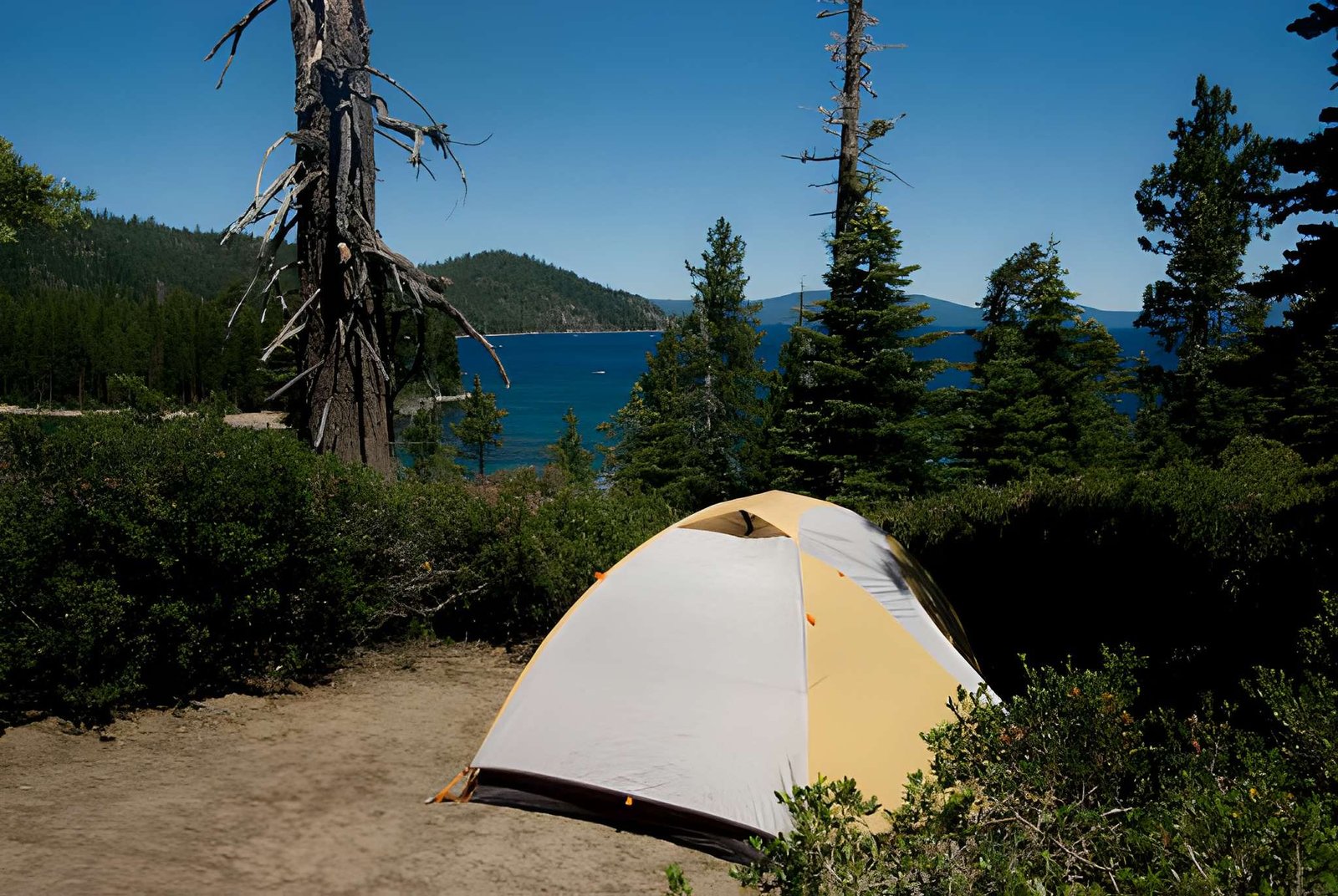
I’m watching the sunrise paint the Sierra Nevada peaks gold from my campsite at D.L. Bliss State Park, steam rising from my coffee cup while Lake Tahoe’s impossible blue waters shimmer just fifty feet away through towering Jeffrey pines. After nineteen camping trips to Lake Tahoe over the past decade—from crowded summer weekends at Emerald Bay to peaceful October nights at Sugar Pine Point—I’ve learned that choosing the right campground makes the difference between a magical mountain experience and a frustrating vacation fighting for space and amenities.
The Lake Tahoe Basin holds fewer than 2,000 campsites serving over 20 million annual visitors. That math alone explains why reservations disappear within minutes, why some families drive hours only to find “campground full” signs, and why knowing exactly which campgrounds match your priorities becomes essential. Whether you’re seeking lakefront sites where kids can swim steps from your tent, full-hookup RV parks with premium amenities, or quiet forest campgrounds far from highway noise, this comprehensive guide reveals which Lake Tahoe campgrounds deliver on their promises, how much they actually cost, and the reservation strategies that actually work after watching dozens of July Saturday slots vanish in under sixty seconds.
Quick Reference: Lake Tahoe Campgrounds Comparison
| Campground | Location | Sites | Beach Access | Showers | RV Hookups | Cost/Night | Reservation Window | Best For |
|---|---|---|---|---|---|---|---|---|
| D.L. Bliss | West Shore | 147 | Yes (walk) | Yes | No | $35-45 | 6 months | Lakefront sites, scenery |
| Sugar Pine Point | West Shore | 175 | Yes (walk) | Yes | No | $35 | 6 months | Year-round, families |
| Emerald Bay | West Shore | 100 | No | Yes | No | $35-45 | 6 months | Iconic views, hikers |
| Camp Richardson | South Shore | 223 | Yes (walk) | Yes | Full hookups | $50-110 | Private | Resort amenities |
| Fallen Leaf Lake | South Shore | 206 | Yes (walk) | Yes | No | $35-50 | 6 months | Families, Desolation access |
| Nevada Beach | South Shore | 54 | Yes (direct) | No | No | $30-40 | 6 months | Beach lovers, dogs allowed |
| Campground by the Lake | South Shore | 170 | Yes (walk) | Yes | Full hookups | $50-85 | City system | Location, bike paths |
| Meeks Bay | West Shore | 36 | Yes (direct) | Yes | No | $40-50 | 6 months | Small, beach access |
| William Kent | West Shore | 95 | No | No | No | $30 | 6 months | Budget, Mt. Tam proximity |
| Tahoe Valley | South Shore | 300+ | No | Yes | Full hookups | $65-95 | Private | RV resort, full amenities |
Peak Season: July-August (book exactly 6 months out at 8 AM)
Shoulder Season: May-June, September-October (easier reservations, beautiful weather)
Winter Camping: November-April (Sugar Pine Point only, first-come/first-served)
Drive Time from Bay Area: 3.5-4.5 hours | From Sacramento: 2-2.5 hours
Understanding Lake Tahoe’s Campground System (What Nobody Tells You)
Before diving into specific campgrounds, let me explain the reservation reality that frustrates thousands of campers every summer. Lake Tahoe operates three separate reservation systems, and mixing them up guarantees disappointment. California State Parks (D.L. Bliss, Sugar Pine Point, Emerald Bay, Tahoe State Recreation Area) book through ReserveCalifornia.com exactly six months in advance. US Forest Service campgrounds (Meeks Bay, William Kent, Fallen Leaf Lake, Nevada Beach) use Recreation.gov, also six months out. Private campgrounds (Camp Richardson, Tahoe Valley, Campground by the Lake) maintain their own booking systems with varying lead times.
Here’s the critical timing detail that catches newcomers: when I say “six months in advance,” I mean to the exact day. Want a campsite for July 15? You must book at 8:00 AM Pacific Time on January 15. Not 8:05 AM. Not 9:00 AM. Exactly 8:00 AM, with your credit card information already saved in your account, because the best lakefront sites at D.L. Bliss and Sugar Pine Point sell out within two to five minutes. I’ve timed this repeatedly, and summer Saturday reservations disappear faster than concert tickets.
The Lake Tahoe Basin also enforces strict bear-country food storage requirements across every campground. Each site includes a metal bear-proof locker (typically 36″ deep, 43″ wide, 22″ high), and rangers issue $1,000 fines for food violations. This isn’t theoretical—during my August 2024 stay at Fallen Leaf Lake, three campers received citations in a single weekend for leaving coolers outside overnight. Even bear-proof coolers like Yeti or Pelican must be locked per manufacturer instructions and ideally cable-locked to prevent bears from rolling them away.
The elevation consideration surprises lowland visitors. Most Lake Tahoe campgrounds sit between 6,200-6,800 feet elevation, where nighttime temperatures drop into the 40s even during July and August. I’ve camped through September when overnight lows hit the low 30s, requiring four-season sleeping bags rated to 20°F. Afternoon thunderstorms occur frequently during summer, appearing suddenly over the peaks around 2-4 PM, making waterproof rain flies essential rather than optional.
D.L. Bliss State Park: The Gold Standard (If You Can Get It)
Sites: 147 | Cost: $35-45/night | Season: Late May-September | Reservations: 6 months via ReserveCalifornia.com
This is what everyone pictures when they imagine Lake Tahoe camping—towering pines, granite boulders, and that impossible Sierra blue shimmering through the trees. D.L. Bliss State Park occupies premium real estate on Lake Tahoe’s west shore, featuring twenty-one coveted lakefront sites that rank among California’s most beautiful camping locations. After five stays at D.L. Bliss spanning different seasons and site types, I can confirm both the legendary appeal and the significant challenges of actually securing a reservation here.
The campground splits into two sections. The lakeside loop contains those famous beachfront sites (sites 141-168 specifically) where you wake up to lake views and walk thirty seconds to swimming. I stayed at site 164 during June 2023, and watching sunrise light up the Sierra Crest while brewing coffee with my feet practically in the water created one of those perfect camping moments you remember for years. These sites cost $45 per night and require ninja-level reservation skills—I’m talking refreshing the ReserveCalifornia.com page at 7:58 AM, logging in at 7:59 AM, and hitting “book” the instant 8:00 AM arrives.
The upper hillside section (sites 1-140) sits farther from the lake but offers larger, more private sites beneath dense pine forest. Sites here cost $35 per night and provide a more realistic reservation target for mere mortals. The trade-off: you’ll walk 5-10 minutes downhill to reach Lester Beach or Calawee Cove Beach, and you’ll hike back uphill after swimming. During my September 2022 visit at site 87, this distance proved manageable but meant we brought less beach gear since carrying everything up and down several times daily gets old quickly.
Amenities include clean flush toilets, hot showers ($0.50 quarters required, bring rolls of them), drinking water throughout the campground, and those mandatory bear-proof lockers at every site. Each site features a picnic table, fire ring, and tent pad, though many sites accommodate small RVs up to 18 feet—larger rigs won’t navigate the narrow, winding campground roads. The dump station serves registered campers but has no electrical hookups anywhere in the park.
The legendary Rubicon Trail starts directly from D.L. Bliss, offering one of Lake Tahoe’s most scenic hikes along dramatic granite cliffs high above the shoreline. The 4.5-mile one-way trail to Vikingsholm (in Emerald Bay State Park) showcases constantly changing lake views, hidden coves, and those iconic Tahoe boulder formations. I’ve hiked this trail four times from D.L. Bliss, and it never gets old—though starting early (before 9 AM) means cooler temperatures and fewer hikers.
What makes D.L. Bliss challenging beyond reservations: during peak season (July-August), the campground feels crowded despite the beautiful setting. Sites are relatively close together, and you’ll hear your neighbors’ conversations, music, and late-night campfire stories. The campground also closes completely from early September through late May, eliminating shoulder-season and winter camping opportunities that some visitors prefer.
Reservation reality check: I’ve successfully booked D.L. Bliss lakefront sites exactly twice in five years of trying, both times for September weekdays when competition drops. For summer weekends, I recommend the backup strategy: book any available D.L. Bliss site immediately while also pursuing cancellations. Services like Campnab ($10/month) monitor ReserveCalifornia.com for cancellations and text-alert you the instant something opens up. During my July 2024 attempt, I secured a lakefront site four days before arrival using this approach after a cancellation appeared.
Sugar Pine Point State Park: The Year-Round Option
Sites: 175 | Cost: $35/night summer, $35/night winter | Season: Year-round | Reservations: 6 months advance (Oct 1-Mar 31 first-come/first-served)
Sugar Pine Point solves several problems that plague other Lake Tahoe campgrounds. Open year-round with winter first-come/first-served camping, located directly on the west shore with easy lake access, featuring hot showers and flush toilets even in October, and maintaining that essential pine forest atmosphere without feeling cramped—after seven stays here across different seasons, Sugar Pine Point has become my reliable fallback whenever other campgrounds sell out.
The campground sits ten miles south of Tahoe City on Highway 89, tucked beneath towering sugar pines and Jeffrey pines that give the park its name. Unlike D.L. Bliss’s dramatic lakefront sites, Sugar Pine Point campground sits about three-quarters of a mile inland from the lake, connected by a pleasant paved bike path through the forest. This slightly removed location actually works in Sugar Pine Point’s favor—you get significantly less highway noise than campgrounds right on Highway 89, while the short walk to the beach feels like a legitimate activity rather than an exhausting hike.
The General Creek Day Use area and beach sits adjacent to the campground, offering a wide sandy beach, shallow swimming area perfect for kids, picnic tables, and that classic Tahoe shoreline experience without crowds. I’ve spent countless afternoons here during my stays, and the beach never feels as packed as South Shore locations even during peak season weekends. The historic Hellman-Ehrman Estate (also called “Pine Lodge”) sits at the day-use area, offering ranger-led tours of the 1903 summer mansion that provide fascinating glimpses into Tahoe’s Gilded Age history.
Site quality varies considerably at Sugar Pine Point’s 175 sites. The General Creek Loop (sites 1-50) offers the most private, spacious sites, tucked among dense pine forest with good spacing between neighbors. I particularly like sites 19, 23, and 38 for their size and relative isolation. The north loops (sites 100-175) sit closer together and parallel the park’s entrance road, meaning more vehicle noise but also easier access for late arrivals. Sites accommodate tents and RVs up to 30 feet, though hookups aren’t available.
The amenities exceed most California state park campgrounds. Hot showers (quarters required) operate from late May through September, plus flush toilets, drinking water, a dump station for RVs, and firewood sales at the entrance kiosk. The campground store sells basic supplies, ice, and those essential forgotten items like matches and marshmallows. Each site includes the standard bear locker, picnic table, and fire ring.
What makes Sugar Pine Point special: winter camping. From October 1 through March 31, the campground operates first-come/first-served for $35 per night—no reservations, no competition, just show up and claim any available site. Showers and the dump station close after September 30, but flush toilets and water remain operational. I winter-camped here during February 2024, and the snow-covered campground hosted maybe twenty occupied sites total, creating a peaceful snow-camping experience without the summer crowds. The park plows campground roads (unless overwhelming snowfall hits), but you’re responsible for digging out your fire ring, bear locker, and picnic table.
The location provides excellent access to west shore hiking. Sugar Pine Point’s own trail system connects to destinations like General Creek Falls (easy 4-mile round-trip) and longer routes into Desolation Wilderness via nearby trailheads. The paved bike path extends in both directions—ride south toward Emerald Bay or north toward Tahoe City, all along scenic lakeshore routes.
Best for families: Sugar Pine Point balances proximity to amenities (Tahoe City 10 miles north offers full grocery stores, restaurants, and outdoor gear shops) with genuine forest camping atmosphere. The shallow, sandy beach works perfectly for kids, and the bike path provides safe riding away from highway traffic.
Emerald Bay State Park: Views Worth the Competition
Sites: 100 (Eagle Point) | Cost: $35-45/night | Season: Late May-early September | Reservations: 6 months via ReserveCalifornia.com
Emerald Bay State Park’s Eagle Point Campground occupies one of California’s most photographed locations—perched on the granite hillside above Emerald Bay with those iconic turquoise waters and Fannette Island views appearing through the pines. After three stays at Eagle Point spanning June, August, and September, I maintain that this campground deserves its reputation for scenery while simultaneously frustrating campers with significant practical limitations that most guidebooks gloss over.
The campground climbs steeply up the hillside in a series of tiered loops, with sites ranging from partially-obstructed lake views to no views whatsoever. Sites 20-40 and 70-90 offer the best lake glimpses, though “lake view” means catching blue water through trees rather than unobstructed panoramas. I stayed at site 75 during August 2023, positioned on the outer loop near the Rubicon Trail trailhead, and while I could see the bay from my tent, the adjacent parking lot meant regular foot traffic from day hikers accessing the trail.
Here’s the reality about Eagle Point: the campground’s location creates challenges. Vikingsholm Castle (Emerald Bay’s main attraction) sits 2.5 miles away via the Rubicon Trail or one steep mile down the Vikingsholm Trail from Highway 89. Swimming access requires hiking down to Vikingsholm Beach—a gorgeous location but involving a 400-foot elevation climb on the return trip. Essentially, Eagle Point trades easy beach access for spectacular views, which works if you prioritize scenery and hiking over convenient swimming.
The sites themselves run smaller than Sugar Pine Point or D.L. Bliss, with less spacing between neighbors. Maximum RV length officially lists as 21 feet, though even that feels optimistic given the tight turns and steep grades. During my June 2022 visit, I watched three RVs attempt the campground roads and ultimately leave without finding manageable sites. This is really a tent camper’s campground masquerading as RV-friendly.
Amenities include flush toilets, hot pay showers, drinking water, bear lockers, and the usual picnic table/fire ring setup. The campground’s steep terrain means significant hiking simply moving around—from my site to the nearest bathroom involved climbing fifty elevation feet each direction. For older campers or anyone with mobility limitations, this presents genuine challenges.
What makes Emerald Bay worthwhile despite drawbacks: the location provides unmatched access to the Rubicon Trail’s southern section, offers those postcard-worthy sunrise views over the bay, and puts you adjacent to Vikingsholm and Fannette Island. I hiked to Vikingsholm three mornings in a row during my September 2023 stay, arriving before the day-tripper crowds for peaceful exploration of the 1929 Scandinavian-style mansion and its surrounding grounds.
The boat-in campground offers a completely different Emerald Bay experience. Twenty sites on the bay’s north shore (accessible only by boat or kayak) provide beachfront camping without road access. I kayaked into these sites during July 2024 and spent two nights in complete solitude despite being peak season. Reservations (six months advance via ReserveCalifornia.com) fill up quickly but not as instantly as Eagle Point.
Reservation strategy: Emerald Bay Eagle Point books up fast but not quite at D.L. Bliss speeds. Weekday reservations remain available for days or even weeks after they first appear, while weekends vanish in minutes. The campground also closes earliest—typically first week of September—meaning late-season opportunities disappear before other campgrounds.
Camp Richardson: The Full-Service Resort Experience
Sites: 223 tent/RV sites + cabins | Cost: $50-110/night | Season: Late May-September | Reservations: CampRichardson.com (varies)
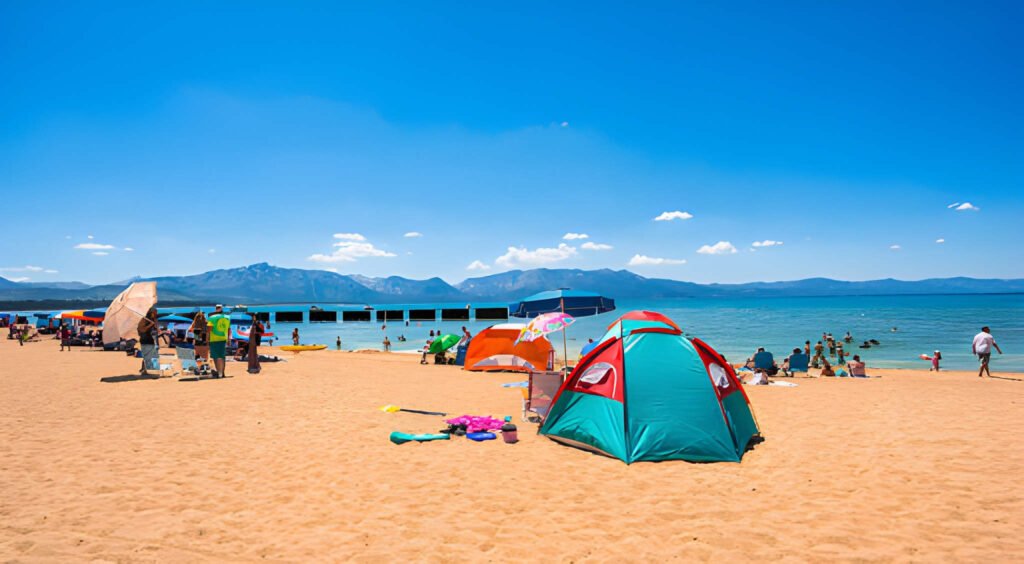
Camp Richardson represents Lake Tahoe camping’s opposite extreme from primitive state park experiences—this is a full-service resort that happens to include campgrounds rather than a campground that happens to offer some amenities. After four stays at different Camp Richardson locations over six years, I appreciate both what this resort delivers and where it falls short compared to traditional campground experiences.
The property sprawls along the south shore about three miles west of South Lake Tahoe, featuring two distinct campground areas. Badger’s Den and Eagle’s Nest campgrounds offer traditional tent/RV camping ($50-55 per night for single sites Sunday-Thursday, $55-60 Friday-Saturday). The RV Village provides full hookups for RVs ($85-110 per night depending on amenities and day of week). All sites include bear-proof lockers, picnic tables, and fire pits, with flush toilets and hot showers throughout.
What sets Camp Richardson apart: the resort amenities. Walk to the beach (about a quarter-mile from campsites), which features a sandy swimming area, beach volleyball, kayak/paddleboard rentals, and those classic Tahoe blue waters. The on-site marina offers boat rentals and lake cruises. The Beacon Bar & Grill serves surprisingly good burgers and drinks with lake views. An ice cream parlor, general store, bike shop, and bike path access complete the resort package.
During my August 2022 stay at Badger’s Den site 47, this convenience proved both blessing and curse. Having a restaurant, grocery basics, and beach all within walking distance meant less driving and more relaxing. But the resort atmosphere also meant constant activity, families everywhere, and that distinctly un-wilderness vibe. Camp Richardson caters to families wanting comfort and amenities rather than solitude-seeking backpackers.
The campground restrictions reflect resort priorities. Strict quiet hours (10 PM-7 AM) are actively enforced by security patrols—good if you’re trying to sleep with kids, frustrating if you’re enjoying late-night campfire conversations. The property accepts service animals only, no pets, which eliminates a common camping companion for many families. Generator hours limit to 10 AM-8 PM, and the close site spacing means your neighbors’ generators become your neighbors’ generators.
Site quality varies significantly between Badger’s Den and Eagle’s Nest. Badger’s Den sites feel slightly more spacious and forested, while Eagle’s Nest sites run smaller and closer together. The RV Village offers the most amenities (full hookups, pull-through sites up to 40 feet) but the least natural atmosphere—think RV park rather than mountain campground. None of the camping areas provide direct lakefront sites; you’re always walking 5-15 minutes to reach the water.
Cost analysis: Camp Richardson charges premium prices compared to state/federal campgrounds. A weekend night in Badger’s Den ($55) costs 35-50% more than D.L. Bliss or Sugar Pine Point ($35). The RV Village full-hookup sites ($95-110) rival hotel prices in less-expensive destinations. You’re paying for convenience, amenities, and location—whether that value proposition works depends entirely on your camping priorities.
Best for: Families with young kids, first-time campers, RVers wanting full hookups near the lake, anyone valuing amenities over wilderness atmosphere.
Reservation tip: Camp Richardson operates its own booking system rather than ReserveCalifornia or Recreation.gov. Reservations open on a rolling basis without the strict 6-month-to-the-day window, meaning more flexibility but also less predictability. Summer weekends still book months ahead, but weekdays often show availability 2-4 weeks out.
Fallen Leaf Lake Campground: The Family Favorite
Sites: 206 | Cost: $35-50/night | Season: Late May-late September | Reservations: 6 months via Recreation.gov
Fallen Leaf Lake Campground sits about three miles southwest of South Lake Tahoe, tucked along the shores of Fallen Leaf Lake (Lake Tahoe’s smaller neighbor) beneath dense Jeffrey pine and incense cedar forest. After six stays here spanning May through September over eight years, Fallen Leaf has become my go-to recommendation for families seeking that perfect balance of accessibility, amenities, and genuine mountain atmosphere without D.L. Bliss’s impossible reservations.
The campground’s 206 sites spread across multiple loops winding through the forest, with the most coveted sites (90-135) closest to Fallen Leaf Lake’s pristine waters. Sites near the lake run $45-50 per night, while back-in sites farther from water cost $35. Site spacing provides reasonable privacy—better than Emerald Bay or Camp Richardson, not quite as spacious as Sugar Pine Point’s best sites. Maximum RV length hits 40 feet on select sites, with most accommodating rigs up to 30 feet.
Fallen Leaf Lake itself offers everything families want. A sandy beach at the north end features swimming, kayaking, paddleboarding, and those incredible Mount Tallac views rising directly across the water. The lake stays clearer and often slightly warmer than Tahoe (though “warmer” means low 60s vs mid-50s), making it more appealing for extended swimming sessions with kids. A 5-mile paved bike path circles much of the lake, perfect for family rides away from traffic.
Amenities exceed most Forest Service campgrounds. Clean flush toilets, hot pay showers, drinking water, a dump station, and firewood sales provide comfort without sacrificing the camping experience. The general store near the entrance sells basic supplies, ice, and forgotten essentials. Each site includes the mandatory bear locker, picnic table, fire ring, and typically some combination of trees providing shade and privacy. During my September 2023 stay at site 112, massive pines created natural wind blocks while still allowing afternoon sun to warm the campsite.
The location provides excellent access to Desolation Wilderness via nearby Glen Alpine Trailhead, less than two miles from the campground. This trailhead serves as a primary entry point for backpacking into Desolation Wilderness, including routes to Gilmore Lake, Half Moon Lake, and connecting trails into the backcountry. I’ve used Fallen Leaf as base camp for several Desolation day hikes, and the proximity beats driving from farther campgrounds.
What challenges Fallen Leaf presents: popularity with families means significant kid activity and noise during peak season. Not “party noise” but the constant sound of children playing, bikes rolling past, and family campsite conversations. If you’re seeking wilderness solitude, look elsewhere. The campground’s size (206 sites) also creates that “campground city” feeling during July-August when it’s completely full. The nearby forest fire smoke became an issue during my July 2024 visit, reducing visibility and creating air quality concerns—this affects all Tahoe campgrounds but felt particularly noticeable at Fallen Leaf given the lower elevation.
RV-specific notes: Fallen Leaf accommodates RVs well with pull-through sites, good road access, and a dump station, though hookups aren’t available. Generator use is permitted during designated hours (10 AM-8 PM), making this a solid option for RVers wanting amenities without resort prices.
Best for: Families with kids, first-time Lake Tahoe campers, anyone wanting reliable amenities with reasonable (not impossible) reservations, Desolation Wilderness hikers.
Reservation strategy: Fallen Leaf books solidly but not at D.L. Bliss speeds. Weekends vanish quickly, but weekday availability often extends several weeks after the 6-month opening. Watch for cancellations 2-3 weeks before your trip when families’ plans change.
Nevada Beach Campground: The Dog-Friendly Beach Option
Sites: 54 | Cost: $30-40/night | Season: Late May-mid-October | Reservations: 6 months via Recreation.gov
Nevada Beach Campground delivers one feature most Lake Tahoe campgrounds don’t: dogs are welcome on the adjacent beach. Positioned on the lake’s southeast shore just across the state line in Nevada, this Forest Service campground combines direct beach access, relatively easier reservations, and more relaxed atmosphere than California’s state park campgrounds. After three stays here (including one memorable October weekend with perfect fall weather and nearly empty beaches), Nevada Beach ranks as my preferred option when traveling with dogs or seeking budget camping close to South Lake Tahoe.
The campground’s 54 sites split into A and B loops set back from the lake by about 200-300 yards—not waterfront camping but close enough for easy beach access. Sites 38-54 in the B loop offer the shortest walk to water and slightly better views through the pines. Maximum RV length is 35 feet, though road access is easier than many Tahoe campgrounds, making this popular with RVers seeking an alternative to expensive private parks.
Nevada Beach itself stretches for nearly a mile of sandy shoreline, unusually long by Lake Tahoe standards where most beaches run 100-200 yards. The beach permits dogs (leashed), making it one of few Tahoe locations where families can bring pets and still enjoy the water. During my September 2023 visit, I watched dozens of dogs playing in the shallows while their owners relaxed on the sand—a scene impossible at California’s state park beaches where dogs are prohibited.
The trade-off for dog-friendly policies and easier reservations: basic amenities and significant highway noise. Nevada Beach offers vault toilets (no flush toilets, no showers) and drinking water but nothing beyond camping basics. Each site includes bear locker, picnic table, and fire ring. The campground sits close enough to Highway 50 that road noise provides constant background sound, particularly noticeable at night. During my July 2024 stay at site 42, traffic noise diminished significantly after 10 PM but never disappeared completely.
The location puts you about four miles from Stateline casinos, restaurants, and grocery stores—convenient for supply runs but also meaning more development and traffic than west shore campgrounds. Nevada Beach feels more “urban camping” than “wilderness camping,” which works perfectly for some visitors while disappointing others expecting pristine mountain solitude.
Cost-wise, Nevada Beach undercuts California campgrounds by $5-15 per night ($30-40 vs $35-50), and the reservation competition runs less intense. I’ve successfully booked Nevada Beach weekend sites just 3-4 weeks before arrival, something nearly impossible at D.L. Bliss or Sugar Pine Point during summer. The extended season (open until mid-October) also provides shoulder-season opportunities when many campgrounds have already closed.
Best for: Dog owners, budget-conscious campers, RVers wanting good road access, families comfortable with vault toilets, anyone failing to secure reservations at premium campgrounds.
What to skip Nevada Beach for: Wilderness atmosphere, hot showers, quiet camping environment, Instagram-worthy mountain scenery.
Campground by the Lake: The Urban Convenience Option
Sites: 170 | Cost: $50-85/night | Season: Late May-late September | Reservations: CityofSLT.us (varies)
Campground by the Lake occupies possibly the most convenient location in the Lake Tahoe Basin—walking distance from the lake, directly on the South Lake Tahoe bike path, surrounded by restaurants and shops, and situated next to Lakeview Commons Beach. Operated by the City of South Lake Tahoe, this campground represents urban camping at its most functional, trading wilderness character for unmatched accessibility.
The campground sprawls across multiple paved loops accommodating everything from small tents to 40-foot RVs. Full hookup sites cost $70-85 per night, while standard sites run $50-65. All sites include picnic tables, fire rings, and bear lockers, with flush toilets, hot showers, a camp store, and laundry facilities serving all campers. The infrastructure feels more “RV resort” than “campground,” which perfectly suits the target audience of families wanting maximum convenience.
The location’s advantages prove hard to beat. Walk 200 yards to Lakeview Commons Beach, featuring sandy swimming areas, paddleboard/kayak rentals, and lawn games. Bike the paved path directly into South Lake Tahoe’s casino district (2 miles), to Heavenly Village shops and restaurants (1.5 miles), or west toward Emerald Bay. Grocery stores, restaurants, gear shops, and every conceivable service sit within one mile. During my June 2023 stay with extended family, we used the campground primarily as a comfortable home base while spending days hiking, biking, and exploring without the typical camping isolation.
The disadvantages mirror the advantages. Campground by the Lake offers zero wilderness atmosphere. Sites sit close together with minimal privacy, surrounded by RVs, traffic noise, and the general bustle of South Lake Tahoe. If your camping ideal involves communing with nature, this isn’t your campground. But if you want comfortable outdoor sleeping combined with easy access to Tahoe attractions, restaurants, and activities, the location works brilliantly.
The reservation system runs through the City of South Lake Tahoe rather than ReserveCalifornia or Recreation.gov, opening on its own schedule typically several months in advance. The campground books solidly but shows better last-minute availability than state parks—I’ve found sites available just two weeks before arrival during shoulder season.
Best for: Families wanting resort-like amenities, first-time Lake Tahoe visitors, anyone prioritizing location over wilderness character, RVers comfortable in urban camping environments.
Tahoe Valley RV Resort: The Premium RV Experience
Sites: 300+ full hookup | Cost: $65-95/night | Season: Year-round | Reservations: TahoeValleyRV.com
Tahoe Valley RV Resort caters specifically to RVers seeking full amenities in a park-like setting. Located about two miles south of South Lake Tahoe on Highway 50, this private campground provides full hookups (50/30/20 amp), pull-through sites up to 45 feet, WiFi, cable TV, heated pool, playground, dog park, and all the amenities you’d expect from a premium RV resort. This is camping for people who prefer not to rough it.
After two stays here (once in July, once in October), Tahoe Valley delivers exactly what it promises: comfortable RV camping with reliable utilities and family-friendly facilities. The trade-off: zero wilderness character, premium prices, and that distinctive commercial RV park atmosphere. Sites sit close together on grass with decent shade from mature trees but minimal privacy. During summer, the campground fills with families, kids playing, and the general activity of a busy RV park.
The amenities justify the cost for the target audience. Hot showers that don’t require quarters, clean flush toilets, a dump station, propane refills, firewood sales, and a small camp store provide everything needed for extended stays. The heated pool (open Memorial Day-Labor Day) keeps kids entertained, while the dog park accommodates pets in a controlled area. The bike path access puts you on paved routes toward South Lake Tahoe’s casinos and beaches.
Cost-wise, Tahoe Valley charges $65-95 per night depending on season, day of week, and site amenities. This significantly exceeds state park and Forest Service campground rates but undercuts Camp Richardson’s premium pricing while offering full hookups Richardson lacks. For RVers accustomed to commercial campground rates, it’s competitive. For tent campers used to $35/night camping, it’s a hard sell.
The year-round operation provides winter camping opportunities when most Lake Tahoe campgrounds close. The resort maintains plowed roads, heated bathrooms, and full utilities through winter, though obviously snow camping requires appropriate equipment and experience.
Best for: Full-time RVers, families in large motorhomes, anyone requiring full hookups and amenities, winter RV camping, extended stays.
Budget Breakdown: What Lake Tahoe Camping Actually Costs
Let me provide realistic cost estimates because most camping articles ignore the total expense beyond nightly fees.
Weekend Tent Camping (2 adults, 2 kids, Friday-Saturday):
- Campsite: $70-90 (2 nights at state park)
- Firewood: $15-20 (2 bundles)
- Ice: $10-12
- Shower quarters: $6-8
- S’mores supplies: $12-15
- Gas from Bay Area: $60-80 round-trip
- Forgotten items at camp store: $20-30
- Total: $193-255
Mid-Week Tent Camping (2 adults, Monday-Wednesday):
- Campsite: $70-90 (2 nights)
- Firewood: $10-15
- Ice: $8-10
- Groceries from home: $40-50
- Gas: $60-80
- Total: $188-245
RV Weekend (Full hookups, 2 nights):
- Campsite: $170-220 (Camp Richardson or Tahoe Valley)
- Gas: $80-120 (depends on RV size)
- Propane refill: $25-35
- Dump station: Included
- Groceries: $80-100
- Activities/dining out: $150-250
- Total: $505-725
Budget Camping (State park, weekday, minimal extras):
- Campsite: $70 (2 nights)
- Firewood gathered/brought from home: $0
- Food from home: $30
- Gas: $60
- Total: $160
Reservation Master Strategy: Actually Getting a Campsite
After booking nineteen Lake Tahoe camping trips over ten years—and failing to secure my first-choice campground at least eight times—I’ve developed a systematic approach that dramatically improves success rates.
Six Months Out (Primary Strategy):
Set calendar alerts for exactly 8:00 AM Pacific Time six months before your target dates. For weekend camping, this is non-negotiable. Log into ReserveCalifornia.com or Recreation.gov the night before, save your payment information, add favorite campgrounds, and test your internet speed. At 7:58 AM, start refreshing the search page. At 8:00:00 AM, book immediately.
Target weekdays over weekends. A Wednesday-Friday reservation books far easier than Friday-Sunday, even during peak season. Consider arriving Sunday rather than Friday—Saturday-Sunday nights vanish instantly, but Sunday-Tuesday often shows availability days after release.
Book your backup campground simultaneously. If targeting D.L. Bliss lakefront, also book Sugar Pine Point for the same dates. Cancel the backup once you secure your first choice (if possible). This dual-booking strategy costs an extra $10 reservation fee but guarantees you’ll camp somewhere desirable.
Cancellation Monitoring (Secondary Strategy):
Two to four weeks before your trip, cancellations appear regularly as people’s plans change. Check ReserveCalifornia.com and Recreation.gov daily, ideally multiple times per day. Cancellations appear randomly but often surface mid-morning (8-11 AM) and late afternoon (4-6 PM) Pacific Time.
Use automated monitoring services like Campnab ($10/month), CampFlare ($5/month), or Recreational.gov’s free notification system. These services check availability every few minutes and text/email when sites open. I’ve secured three D.L. Bliss lakefront sites using Campnab after monitoring for 7-10 days.
Alternative Approaches:
Consider private campgrounds (Camp Richardson, Tahoe Valley) with more flexible reservation windows. These fill up but not at 8:00:01 AM, giving you better odds booking closer to your trip.
Embrace first-come/first-served options. Sugar Pine Point (October-March), plus several small Forest Service campgrounds around the basin, operate without reservations during shoulder seasons. Arrive mid-week for best availability.
Extend your search radius. Campgrounds 30-45 minutes from Tahoe (Grover Hot Springs, Hope Valley, Prosser Creek) book easier while still providing reasonable lake access for day trips.
Bear Safety & Food Storage: The Rules That Matter
Every Lake Tahoe campground enforces strict bear-country regulations, and rangers issue substantial fines for violations. Understanding these requirements prevents expensive citations and protects both bears and campers.
The Basic Rules:
All food, toiletries, coolers, and scented items must be stored in the provided bear locker or a hard-sided, bear-proof container when not actively in use. “Not actively in use” means if you’re not physically standing next to your cooler preparing a meal, it’s locked in the bear locker. Even going to the bathroom requires locking everything up.
Nothing food-related stays in your tent ever—not snacks, not gum, not scented lip balm. Bears associate tents with food after decades of campers making this mistake, and they’ll tear through nylon in seconds. During my August 2024 Fallen Leaf stay, a bear destroyed an adjacent campsite’s tent searching for food around 2 AM, terrifying the occupants and earning them a $1,000 citation for the food violation.
Bear lockers measure roughly 36″ deep by 43″ wide by 22″ high. This size accommodates standard coolers up to about 54-quart capacity, grocery bags, and food boxes. Larger coolers won’t fit, requiring multiple trips to the bear locker or using a separate bear-proof container. Lock the locker using the built-in locking mechanism—bears can open unsecured lockers easily.
What Bears Actually Do:
Black bears (Tahoe has no grizzlies) are smart, persistent, and constantly searching for easy calories. They’ll investigate every campsite nightly during summer, checking for food violations. I’ve watched bears systematically work through campsites, trying cooler handles, sniffing around tents, and testing bear locker security. They’re not aggressive toward humans but show zero fear and incredible determination.
If a bear enters your campsite, make loud noises, bang pots, yell, and generally make yourself annoying. Don’t approach the bear, don’t run, just be loud and assertive. Bears almost always leave quickly when confronted. During my seventeen years camping in Tahoe, I’ve had bear encounters at least a dozen times, and every single encounter ended with the bear wandering away after I made noise.
Practical Storage Tips:
Organize your bear locker before arriving. Use stackable containers rather than loose bags—milk crates work perfectly. Place frequently-needed items (coffee, breakfast foods) on top for easy morning access without unpacking everything.
If car-camping, supplement the bear locker with your locked vehicle trunk. Store extra food, drinks, and supplies in the trunk (not visible through windows), using the bear locker for immediate needs. This extends your “cold storage” capacity when camping with large groups.
Dispose of all food waste immediately in bear-proof trash cans. Don’t leave dirty dishes, food scraps, or trash bags around your campsite. Clean cooking equipment thoroughly and store it in the bear locker or car trunk.
Best Times to Camp Lake Tahoe: Seasonal Considerations
Lake Tahoe’s 6,225-foot elevation creates distinct seasonal patterns that dramatically affect camping quality, crowd levels, and available activities.
Summer (July-August): Peak season brings warm days (75-85°F), cool nights (40-50°F), maximum crowds, and occasional afternoon thunderstorms. Campgrounds book instantly, beaches feel packed, and parking becomes challenging everywhere. Water temperatures reach their warmest (mid-60s at best), making swimming most pleasant. This is family vacation season when kids are out of school and everyone wants lakefront camping.
Late Spring (May-June): My favorite time for Tahoe camping. Days warm nicely (65-75°F), nights stay cool (35-45°F), crowds remain moderate, and everything feels fresh and green. Many campgrounds open late May, meaning Memorial Day weekend marks the season’s unofficial start. Mosquitoes peak during June around creeks and marshy areas—bring strong repellent. Water temperatures hover in the 50s, limiting swimming to the brave or wetsuit-equipped.
Early Fall (September-October): Another premium window. September extends summer weather (70-80°F days, 40-50°F nights) with dramatically reduced crowds after Labor Day. October brings cooler temperatures (60-70°F days, 30-40°F nights), golden aspen colors at higher elevations, and that crisp mountain air that makes campfires extra cozy. Most campgrounds close by mid-October, but Sugar Pine Point stays open through winter. Water temperatures drop into the 50s, making swimming brief or nonexistent.
Winter (November-April): Only Sugar Pine Point operates for winter camping, offering a completely different Tahoe experience. Expect snow (often heavy), freezing nights (teens to 30s°F), and quiet solitude. Winter camping requires four-season tents, cold-rated sleeping bags, and experience managing snow conditions. I winter-camped twice at Sugar Pine Point, and both times ranked among my most memorable Tahoe experiences—but they also demanded significant preparation and proper gear.
Frequently Asked Questions
How far in advance should I book Lake Tahoe campgrounds?
State parks and Forest Service campgrounds accept reservations exactly six months in advance. For summer weekends at popular campgrounds like D.L. Bliss or Sugar Pine Point, book at precisely 8:00 AM Pacific Time when reservations open—sites disappear within minutes. Weekday camping books more easily, often showing availability several weeks after opening. Private campgrounds use their own systems with varying advance windows.
Which Lake Tahoe campground has the best beach access?
Nevada Beach provides the shortest walk to water (200-300 yards) with a mile-long sandy beach where dogs are allowed. D.L. Bliss offers twenty-one actual lakefront sites with direct beach access. Meeks Bay features sites within 50 yards of sandy swimming areas. Camp Richardson and Fallen Leaf Lake both provide good beach access via short walks (5-10 minutes). Most campgrounds require at least some walking to reach the lake.
Can I camp at Lake Tahoe with my dog?
Dogs are allowed at Forest Service campgrounds (Nevada Beach, Fallen Leaf Lake, Meeks Bay) but not on California state park beaches. Nevada Beach specifically allows leashed dogs on the adjacent beach, making it Tahoe’s best dog-friendly camping option. Camp Richardson prohibits pets except service animals. Always keep dogs leashed, clean up waste, and respect quiet hours when camping with pets.
What’s the cheapest way to camp at Lake Tahoe?
Forest Service campgrounds like William Kent ($30/night) and Nevada Beach ($30-40/night) cost less than state parks ($35-50/night) or private campgrounds ($50-110/night). Camping Sunday-Thursday saves $5-10 per night compared to Friday-Saturday rates at many campgrounds. Bring all food and supplies from home rather than buying at inflated camp store prices. Winter camping at Sugar Pine Point (first-come/first-served, $35/night) eliminates competitive reservations.
Do Lake Tahoe campgrounds have showers?
Most major campgrounds provide hot pay showers (bring quarters). D.L. Bliss, Sugar Pine Point, Fallen Leaf Lake, Camp Richardson, and Campground by the Lake all offer shower facilities. Nevada Beach and William Kent have only vault toilets without showers. Shower buildings typically close during shoulder seasons (May and October) at state parks but remain open through summer at private campgrounds.
Is it safe to camp at Lake Tahoe with bears around?
Black bears are common at Lake Tahoe but rarely dangerous to humans. Store all food, toiletries, and scented items in provided bear lockers or bear-proof containers. Never keep food in tents. If a bear enters your campsite, make loud noises until it leaves—don’t approach, don’t run. I’ve camped at Tahoe nineteen times over seventeen years with multiple bear encounters, and every encounter ended safely by following these basic precautions.
Can I camp at Lake Tahoe in winter?
Sugar Pine Point State Park operates year-round with first-come/first-served camping October through March ($35/night). Winter camping requires four-season tents, cold-rated sleeping bags (-10°F to 0°F rating), and experience managing snow and freezing conditions. The campground plows roads (usually) and maintains water and flush toilets, but showers close after September. All other Lake Tahoe campgrounds close October through May.
Which Lake Tahoe campground is best for families with young kids?
Fallen Leaf Lake combines good amenities (hot showers, flush toilets), easy beach access, shallow swimming areas, and a paved bike path perfect for families. Camp Richardson provides resort amenities including restaurants, ice cream, and organized activities appealing to kids. Sugar Pine Point offers spacious sites, a sandy beach, and less crowded atmosphere than peak-season south shore campgrounds. Avoid Eagle Point’s steep terrain with young children.
Key Takeaways: Choosing Your Perfect Lake Tahoe Campground
After nineteen camping trips to Lake Tahoe spanning every season and most major campgrounds, I’ve learned that “best campground” depends entirely on your priorities rather than any objective ranking. D.L. Bliss State Park legitimately deserves its reputation as Tahoe’s most scenic camping, with those legendary lakefront sites delivering postcard-worthy views and immediate beach access. But the impossible reservations, higher costs, and summer crowds mean many campers enjoy better overall experiences at less-competitive alternatives.
Sugar Pine Point has become my reliable choice, balancing reasonable reservation odds with genuine quality—hot showers, flush toilets, decent beach access via bike path, year-round availability, and that essential pine forest atmosphere without feeling cramped. The first-come/first-served winter camping (October-March) provides the unexpected bonus of peaceful snow camping when every other Lake Tahoe campground sits closed and empty.
For families prioritizing convenience and amenities over wilderness character, Fallen Leaf Lake or Camp Richardson solve the practical challenges that can frustrate camping with kids. Hot showers without reservation drama, nearby beaches perfect for young swimmers, and easy access to supplies and restaurants mean less stress and more actual vacation. The trade-off: you’re camping alongside hundreds of other families rather than escaping crowds, and costs run 30-50% higher than basic Forest Service options.
The reservation system frustrates everyone, but systematic approaches dramatically improve success rates. Set those 8:00 AM alarms six months out, target weekdays over weekends, embrace cancellation monitoring through automated services like Campnab, and always maintain backup options. I’ve never failed to camp at Tahoe when I actually wanted to—though I’ve certainly settled for third-choice campgrounds and Tuesday arrivals instead of Friday departures when my preferred dates vanished in sixty seconds.
Bear country regulations aren’t suggestions or optional guidelines—they’re strictly-enforced rules protecting both wildlife and campers from dangerous encounters. Lock everything scented in provided bear lockers, never keep food in tents, and make loud noises if bears enter your campsite. These simple protocols prevented problems during my dozens of bear encounters while camping throughout the Tahoe Basin.
Budget realistically, especially for summer family camping. A weekend at Nevada Beach or Sugar Pine Point costs $180-250 total when you factor in campsites, gas, firewood, ice, forgotten supplies, and food. Premium options like Camp Richardson or Tahoe Valley RV Resort push weekend costs toward $500-700 with full hookups and resort amenities. Winter camping or shoulder-season weekdays cut costs significantly while often delivering superior experiences through smaller crowds and more dramatic weather.
The Lake Tahoe campgrounds offer something increasingly rare in modern life—sleeping beneath towering pines beside alpine waters so blue they seem artificial, waking to Sierra sunrise painting granite peaks gold, and falling asleep to the gentle lapping of waves against shoreline rocks. Whether you score a D.L. Bliss lakefront site through reservation ninja skills, settle for Sugar Pine Point’s reliable forest camping, or embrace Nevada Beach’s budget-friendly beach access, Lake Tahoe rewards those who plan carefully, adapt flexibly, and remember that any night camping beside this impossible-blue alpine lake beats another weekend sitting at home.
