
I’m walking down Ocean Avenue toward Carmel Beach at 7:15 AM when a couple from Chicago asks me how to find a specific art gallery—and I have to explain that Carmel doesn’t use street addresses. After visiting Carmel-by-the-Sea nineteen times over the past nine years, I’ve learned that this enchanting village of 3,000 residents operates by its own rules, and understanding those quirks transforms a frustrating visit into a magical one.
Most Carmel guides list the same beaches and shops without explaining the parking reality that ruins most first visits, which galleries are worth your time versus tourist traps, or how to experience this fairytale village without spending $500 on dinner and feeling nickel-and-dimed at every turn. This complete guide provides 20 tested Carmel activities with specific parking strategies, honest restaurant recommendations that locals actually visit, and insider knowledge about this peculiar, precious village. Whether you’re planning a romantic weekend or a day trip from Monterey, you’ll discover everything from white-sand beaches to world-class galleries, scenic coastal walks to hidden courtyards—all within one square mile of California’s most charming coastal village.
Understanding Carmel’s Unique Character
Carmel-by-the-Sea is deliberately frozen in time through some of California’s strictest development codes. No chain restaurants exist here. No buildings exceed two stories. No neon signs blemish the skyline. Street lights are banned. And yes, houses have no street numbers—they’re identified by names like “Hansel” or “Sea Urchin” instead of 123 Main Street.
These rules aren’t accidental. They reflect a century-old vision of Carmel as an artists’ colony and refuge from commercialism. The result is a village that feels more European hamlet than California beach town, where cypress trees drape over storybook cottages and every corner reveals another postcard-perfect scene.
The village core measures roughly one square mile between Highway 1 and Carmel Beach, making everything walkable once you’ve parked. Ocean Avenue serves as the main commercial street running straight from Highway 1 down to the beach. Side streets reveal the gallery district, residential areas with those famous fairytale cottages, and hidden courtyards filled with boutiques.
The weather here runs cooler and foggier than nearby Monterey. Morning fog often lingers until noon, and temperatures rarely exceed 70°F even in summer. Locals joke that Carmel has two seasons—cool and slightly cooler. Layer clothing and bring a jacket even on seemingly warm days.
The village attracts a specific demographic—affluent retirees, art collectors, romantic couples seeking weekend escapes, and tourists willing to pay premium prices for premium experiences. You won’t find backpackers or budget travelers here. Carmel caters to those who appreciate refinement, are willing to pay for it, and understand that the experience itself justifies the cost.

The Best Things to Do in Carmel-by-the-Sea
Beaches and Coastal Walks
Carmel Beach
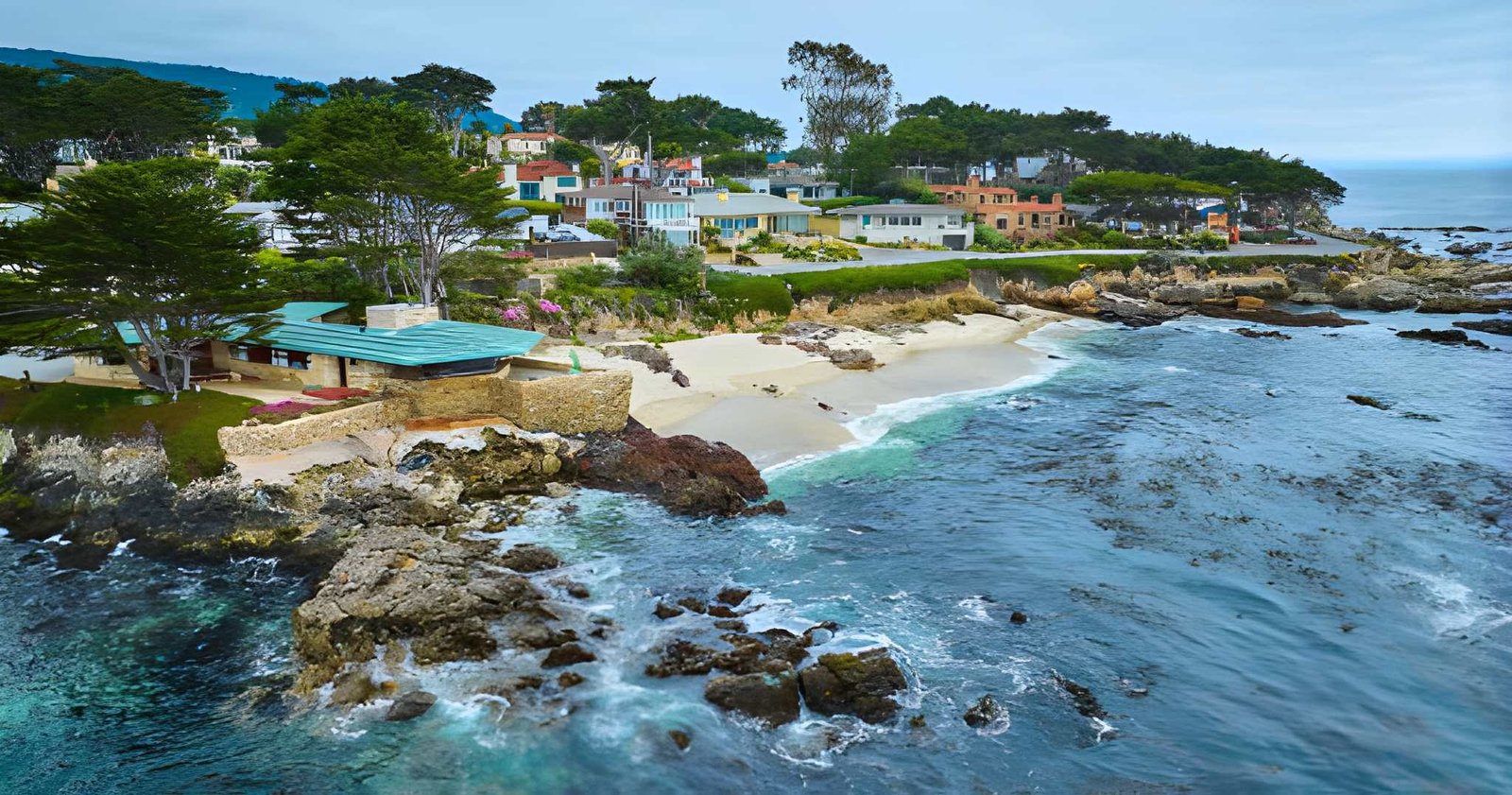
Carmel Beach stretches for a mile of white sand framed by twisted cypress trees and backed by multimillion-dollar homes perched on bluffs. It’s achingly beautiful and frequently appears on “best beaches in America” lists despite having water too cold for swimming and winds that can sandblast exposed skin.
The beach faces directly west, creating spectacular sunsets that draw crowds to the sand every evening. Dogs run off-leash here, making it heaven for pet owners and a parade of golden retrievers, labs, and every other breed chasing balls and splashing in surf. This is California’s most famous dog-friendly beach.
The wide, soft sand invites long walks from the north end near 10th Avenue down to the south end at Scenic Road. At low tide, tide pools appear at the north end rocks where you can explore marine life. High tide brings dramatic waves crashing against rocks and logs scattered across the sand.
Parking requires strategy since the small lot at the beach’s foot holds maybe sixty cars and fills by 10 AM on weekends and nice weekdays. Free residential street parking lines the avenues leading to the beach, particularly along Scenic Road and the numbered avenues. Walk a few blocks from your parking spot to the beach access points.
The best time to visit is early morning before 9 AM when fog often creates moody, atmospheric conditions and you’ll have relative solitude. Late afternoon into sunset brings crowds but offers that golden light that makes every photograph stunning. Weekday mornings outside summer see surprisingly few visitors despite the beach being genuinely spectacular.
Facilities are minimal—just restrooms at the main parking lot. Bring what you need for the day since the closest shops sit several blocks uphill on Ocean Avenue. The beach’s beauty lies partly in its undeveloped character. No vendors, no lifeguards, no commercial intrusions—just sand, surf, cypress trees, and views.
Scenic Road Walk
Scenic Road traces the bluff above Carmel Beach for about a mile, providing one of California’s most beautiful coastal walks. The paved path passes between oceanfront estates on one side and dramatic views over the beach and Pacific on the other.
Start at the north end where Ocean Avenue meets Scenic Road and walk south toward Carmel River State Beach. Cypress trees twisted by decades of wind create natural sculptures against the sky. Benches positioned at intervals invite sitting and absorbing views that justify Carmel’s reputation and real estate prices.
The path showcases architecture as much as ocean views. You’ll pass some of Carmel’s most impressive homes, each reflecting different interpretations of California coastal style from Mediterranean villas to modern glass boxes. The variety demonstrates that even Carmel’s strict architectural codes allow creative expression.
Photographers flock here during golden hour when late afternoon sun illuminates the beach and ocean. Morning fog can obscure views but creates its own moody beauty. This walk works in any weather and any season since the paved path handles rain and the elevation keeps you above beach sand.
Walking the full length takes about thirty minutes at a leisurely pace, though most people stop frequently to photograph views or watch dogs playing on the beach below. It’s equally pleasant as an evening stroll after dinner or a morning constitutional before galleries and shops open.
Access points exist all along Scenic Road, so you can walk as much or as little as appeals. Many visitors combine this with Carmel Beach time, parking once and experiencing both. The walk is completely flat and accessible for all fitness levels and ages.
Carmel River State Beach
Carmel River State Beach sits where the Carmel River meets the Pacific at the southern edge of the village. It offers a different experience from Carmel Beach—wider, wilder, less manicured, and far less crowded.
The beach stretches for nearly a mile with coarse white sand and driftwood logs scattered across it. The river mouth creates a lagoon that often closes off from the ocean, forming a still-water area where birds feed and kayakers paddle. When the sandbar breaks and river water rushes to the sea, it creates dramatic channels cutting across the beach.
This is exceptional birding territory. The wetlands behind the beach attract over 200 species including egrets, herons, pelicans, and various shorebirds. Bring binoculars if you appreciate wildlife watching. Harbor seals haul out on the beach to rest, particularly during pupping season in spring.
The beach feels remote despite being minutes from Carmel’s village center. You’ll see locals walking dogs, photographers capturing the river mouth, and serious beachcombers hunting for treasures, but rarely crowds. The lack of amenities and slightly longer drive from town center keeps tourist numbers down.
Parking is free in the large lot off Carmelo Street. The lot rarely fills even on summer weekends. From the parking area, trails lead through coastal scrub and wetlands to multiple beach access points. The walk takes 5-10 minutes depending on which trail you choose.
Strong currents where the river meets the ocean make swimming dangerous. Wading in the lagoon when it’s closed off from the sea is safe and popular with families. The beach excels at walking, photography, wildlife viewing, and that meditative experience of sitting somewhere beautiful and simply being present.
Point Lobos State Natural Reserve
Point Lobos sits just three miles south of Carmel and ranks among California’s most spectacular coastal parks. This 554-acre reserve protects rocky headlands, hidden coves, and crystal-clear water that rivals anything in the world for beauty.
Six miles of trails wind through the reserve connecting multiple coves and viewpoints. The Cypress Grove Trail showcases ancient Monterey cypress trees clinging to granite cliffs. China Cove offers turquoise water in a protected inlet that photographs like the Mediterranean. Sea Lion Point Trail brings you to rocks where dozens of sea lions bark and sun themselves.
The reserve’s waters support incredibly rich marine life. Sea otters float in kelp beds visible from shore trails. Harbor seals haul out on rocks. Gray whales pass offshore during migration seasons. The kelp forests here appear so clear that you can watch fish and invertebrates from cliff tops thirty feet above.
Point Lobos requires reservations on weekends and holidays through Reserve California. Book 2-3 weeks ahead for weekend visits. Weekdays remain first-come, first-served and rarely fill completely. Admission costs $10 per vehicle for day use.
Plan at least 2-3 hours to experience multiple trails and coves. Serious hikers and photographers can easily spend a full day here. The reserve opens at 8 AM when morning light is best and wildlife is most active. Late afternoon light is also spectacular for photography.
The reserve is undeveloped by design. No food, no water refills, minimal facilities. Bring everything you need including water, snacks, layers for changing weather, and camera equipment. The trails range from easy paved paths to moderate rocky sections. Most visitors can handle the easier trails that access the best viewpoints.
Point Lobos is technically outside Carmel proper but I include it here because no Carmel visit is complete without experiencing what many consider the crown jewel of California’s coast. If you only have time for one outdoor activity, make it Point Lobos.
Art Galleries and Shopping
Carmel Gallery District
Carmel built its reputation as an artists’ colony in the early 1900s, and today over 100 galleries operate within the village’s one square mile. The concentration of quality art galleries rivals much larger cities and offers browsing that ranges from pleasant to genuinely extraordinary.
The gallery district concentrates along Ocean Avenue, Dolores Street, San Carlos Street, Lincoln Street, and the cross streets between them. You can easily walk a circuit hitting a dozen galleries in an hour or spend an entire afternoon diving deep into particular styles or mediums that interest you.
Gallery quality varies wildly. Some represent serious contemporary artists with museum-quality work and corresponding prices. Others sell decorative pieces aimed at tourists seeking souvenirs. Learning to distinguish between them enhances your experience considerably.
My favorite galleries include the Weston Gallery on Sixth Avenue for museum-quality photography including works by Ansel Adams and Edward Weston. The Carmel Art Association on Dolores near Fifth showcases work by local artists in a historic building that’s been an exhibition space since 1927. Rodrigue Studio on Dolores features George Rodrigue’s Blue Dog paintings in the artist’s former studio space.
For contemporary painting, visit the Highlands Sculpture Gallery on Dolores between Fifth and Sixth, or Dawson Cole Fine Art on San Carlos for impressionist and contemporary work. The Thunderbird Bookshop and Gallery on The Barnyard combines a excellent bookstore with rotating art exhibitions.
Most galleries welcome browsers without pressure to buy. Gallery hopping is a legitimate Carmel activity and cultural experience, not just shopping. Many galleries feature local artists who capture Carmel and Monterey Peninsula landscapes, offering the opportunity to take home art depicting the place you’re visiting.
First Friday Art Walk happens monthly when galleries stay open until 8 PM with wine and receptions. This is Carmel at its most social and accessible. If your visit coincides with a First Friday, absolutely participate.
Galleries typically open around 10 AM and close by 5 or 6 PM. Many close Tuesdays or Wednesdays, so check if you’re planning to visit specific galleries. Weekday mornings offer the most peaceful browsing with staff available for conversation without crowds competing for attention.
Carmel Plaza and Shopping Courtyards
Carmel Plaza anchors the village’s upscale shopping at the corner of Ocean Avenue and Mission Street. This outdoor complex houses high-end retailers like Tiffany & Co, Anthropologie, and various boutiques selling clothing, jewelry, and home goods at price points that reflect Carmel’s affluent demographic.
The plaza’s architecture integrates better than most shopping centers with Carmel’s village character. Courtyards with fountains, sculptures, and comfortable seating create spaces for resting between shops. The rooftop terrace offers excellent people-watching and views down Ocean Avenue toward the beach.
Beyond Carmel Plaza, the village reveals dozens of hidden courtyards accessible through archways and passageways that you’d miss if walking straight down main streets. These courtyards house boutiques, galleries, and specialty shops in intimate settings that feel discovered rather than commercial.
The Doud Arcade on Ocean Avenue between Lincoln and Dolores, and the Seventh Avenue Court between San Carlos and Dolores showcase this courtyard shopping perfectly. Duck through an archway and find yourself in a European-style courtyard where shops occupy spaces that feel more like someone’s home than retail spaces.
Shopping in Carmel skews expensive. This isn’t the place for bargains or budget finds. You’re paying for unique items, quality goods, and the experience of shopping in beautiful settings with attentive service. If budget shopping appeals more than experience, Carmel will frustrate you.
For visitors not interested in shopping, these areas still merit exploration for their architecture and atmosphere. The courtyards are photogenic, the window displays creative, and simply wandering these spaces captures Carmel’s village character better than any single attraction.
Restaurants and Wine Tasting
Restaurant Recommendations
Carmel’s restaurant scene reflects the village’s sophisticated character with exceptional dining options ranging from casual to special-occasion establishments. Reservations are essential at popular restaurants, often weeks ahead for weekend dinners.
La Bicyclette on Dolores Street serves French-inspired California cuisine in a rustic, welcoming atmosphere. The outdoor courtyard is charming for lunch or early dinner. Prices run $18-28 for lunch, $28-42 for dinner entrees. It strikes the balance between special and approachable better than anywhere in Carmel.
Casanova Restaurant on Fifth Avenue between San Carlos and Mission occupies a historic cottage with multiple intimate dining rooms and a magical garden patio. The Mediterranean and Italian-influenced menu works for romantic dinners or special celebrations. Expect $35-55 per entree, though the prix fixe menu at $65 per person offers good value.
For breakfast or lunch, Katy’s Place on Mission Street between Fifth and Sixth serves excellent American breakfast classics in a cottage setting with outdoor seating. The sixteen varieties of eggs Benedict are legendary among Carmel regulars. Breakfast runs $15-24 per person and lines form on weekend mornings, so arrive early or expect a wait.
The Forge in the Forest on Fifth Avenue offers a more casual atmosphere with American comfort food, a large outdoor patio with fire pits, and live music on weekends. It’s where locals go for relaxed dinners without the formality of Carmel’s fancier establishments. Entrees run $22-38.
Mission Ranch Restaurant sits slightly outside the village on Carmel’s southern edge with meadow and ocean views. The property was saved from development by Clint Eastwood, Carmel’s former mayor who still owns it. Sunset dining on the terrace while watching sheep graze and waves crash is quintessentially Carmel. Steaks and seafood run $32-48.
For lunch with coastal views, Rio Grill at The Crossroads shopping center serves Southwestern-influenced California cuisine with excellent margaritas. It’s less formal than village restaurants and handles families better. Lunch is $18-28, dinner $24-38.
Budget-conscious visitors can find decent options. Bruno’s Market and Delicatessen on Junipero Street makes excellent sandwiches to go ($12-16). The Cottage Restaurant on Lincoln serves generous breakfast and lunch at slightly lower prices than other Carmel spots. Take advantage of Carmel Beach being free for picnics with market food.
The reality is that dining in Carmel costs more than nearby Monterey or Pacific Grove for comparable food quality. You’re paying for the village setting and atmosphere as much as the cuisine. Plan accordingly and pick one or two special meals rather than expecting budget prices.
Historic Sites and Architecture
Carmel Mission Basilica
Mission San Carlos Borromeo del Río Carmelo, commonly called Carmel Mission, was Father Junipero Serra’s headquarters for the California mission system and is regarded as the most beautiful of California’s 21 missions. Founded in 1770, it’s also one of the oldest buildings in California.
The mission showcases stunning Spanish colonial architecture with its distinctive star-shaped window, Moorish bell tower, and beautiful stone church. The restored interior features hand-painted decorations, original artwork, and a serene atmosphere enhanced by natural light filtering through windows.
The museum complex includes multiple buildings surrounding central courtyards with fountains and gardens. Exhibits display Chumash artifacts, Spanish colonial items, and mission history. Father Serra is buried here, and his modest cell has been preserved showing how the mission’s founder lived.
The cemetery and gardens deserve as much time as the church itself. Rose gardens bloom year-round, and the cemetery contains headstones dating to the mission’s founding. The peaceful grounds invite contemplation and provide understanding of California’s complex colonial history.
Admission costs $9 for adults, $5 for children. The mission opens daily from 9:30 AM to 5 PM, with shorter hours in winter. Visiting takes 60-90 minutes for a thorough exploration of all buildings and grounds.
The mission sits slightly outside the village center at 3080 Rio Road, requiring a 10-minute drive or 25-minute walk from downtown Carmel. Free parking is available in the mission lot. This is one of California’s most significant historical sites and absolutely worth the minor detour from the village center.
Fairytale Cottage Architecture Tour
Carmel’s distinctive residential architecture includes dozens of whimsical cottages built in the 1920s-1940s that look transported from European fairytales. These homes feature rolled eaves, undulating rooflines, irregularly shaped doors and windows, and creative stone or log construction.
The most famous is the Hansel and Gretel House at Torres Street and Camino Real. Hugh Comstock built this and many other storybook cottages inspired by illustrations in children’s books. The exaggerated proportions, steep roofs, and deliberately crooked lines create fantasy architecture that somehow works.
You can’t tour inside these private residences, but walking the neighborhoods admiring exteriors makes for a delightful hour. Torres Street, Casanova Street, and the blocks surrounding them contain the highest concentration of fairytale cottages. Just wander and watch for the whimsical details—a door shaped like a keyhole, a chimney that seems to melt, windows at odd angles.
Photographing these cottages is part of the Carmel experience. Morning and late afternoon light work best. Be respectful since these are private homes—photograph from the street and keep voices down in residential areas.
Scenic Drives and Day Trips
17-Mile Drive
The 17-Mile Drive winds through Pebble Beach between Carmel and Pacific Grove, passing oceanfront estates, golf courses, and dramatic coastal scenery. It’s a toll road costing $12.25 per vehicle, but that fee is fully credited toward purchase of $35 or more at Pebble Beach Resort restaurants or shops.
The drive takes 1.5-2 hours at a leisurely pace with stops at designated viewpoints. The Lone Cypress, a windswept tree clinging to rocky headland, is the drive’s most photographed landmark. Bird Rock hosts barking sea lions and cormorants. China Cove offers turquoise water views.
Is it worth the $12.25? Honestly, if you visit Point Lobos, you’ll see comparable coastal beauty for free. The 17-Mile Drive adds the novelty of driving through exclusive Pebble Beach with its manicured golf courses and estates, plus convenient viewpoint parking. For first-time visitors, it’s a pleasant experience. Return visitors might skip it in favor of spending that time and money elsewhere.
The drive entrance nearest Carmel sits at the intersection of Ocean Avenue and North San Antonio Avenue. Pick up a map at the entrance gate showing all viewpoints and points of interest. The route is one-way with clear signage, so getting lost isn’t possible.
Best times are early morning before 9 AM or late afternoon after 3 PM when traffic is lighter. Foggy days create moody photographs but obscure distant views. The drive is popular with tour buses, so patience is required when stuck behind one stopping at every viewpoint.
Carmel Valley Village
Carmel Valley stretches 15 miles inland from Carmel-by-the-Sea, following the Carmel River into sun-drenched hills that support wine vineyards and rural estates. The climate changes dramatically from coastal fog to sunny warmth within minutes of driving Carmel Valley Road.
Carmel Valley Village, about 12 miles from the coast, serves as the valley’s hub with tasting rooms, restaurants, and that relaxed wine country vibe. It’s tiny—essentially one main road with businesses on both sides—but charming for a few hours of wine tasting and lunch.
Multiple wineries operate tasting rooms in the village. The valley specializes in warm-climate varietals like Cabernet Sauvignon, Syrah, and Rhône-style blends that wouldn’t ripen in the foggy coastal climate. Tastings typically cost $20-30 per person.
For lunch, Corkscrew Café serves bistro fare using local ingredients in a casual atmosphere perfect after wine tastings. The village also offers a nice market for picnic supplies if you prefer eating outdoors along the river.
The drive itself through oak-studded hills and pastoral landscapes provides half the appeal. Stop at riverside parks for picnics or short walks. The sunny weather makes Carmel Valley ideal for escaping coastal fog on those gray mornings in Carmel proper.
Practical Information
When to Visit Carmel
Carmel’s mild coastal climate means no truly bad time to visit, but different seasons offer distinct experiences. September and October bring the warmest, clearest weather with minimal fog and the most reliable sunshine. These months see smaller crowds after summer vacation season and lower lodging rates than peak summer.
Spring from April through May showcases green hillsides and blooming wildflowers in nearby parks. The weather stays cool with frequent morning fog, but afternoons often turn pleasant. This is excellent timing for avoiding summer crowds while enjoying decent weather.
Summer attracts the most visitors despite being the foggiest season. July and August particularly see “June Gloom” extending into full summer with fog often lasting until early afternoon. The upside is that fog creates dramatic photography and romantic atmosphere. If you specifically want beach weather, summer often disappoints.
Winter from November through March brings occasional rain and the coolest temperatures, though “cool” means 50-60°F. Lodging rates drop significantly, restaurants are easier to book, and you’ll experience a more local Carmel without tourist crowds. Winter storms create dramatic ocean conditions and exceptional photography opportunities.
Parking Strategy
Parking in Carmel requires patience and strategy. The village offers free street parking with time limits, paid parking lots, and residential streets where visitors may park free for up to two hours.
The best strategy is arriving early—before 10 AM on weekends—when street parking remains available. Look for spots on the numbered avenues (4th through 12th) or residential streets off Ocean Avenue. Read signs carefully since some areas restrict parking to residents only.
The Vista Lobos lot on Third Avenue offers pay parking at reasonable rates and rarely fills completely. The Sunset Center lot on San Carlos also provides paid parking within easy walking distance of downtown. Expect to pay $2-4 per hour at paid lots.
Don’t circle endlessly hunting for that perfect spot near your destination. Park wherever you find a legal space and walk. Everything in Carmel sits within a 10-minute walk of everything else. The walking is pleasant and seeing the village on foot is part of the experience.
Parking enforcement is vigilant. Tickets for overstaying meters or parking in restricted zones run $60-80. Set phone alarms if parking in timed spots, though honestly, exploring Carmel distracts you from time passing quickly.
Many visitors park once for the entire day and explore on foot. This approach works perfectly given Carmel’s compact size. Park in a residential area legally, walk to the beach, explore galleries and shops, have lunch, and return to your car without moving it.
Where to Stay
Carmel offers numerous boutique inns and hotels that reflect the village’s artistic character. Expect to pay premium prices for the privilege—$300-600 per night is standard for nice accommodations, with luxury properties exceeding $800 per night.
L’Auberge Carmel delivers intimate luxury with just 20 rooms in a European-style inn. Service is exceptional, the location on Seventh Avenue is central to everything, and the experience justifies the $600-900 per night rates for special occasions.
Cypress Inn on Lincoln Street, owned by Doris Day, welcomes pets and offers Spanish colonial charm at $250-450 per night. The location puts you in the heart of the village with restaurants and shops surrounding you.
For relative value, Hofsas House on San Carlos provides comfortable rooms at $200-350 per night with a pool and convenient parking. The Bavarian-themed property isn’t as charming as some Carmel inns, but it’s clean, comfortable, and more affordable.
Budget-conscious travelers should look at Monterey for lodging and drive the 10 minutes to Carmel for the day. Monterey offers chain hotels at $150-250 per night compared to Carmel’s boutique rates.
Book 2-3 months ahead for summer and fall weekends. Spring and winter offer more availability and lower rates, sometimes allowing last-minute bookings. Always check cancellation policies and look for midweek specials that can save 20-30% compared to weekend rates.
Budget Expectations
Carmel ranks among California’s most expensive small destinations. Prepare for costs that exceed similar-sized towns and even rival some big cities.
A day trip from Monterey costs approximately $80-120 per person including lunch, parking, and perhaps a gallery purchase or 17-Mile Drive admission. Add dinner and you’re looking at $150-200 per person for the day.
An overnight weekend trip with Friday and Saturday nights runs approximately $1,200-2,000 per couple for modest accommodations, four meals out, activities like 17-Mile Drive and Point Lobos, and general expenses. Upgrade to luxury lodging and fine dining and that figure easily doubles.
Ways to reduce costs include staying in Monterey and visiting Carmel for the day, bringing picnic supplies instead of eating all meals at restaurants, focusing on free activities like beach walks and gallery browsing, and visiting during off-season when lodging rates drop 30-40%.
The reality is that Carmel caters to affluent visitors willing to pay premium prices for premium experiences. If budget travel is your priority, other California coastal towns offer better value. Carmel rewards those who can afford it with experiences that genuinely justify the cost.
People Also Ask About Carmel-by-the-Sea
Is Carmel-by-the-Sea worth visiting?
Yes, absolutely—Carmel-by-the-Sea ranks among California’s most enchanting coastal villages with a unique character found nowhere else. The fairytale architecture, pristine white-sand beach, concentration of art galleries, and absence of chain commercialism create a genuinely special place that rewards the premium prices.
After nineteen visits over nine years, I still find new courtyards to explore and galleries to discover. The village’s commitment to preserving its artistic character means it hasn’t homogenized like so many California coastal towns. You won’t find Starbucks or McDonald’s, and that intentional preservation makes Carmel feel refreshingly different.
What makes it worth visiting is the totality of the experience. Individually, you can find better beaches elsewhere in California. You can find serious art galleries in major cities. You can find charming architecture in other towns. But nowhere else combines all these elements in one walkable square mile with this level of consistency and quality.
How many days do you need in Carmel?
Two days provides the ideal amount of time to experience Carmel thoroughly without rushing. Day one covers the village galleries, shops, and dining, plus Carmel Beach. Day two adds Point Lobos and either 17-Mile Drive or Carmel Valley, with time for that leisurely pace that Carmel encourages.
A day trip works if that’s your only option, but you’ll spend 4-5 hours exploring compared to the relaxed multiday visit that lets Carmel work its magic. The village rewards slowing down, lingering over meals, and walking without agenda through quiet streets discovering hidden courtyards.
Three days feels excessive unless you’re using Carmel as a base for exploring the Monterey Peninsula more broadly. The village itself reveals its highlights in two full days. Additional time would include day trips to Big Sur, Monterey, or deeper exploration of Carmel Valley wine country.
What is Carmel-by-the-Sea known for?
Carmel-by-the-Sea is famous for its fairytale cottage architecture, particularly the whimsical storybook houses built by Hugh Comstock in the 1920s. These deliberately crooked homes with rolled eaves and undulating rooflines create Carmel’s distinctive visual character that looks transported from European villages.
The village built its reputation as an artists’ colony in the early 1900s when writers and artists including Jack London, Sinclair Lewis, and photographer Edward Weston made it their home. Today, over 100 art galleries continue that creative legacy, making Carmel one of America’s premier art communities relative to its tiny population.
Carmel Beach with its white sand, cypress trees, and dog-friendly policies ranks among California’s most photographed beaches. The village’s strict anti-commercial development codes mean no chain stores, no street addresses, and architectural preservation that maintains the village character against development pressures.
Celebrity connections also boost Carmel’s fame. Clint Eastwood served as mayor in the 1980s and still owns the Mission Ranch. Doris Day founded the Cypress Inn. The wealthy and famous have long maintained homes in Carmel and neighboring Pebble Beach, though the village’s culture respects privacy over celebrity sighting tourism.
Is Carmel-by-the-Sea expensive?
Yes, Carmel ranks among California’s most expensive destinations with premium pricing for lodging, dining, and most services. Hotel rooms range from $250-600 per night for standard accommodations with luxury properties exceeding $800. Restaurant dinners run $30-60 per entree at nice establishments.
The costs reflect Carmel’s affluent demographics, limited commercial development creating scarcity, and the simple reality that wealthy visitors tolerate high prices for quality experiences in beautiful settings. Everything from parking to coffee costs more here than in nearby Monterey.
You can visit Carmel more affordably by staying in Monterey and driving over for the day, bringing picnic supplies instead of eating all meals at restaurants, and focusing on free activities like beach walking and gallery browsing. But even budget-conscious visits to Carmel cost more than similar trips to other California coastal towns.
Whether the cost is justified depends on your values and budget. Carmel delivers exceptional quality, genuine uniqueness, and experiences you can’t replicate elsewhere. Those who can afford it generally find the premium worthwhile. Budget travelers might find better value at destinations that offer similar activities at lower prices.
Can you swim at Carmel Beach?
You can technically swim at Carmel Beach, though most visitors don’t due to the cold water and lack of lifeguards. Water temperatures range from 50-58°F year-round, cold enough that extended swimming requires a wetsuit. The beach has no lifeguard coverage, so swimming is at your own risk.
The beach excels at other activities that don’t require entering the water. Long walks on soft white sand, watching dogs play off-leash, photography during golden hour, and sitting with a book while waves crash create the Carmel Beach experience most visitors actually enjoy.
Wading in the shallows on warm days provides refreshing coolness without the commitment of full swimming. Children typically splash in the edge water and build sandcastles rather than swimming. The lack of lifeguards and cold temperatures make this a poor choice for families with young children who might need rescue.
If you specifically want swimming, Carmel River State Beach’s lagoon when closed off from the ocean provides calmer, slightly warmer conditions. But realistically, Monterey Peninsula beaches aren’t primarily swimming destinations—they’re walking, playing, and viewing destinations where the scenery and atmosphere matter more than water temperature.
Final Thoughts
After nineteen visits to Carmel-by-the-Sea, I’ve learned that this village rewards a specific mindset. Come seeking efficiency and checked boxes, and you’ll leave frustrated by expensive parking, pricey meals, and wondering what justified the hype. Come seeking beauty, artistry, and permission to slow down, and you’ll understand why people return year after year despite the costs.
My best Carmel memories aren’t from famous attractions. They’re from stumbling into a courtyard gallery where the artist happened to be present and spent thirty minutes discussing their creative process. They’re from watching sunset from Carmel Beach with my coffee from a village café, surrounded by dogs chasing balls and couples walking hand-in-hand. They’re from discovering that perfect storybook cottage on a random residential street that captured everything magical about Carmel’s architecture in one small building.
The 20 activities in this guide provide structure to ensure you don’t miss genuinely special places like Point Lobos or the Mission. But leave room for wandering without agenda. Take that side street that looks interesting. Duck into the gallery whose window display caught your eye even though it’s not on any recommended list. Sit at Carmel Beach an extra hour just because it feels right.
Carmel asks visitors to spend more and rush less. Everything costs premium prices and that won’t change. But what you receive in exchange—beauty, artistry, and atmosphere that took a century to cultivate and is actively preserved—justifies the investment if you’re in a position to make it.
This village succeeded at something remarkable. It maintained its character against every commercial pressure that homogenized most California coastal towns. Walking Carmel today feels surprisingly similar to walking it thirty or fifty years ago. That continuity is rare and precious and worth experiencing, even if just once.
