
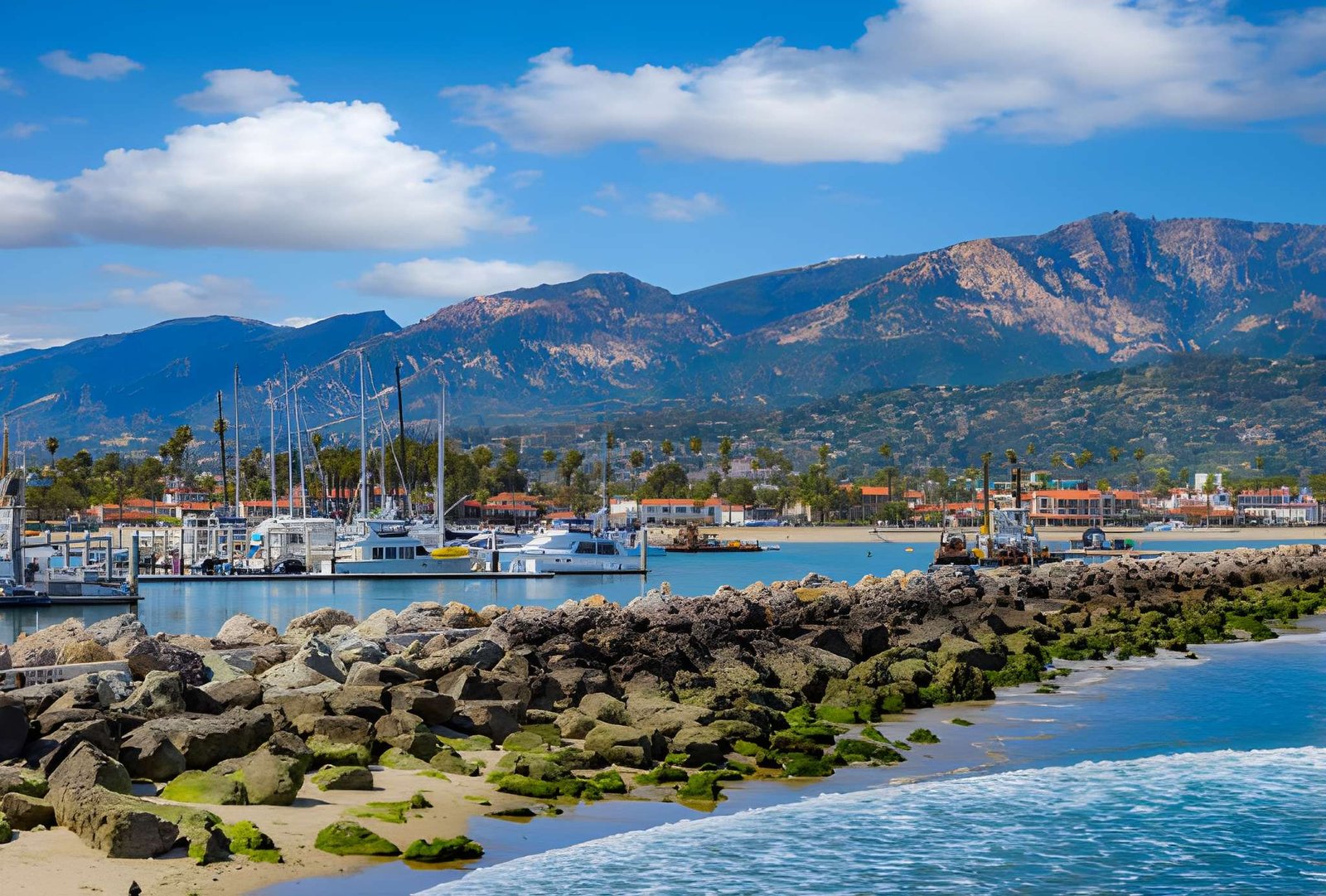
I’m watching pelicans dive-bomb for fish from Stearns Wharf at 7 AM when a couple from Seattle asks me if Santa Barbara really lives up to the “American Riviera” nickname. After visiting Santa Barbara twenty-three times over the past eleven years—from weekend wine tasting trips to month-long work stays—I can confidently say it exceeds the hype, but not for the reasons most travel guides emphasize.
Most Santa Barbara guides list the same attractions without explaining the parking reality downtown, which beaches
are worth your time versus overcrowded tourist traps, or how to experience this elegant coastal city without spending $200 per person on dinner. This complete guide provides 25 tested Santa Barbara activities with specific timing strategies, honest restaurant recommendations, parking tactics that actually work, and real budget breakdowns. Whether you’re planning a weekend escape from Los Angeles or a week exploring California’s Central Coast, you’ll discover everything from Spanish colonial architecture to world-class wine tasting, pristine beaches to hidden hiking trails—all within this remarkably walkable city.
Understanding Santa Barbara’s Layout
Santa Barbara stretches along eight miles of south-facing coastline where the Santa Ynez Mountains create a natural amphitheater overlooking the Pacific. This unusual east-west coastline (most of California faces west) means Santa Barbara enjoys protected beaches with calmer water and more sunshine than communities farther north.
Downtown centers on State Street, which runs perpendicular to the coast for about twelve blocks from the beach to the Mission. Everything between the beach and Highway 101 is exceptionally walkable—you can stroll from Stearns Wharf to the Funk Zone to downtown shops without moving your car. The city’s Spanish colonial revival architecture creates visual harmony with white stucco buildings, red tile roofs, and flowering bougainvillea cascading over courtyards.
Montecito sits just east of Santa Barbara proper and brings serious wealth—this is where Oprah, Ellen, and various tech billionaires own estates. You’ll find exclusive beaches, high-end shopping, and the kind of casual elegance where people wear $400 sandals to the farmers market. West of downtown, the neighborhoods become more residential until you reach Hope Ranch and Goleta, home to UC Santa Barbara.
The weather here operates on what locals call “perpetual spring.” Expect 70-75°F most days year-round, though morning fog (“May Gray” and “June Gloom”) can linger until noon during late spring and early summer. Santa Barbara averages 283 sunny days annually, which explains why outdoor dining and beach time dominate the culture.
The Best Things to Do in Santa Barbara
Beaches and Coastal Activities
East Beach
East Beach is Santa Barbara’s most popular beach for good reason—it offers the best combination of soft sand, gentle waves, nearby amenities, and that quintessential Santa Barbara vibe. The mile-long beach stretches from Stearns Wharf east toward Montecito, backed by palm-tree-lined Cabrillo Boulevard and the extensive bike path.
The sand quality here surpasses most Southern California beaches, and the protected harbor means waves stay manageable for swimming and paddleboarding. Volleyball courts draw serious players and casual games throughout summer. The gentle slope makes it perfect for families with young children who can wade safely in the shallows.
What really elevates East Beach is the setting. The Santa Ynez Mountains rise dramatically behind the city, creating spectacular morning light when the sun hits those peaks. Palm trees provide shaded picnic spots, and the adjacent Chase Palm Park offers grassy areas, an antique carousel, and a shipwreck-themed playground that delights kids.
Parking fills quickly on summer weekends. The Cabrillo Boulevard lots charge $3 per hour with a $12 daily maximum, but street parking along Cabrillo is free with a 90-minute limit. Arrive before 9 AM on weekends or after 3 PM when the lunch crowd clears. Weekdays remain much quieter.
The beach sits directly across from many downtown hotels, making it incredibly convenient. You can grab morning coffee on State Street, spend hours at East Beach, then shower and walk to dinner without needing your car. Restrooms, outdoor showers, and a beach equipment rental kiosk provide everything needed for a full beach day.
Butterfly Beach
Butterfly Beach in Montecito offers Santa Barbara’s most refined beach experience—quieter, prettier, and favored by locals over the more tourist-heavy downtown beaches. This intimate crescent of sand rarely sees crowds despite being one of the area’s most beautiful spots.
The beach faces directly south, making it spectacular for both sunrise and sunset photography. Calm water and gentle waves create ideal conditions for swimming, though the water stays chilly year-round like all Santa Barbara beaches. At low tide, tide pools appear at the western end where kids can explore marine life.
Butterfly Beach earned its celebrity reputation honestly—it sits directly across from the Four Seasons Biltmore and various celebrity estates. You might spot someone famous walking their dog at sunrise, though locals maintain a respectful “pretend you don’t notice” attitude that keeps it low-key.
Parking is straightforward but limited. A small free lot holds maybe thirty cars and fills by mid-morning on weekends. Additional free street parking lines Channel Drive. The lack of facilities (no restrooms, no showers, no food vendors) keeps crowds manageable. Bring what you need for the day because the nearest cafe is a half-mile walk.
The best time to visit is early morning before 9 AM or the final two hours before sunset. Morning brings glassy water perfect for paddleboarding, while evening delivers that golden light that makes every phone photo look professionally shot. Weekdays outside summer see surprisingly few visitors even at peak times.
Arroyo Burro Beach (Hendry’s)
Arroyo Burro Beach, universally called Hendry’s by locals, is where Santa Barbara residents actually go to beach. Located about two miles west of downtown, it offers a more relaxed vibe than the tourist-heavy beaches near State Street, plus the bonus of being dog-friendly.
The beach features soft sand, decent surf for bodyboarding, and a creek mouth where kids can play in calmer water. Rock formations at both ends create tide pools worth exploring at low tide. The beach stretches for about a half-mile with plenty of space to spread out even on busy summer days.
What makes Hendry’s special is The Boathouse restaurant sitting right on the beach. This casual spot serves excellent breakfast and lunch with indoor and outdoor seating offering water views. The huevos rancheros are legendary among locals, and sitting on the patio with coffee watching waves and dogs playing feels quintessentially Santa Barbara.
Parking is free in the large lot, though it fills on summer weekends and sunny winter weekends when locals escape to the beach. Restrooms, outdoor showers, and grassy picnic areas with tables and grills make this ideal for extended beach days. The dog-friendly policy means you’ll see every breed imaginable running in the surf.
Hendry’s sits at the base of a residential neighborhood, creating a more local feel than downtown beaches. You won’t find t-shirt vendors or tourists asking strangers to take their photos here. It’s where Santa Barbara families bring their kids on Saturday mornings and where locals walk their dogs at sunset. That authentic neighborhood beach vibe is increasingly rare along California’s coast.
Stearns Wharf
Stearns Wharf extends a quarter-mile into Santa Barbara Harbor, making it California’s oldest operating wooden wharf since 1872. Unlike many touristy piers, Stearns Wharf balances history, working fishing boats, and visitor attractions without feeling too commercialized.
Walking the wharf takes about twenty minutes end-to-end at a leisurely pace. You’ll pass seafood restaurants, a wine tasting room, an ice cream shop, and the Ty Warner Sea Center (an excellent small aquarium perfect for kids). The real pleasure is watching pelicans perch on pilings, sea lions swim in the kelp beds below, and fishing boats unload their catch.
The Santa Barbara Shellfish Company at the end of the wharf serves the freshest seafood you’ll find in Santa Barbara. It’s casual counter-service with outdoor picnic tables, and you’re eating fish that was swimming yesterday. The clam chowder and grilled fish tacos are exceptional. Go early for lunch or late afternoon to avoid the midday rush.
Parking on the wharf itself costs $2.50 per hour with a $20 daily maximum, but the first 75 minutes are free if you get validation from any wharf business. Most visitors validate at Santa Barbara Shellfish Company or the wine tasting room, making a lunch stop essentially provide free parking. The wharf parking lot holds about fifty cars and turns over quickly since most visits last an hour or two.
Sunrise and sunset from the end of the wharf are genuinely special. Morning brings fishermen unloading the night’s catch while pelicans swoop hoping for scraps. Evening bathes the mountains in golden light while the city lights begin twinkling. The wharf’s elevation provides perspectives you can’t get from the beach itself.
Wine Tasting Experiences
The Funk Zone Urban Wine Trail
The Funk Zone transformed from a gritty warehouse district into Santa Barbara’s hippest neighborhood over the past decade. Today, two dozen wineries operate tasting rooms in converted industrial spaces alongside craft breweries, art galleries, and restaurants. It’s become the most fun way to taste Santa Barbara County wines without driving to wine country.
This is urban wine tasting at its best. Walk between tasting rooms housed in corrugated metal buildings decorated with street art. Most rooms offer casual atmospheres where you can taste standing at a bar rather than sitting at formal tables. Prices range from $20-35 for five-wine flights, comparable to Napa but without the pretension.
My favorite tasting rooms include Municipal Winemakers for innovative natural wines, Grassini Family Vineyards for elegant Bordeaux-style reds, and Riverbench for excellent chardonnay and pinot noir. But honestly, every winery in the Funk Zone produces quality wines—Santa Barbara County has become one of California’s most exciting wine regions.
The Funk Zone sits between State Street and the harbor, making it walkable from downtown hotels. Park once (try the free waterfront lot near the harbor if you arrive early) and spend an afternoon meandering between tasting rooms. Most people visit 3-4 rooms over three hours, which allows time to sit at the sidewalk tables between stops.
Food trucks and casual restaurants throughout the Funk Zone mean you can easily combine wine tasting with lunch or dinner. The Lark, housed in a historic fish market, serves exceptional farm-to-table fare and has become Santa Barbara’s most acclaimed restaurant. Reservations are essential weeks ahead for dinner, though the bar serves the full menu for walk-ins.
Wine Tasting in Santa Ynez Valley
If you want traditional winery experiences with vineyard views, the Santa Ynez Valley sits just 35 minutes north of Santa Barbara over the San Marcos Pass. This region produces the wines you’re tasting in the Funk Zone, and visiting the actual vineyards adds context and beauty to the experience.
The valley contains over 120 wineries spread across several micro-regions. The Santa Rita Hills appellation (technically in the valley despite the name) grows exceptional pinot noir and chardonnay in the cool, fog-influenced climate. Los Olivos offers concentrated winery tasting rooms in a walkable village. Solvang provides Danish-themed tourist charm alongside serious wine tasting.
Don’t attempt to drive yourself if you’re seriously wine tasting. The mountain roads and Highway 101 require sober drivers, and DUI checkpoints are common. Several companies offer group wine tours from Santa Barbara hotels, or hire a private driver for a more personalized experience. Tours typically visit 3-4 wineries over 5-6 hours and cost $150-250 per person including transportation and some tasting fees.
My recommended wineries include Sanford for pioneering Santa Rita Hills pinot noir, Alma Rosa for organic wines from the Sta. Rita Hills, and Presqu’ile for stunning architecture and world-class chardonnay and pinot noir. Many wineries require reservations, especially on weekends, so plan ahead rather than showing up randomly.
The full-day wine country excursion works best when combined with lunch in Los Olivos or Solvang. Sides Hardware and Shoes in Los Olivos serves excellent California cuisine in a converted hardware store, while Avant Tapas in Los Olivos offers shareable plates perfect for groups. Budget $50-80 per person for a nice lunch with wine.
Historic and Cultural Sites
Old Mission Santa Barbara
The Old Mission Santa Barbara, founded in 1786, stands as the most beautiful of California’s 21 missions and the only one continuously operated by Franciscan friars since its founding. Known as the “Queen of the Missions,” it dominates a hillside perch overlooking the city with its iconic twin bell towers.
The mission’s Spanish Colonial architecture showcases remarkable craftsmanship in its sandstone facade, hand-painted murals, and rose gardens. Self-guided tours take you through the church (still an active parish), museum displaying Chumash and Spanish artifacts, cemetery, and multiple courtyards where fountains bubble and roses bloom year-round.
The museum section provides historical context about the mission system, Spanish colonization, and the Chumash people who built the mission under Franciscan direction. This history is complex and often troubling—the missions represented both religious conversion and cultural subjugation. The museum handles this history more honestly than many missions, acknowledging the difficult realities alongside the architectural achievements.
Visiting takes 60-90 minutes depending on your interest in history. Admission costs $15 for adults, $13 for seniors, and $10 for children (5 and under free). The mission opens daily from 9 AM to 5 PM, with mass celebrated daily if you’re interested in experiencing the church as an active religious site rather than just a museum.
The hilltop location provides excellent Santa Barbara views from the mission grounds and adjacent cemetery where many prominent early California residents are buried. The rose garden in front of the mission blooms brilliantly from April through October and frames that iconic twin-tower photo everyone takes.
Weekend visits occasionally encounter weddings that limit access to the church, though the museum and grounds remain open. Weekday mornings offer the most peaceful visits with fewer tour groups. Free parking is available in the mission lot, making this one of Santa Barbara’s easiest major attractions to visit.
Santa Barbara County Courthouse
The Santa Barbara County Courthouse might be the most beautiful government building in America, and it’s free to visit. Completed in 1929 in Spanish Colonial Revival style, this working courthouse functions as both government office and de facto tourist attraction due to its exceptional architecture.
The building showcases hand-painted murals, ornate tiles, wrought iron details, sunken gardens with fountains, and a clock tower offering panoramic city views. You can wander freely through the public areas, admiring the assembly room with its massive mural depicting Santa Barbara’s history, or relaxing in the Sunken Garden courtyard where fountains gurgle beneath archways.
The 85-foot El Mirador clock tower is the highlight. Climb the stairs (or take the elevator) to the observation deck for 360-degree views encompassing the city, ocean, Channel Islands, and mountains. It’s Santa Barbara’s best vantage point, and unlike many observation decks, it’s free and rarely crowded.
The courthouse remains an active government building, so you might encounter real trials, marriage license applications, and county business alongside tourists snapping photos. This working function adds authenticity—it’s not a preserved museum but a living piece of Santa Barbara’s civic life.
Guided tours run Monday-Saturday at 2 PM from the main entrance (check for current schedule). The docents share fascinating stories about the building’s construction, architectural details, and historical significance. Tours last about an hour and are free, though tips are appreciated.
Visiting takes 45-90 minutes depending on whether you’re just viewing the building or taking the full tour and climbing the tower. The courthouse opens weekdays from 8 AM to 5 PM and weekends from 10 AM to 5 PM. Free parking is available in city lots nearby with the standard 75 minutes free, then $3 per hour.
Weddings happen almost daily in the gorgeous Mural Room or Sunken Garden, especially on Saturdays. If you encounter a wedding, respectfully view other parts of the building and return afterward. The joy on couples’ faces getting married in such a spectacular setting is actually quite charming to witness.
Outdoor Adventures and Activities
Hiking to Inspiration Point
Inspiration Point offers Santa Barbara’s most accessible rewarding hike—a 3.5-mile round trip climbing to a viewpoint overlooking the entire city, coast, and Channel Islands on clear days. The trail rewards relatively modest effort with spectacular panoramas.
The trailhead starts in the parking lot behind the Santa Barbara Mission. From there, the path switchbacks steadily upward through coastal sage scrub and occasional oak groves, gaining about 800 feet of elevation over 1.75 miles. It’s a workout but never overwhelmingly steep, and the trail surface is well-maintained dirt path.
The actual Inspiration Point viewpoint sits at a rock outcropping where most hikers rest, snap photos, and turn around. The city spreads below with the harbor, Stearns Wharf, and downtown all visible. On exceptionally clear days (typically late fall through early spring after Santa Ana winds), you can see all five Channel Islands and sometimes even Point Conception 40 miles west.
Many hikers continue past Inspiration Point on the Jesusita Trail, which extends several more miles up toward the crest of the Santa Ynez Mountains. This extended route offers solitude and even better views but requires significantly more time and energy. Unless you’re a serious hiker, Inspiration Point provides the best view-to-effort ratio.
Start early in summer since the trail offers minimal shade and south-facing slopes get hot by midday. Winter and spring bring green hillsides and occasional wildflowers. The golden-brown summer landscape has its own beauty, though most visitors prefer the greener seasons.
Bring plenty of water (no sources on trail), sunscreen, a hat, and your camera. The parking lot behind the mission holds about thirty cars and fills on weekends by 8 AM. If full, park at the mission’s main lot and walk the extra five minutes to the trailhead.
Kayaking in the Santa Barbara Harbor
Santa Barbara’s protected harbor and kelp forests create ideal kayaking conditions with calm water, abundant marine life, and scenic coastal views. Multiple outfitters near the harbor offer kayak rentals and guided tours that get you out on the water without requiring experience.
Kayaking the harbor allows close encounters with sea lions, harbor seals, sea otters, and countless seabirds. Paddle through kelp beds where fish dart beneath your boat and otters wrap themselves in kelp while floating on their backs eating urchins. The calm conditions make this perfect for beginners or families with children.
Guided tours last 2-3 hours and cost $60-80 per person, including all equipment and instruction. Tours typically paddle from the harbor out along West Beach, through kelp forests, and around Stearns Wharf before returning. Guides point out wildlife and share information about the harbor’s ecology and history.
Self-guided kayak rentals run about $18-30 per hour for singles or $25-45 per hour for tandem kayaks. Most rental shops sit right at the harbor near the breakwater. You can paddle at your own pace, though staff will brief you on safety and where to go. Solo rentals work best for those with kayaking experience.
The best kayaking happens during morning hours when winds are lightest and water is calmest. Afternoons can bring breezes that create chop, making paddling more challenging. Summer offers the warmest conditions, though Santa Barbara’s mild climate makes kayaking pleasant year-round except during winter storms.
No reservation is typically needed for rentals, but guided tours book up on summer weekends. Call ahead or reserve online if you’re planning a specific day. Wear clothes you don’t mind getting wet and bring sunscreen—the water reflection intensifies sun exposure.
Channel Islands National Park Day Trip
Channel Islands National Park protects five rugged islands off Santa Barbara’s coast, offering California’s best accessible wilderness experience and wildlife viewing. Day trips from Santa Barbara harbor provide extraordinary adventures without the logistics of overnight camping.
Island Packers runs daily boats to the islands from spring through fall, with reduced winter service. The most popular trips go to Santa Cruz Island, the largest and most accessible island, offering hiking, snorkeling, sea cave kayaking, and wildlife viewing. The boat ride takes about an hour each way.
On Santa Cruz Island, you can hike to Cavern Point for spectacular views, explore the island’s grasslands where island foxes roam, or join a kayaking tour through massive sea caves. The channel waters support an incredible concentration of marine mammals—spotting dolphins, sea lions, seals, and migrating gray whales during the boat crossing is virtually guaranteed.
Day trip packages range from $65 for the basic boat transportation to $185 for trips including guided kayaking through the sea caves. Most visitors spend 4-6 hours on the island, giving enough time for a hike and lunch before the return boat. The full day adventure lasts about 8 hours including boat time.
This is one of Santa Barbara’s most memorable experiences, but it requires planning. Book at least 2-4 weeks ahead for summer weekends, though weekdays may have availability closer to your dates. The boat ride can be rough depending on conditions, so take seasickness medication if you’re prone to motion sickness.
Pack layers since island weather often differs from mainland conditions. Bring lunch and plenty of water (limited services on islands), sunscreen, and a waterproof bag for cameras. The natural beauty and wildlife encounters rival anywhere in California, and you’ll have stories and photos most Santa Barbara visitors miss entirely.
Arts, Shopping, and Dining
State Street Shopping and Dining
State Street is Santa Barbara’s main artery, running from the beach uphill toward the mission for about twelve blocks of shops, restaurants, galleries, and entertainment. Unlike many downtown shopping districts, State Street has maintained its Spanish colonial architecture and pedestrian-friendly feel.
The shopping ranges from familiar national chains to local boutiques selling coastal-chic clothing, art galleries, bookstores, and specialty food shops. Paseo Nuevo, an outdoor shopping center at State and Canon Perdido, houses the usual mall stores but does so in attractive Spanish-style architecture that doesn’t feel generic.
State Street really shines for dining and cafes. You’ll find everything from casual taco shops and cafes to upscale restaurants serving California cuisine. Jeannine’s serves breakfast and lunch in a bright, tile-decorated space and always has a wait on weekends for their famous omelets. The Palace Grill delivers excellent Cajun food in a lively atmosphere that feels transported from New Orleans.
For coffee, Handlebar Coffee Roasters in the Funk Zone (just off lower State) serves the best espresso drinks and has a hip, welcoming vibe perfect for lingering. They roast their own beans and take coffee seriously without being pretentious about it.
Walking the full length of State Street from beach to mission takes about 30 minutes at a purposeful pace, though most visitors concentrate on the lower eight blocks between the beach and De la Guerra Street. This section offers the best concentration of shops, restaurants, and people-watching.
Street musicians, festivals, and a weekly farmers market on Saturdays bring energy to State Street. The Saturday farmers market particularly deserves a visit—high-quality produce, prepared foods, flowers, and a genuine community gathering rather than just a tourist attraction. It runs 8:30 AM to 1 PM at State and Cota.
Parking on State Street itself is limited to metered spots with time limits. The smarter approach is parking in one of the city lots just off State Street—all offer 75 minutes free, then $3 per hour after that. Park once and walk State Street rather than moving your car repeatedly.
Santa Barbara Museum of Art
The Santa Barbara Museum of Art punches well above its weight for a city of this size, housing an impressive permanent collection and hosting notable traveling exhibitions. It’s Santa Barbara’s cultural anchor and worth a few hours on a foggy morning or hot afternoon.
The permanent collection includes ancient Mediterranean art, Asian art, 19th and 20th century European paintings, American art, photography, and contemporary works. The museum particularly excels in its collection of antiquities and its holdings of American regional paintings. The scale is manageable—you can see the highlights in 90 minutes or spend half a day exploring in depth.
Traveling exhibitions range from impressionist painters to contemporary photography, bringing museum-quality shows that would typically require trips to Los Angeles or San Francisco. Check the current exhibition before visiting since these special shows often justify the entire visit.
Admission costs $10 for adults and includes entrance to current exhibitions. The museum offers free admission every Thursday after 5 PM and free for everyone on the first Sunday of each month. If you’re budget-conscious, timing your visit for free admission makes sense.
The museum occupies a former department store building right on State Street, making it easily accessible while shopping or dining downtown. The adjacent café serves light lunch fare and excellent coffee, perfect for a break between galleries. Museum members can eat here without paying admission.
Allow 1-2 hours for a focused visit or 2-3 hours if you’re a museum enthusiast who reads every label. The museum opens Tuesday-Sunday from 11 AM to 5 PM and closes on Mondays. City lot parking nearby offers 75 minutes free.
MOXI: The Wolf Museum of Exploration and Innovation
MOXI brings interactive science and creativity to Santa Barbara in a three-story museum designed to spark curiosity in kids and adults alike. Opened in 2017, it’s become Santa Barbara’s best rainy-day activity and engages families better than anywhere else in the region.
The museum focuses on hands-on experiences rather than static displays. You can build structures that withstand simulated earthquakes, create musical compositions, explore light and sound through interactive exhibits, design and race cars, and experiment with dozens of other science and technology concepts. The third-floor rooftop features the Sky Garden with a giant music wall and other outdoor interactive installations.
What makes MOXI special is its appeal across age ranges. The exhibits engage 5-year-olds building towers from foam blocks and 50-year-olds exploring acoustics equally well. This isn’t a children’s museum that adults tolerate—it’s genuinely interesting and fun for all ages.
Admission costs $20 for adults, $17 for children 3-17, and free for kids under 3. Allow at least 2-3 hours since there’s enough to explore that rushing feels wasteful. The museum gets packed on rainy days and weekends during school breaks, so visiting weekday mornings provides the best experience.
MOXI sits right at the base of State Street near the waterfront in a striking building you can’t miss. The location makes it easy to combine with lunch on State Street or a walk to Stearns Wharf afterward. City parking lots nearby offer the standard 75 minutes free.
More Santa Barbara Experiences
Montecito and the Coral Casino
Montecito represents Santa Barbara’s wealth and exclusivity taken to the extreme. This upscale community just east of Santa Barbara proper houses celebrities, tech billionaires, and old California money in sprawling estates hidden behind hedges and gates.
The best way to experience Montecito is driving or walking the Butterfly Beach area along Channel Drive. You’ll pass the Four Seasons Biltmore, one of California’s grand resort hotels, and spot glimpses of magnificent estates. The Coral Casino Beach and Cabana Club, visible from Butterfly Beach, is Montecito’s exclusive beach club where wealthy residents and hotel guests access a private beach, pool, and facilities.
Coast Village Road serves as Montecito’s downtown, offering upscale boutiques, home decor shops, and restaurants catering to the area’s affluent residents. Window shopping here reveals another side of California wealth—the kind where $300 children’s dresses and $2,000 throws are displayed as everyday purchases.
Pierre Lafond Deli and Wine Merchant on Coast Village Road makes a perfect lunch stop. This local institution serves excellent sandwiches, salads, and pastries in a casual counter-service setting. Grab food and eat at outdoor tables while watching Bentleys and Range Rovers cruise past.
Lotusland, a spectacular 37-acre garden estate, offers the best actual Montecito attraction. This is one of the world’s finest private gardens, featuring collections of palms, cacti, cycads, and exotic plants arranged in stunning landscapes. Reservations are required months ahead, and tours are limited, but garden enthusiasts consider it unmissable. Admission is $55 for adults.
The reality is that Montecito works better as a scenic drive and lunch outing rather than a destination with specific attractions. The allure is seeing how California’s elite live and experiencing a completely different vibe from downtown Santa Barbara’s accessible tourism.
Santa Barbara Zoo
The Santa Barbara Zoo offers a more intimate zoo experience than massive urban zoos, making it perfect for families with young children or anyone wanting a few pleasant hours among animals in beautiful surroundings. The zoo sits on 30 acres overlooking the Pacific Ocean—most zoo animals don’t get ocean views.
The compact size means you can easily see everything in 2-3 hours without exhausting feet or attention spans. Animals from around the world include elephants, lions, gorillas, penguins, and Californian species like condors and sea lions. The California Trails section focuses on native species and habitats, providing educational context about local ecosystems.
What sets this zoo apart is its setting and atmosphere. Ocean breezes cool even hot summer days, and many exhibits offer views of the coastline along with the animals. The zoo maintains beautiful grounds with mature trees providing shade and flowers blooming year-round. It feels more like a botanical garden with animals than a concrete urban zoo.
Admission costs $22 for adults, $17 for children 2-12, and free for kids under 2. Parking is free in the zoo lot. The zoo opens daily from 10 AM to 5 PM, with extended summer hours. Weekday mornings are ideal for seeing active animals and avoiding weekend crowds.
The zoo is located between the beach and downtown, making it simple to combine with other Santa Barbara activities. Many families do mornings at the zoo followed by lunch and beach time. The Ridley-Tree Restaurant inside the zoo serves decent casual food with ocean-view seating.
Drive or Bike Cabrillo Boulevard
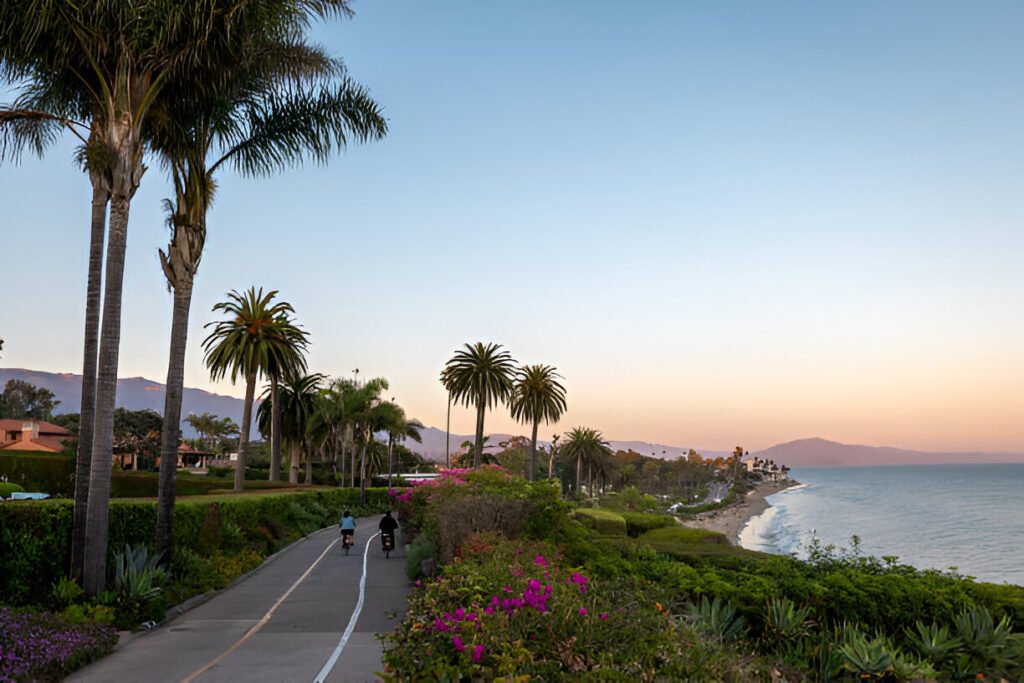
Cabrillo Boulevard runs for four miles along Santa Barbara’s coastline from the harbor past East Beach, providing one of California’s most beautiful beach drives. But the real pleasure is biking this route on the dedicated path that parallels the road.
The Cabrillo Bike Path offers completely flat, paved cycling through palm trees, along beaches, past the harbor, and through waterfront parks. Multiple bike rental shops near the harbor and beach rent beach cruisers, electric bikes, and specialty cycles for $12-35 per hour or $30-80 for full-day rentals. Many visitors rent surreys (those four-wheeled pedal contraptions) that fit whole families.
Cycling Cabrillo at a relaxed pace takes about 45 minutes from the harbor to the bird refuge and back. Most visitors ride shorter sections, stopping frequently at beaches, the wharf, and various lookout points. The path connects to inland bike routes extending throughout the city, allowing longer rides for serious cyclists.
Sunday mornings are ideal for cycling when families and couples cruise the path but traffic remains light. Weekday afternoons work well too. Summer weekends see the most congestion with tourists on rental bikes, though it never feels unmanageably crowded.
The path provides excellent people-watching—surfers heading to breaks, beach volleyball players, rollerbladers, families with kids in bike trailers, and everyone else enjoying Santa Barbara’s coastal lifestyle. For capturing the city’s active, outdoorsy culture, few experiences work better than cruising Cabrillo on a bike with the ocean on one side and Santa Ynez Mountains on the other.
When to Visit Santa Barbara
Santa Barbara enjoys remarkably consistent weather year-round, making it a rare destination where there’s genuinely no bad time to visit. That said, different seasons offer distinct advantages.
Late spring and early summer (May-July) bring “May Gray” and “June Gloom”—marine layer fog that often doesn’t burn off until afternoon. If you’re focused on beach time, this can frustrate. However, these months offer lower accommodation rates, smaller crowds, and perfect temperatures for hiking and wine tasting. Once the fog clears, afternoons are gorgeous.
Summer and early fall (August-October) deliver the clearest, warmest weather. September particularly offers exceptional conditions with the warmest ocean temperatures of the year (still only 60-65°F but less shocking), minimal fog, and that perfect California summer feeling. This is peak season with corresponding crowds and highest lodging rates.
Late fall and winter (November-March) bring occasional rain and cooler temperatures but maintain that mild California climate most of the country envies. Daytime temperatures stay in the 60s, sunshine remains frequent, and winter storms are brief. This is Santa Barbara’s best-value season with lodging rates 30-40% lower than summer.
Spring (March-May) combines green hillsides, blooming wildflowers, and pleasant temperatures. The Saturday farmers market particularly shines in spring with exceptional produce. Gray whale migration brings cetaceans offshore, and hiking conditions are ideal before summer heat arrives.
For budget-conscious travelers, November through March offers the best lodging values. For weather reliability, September and October are unbeatable. For avoiding crowds while maintaining good weather, late April through May or mid-September through October hit the sweet spot.
How Long to Stay in Santa Barbara
A weekend (two nights) allows you to hit major highlights—State Street, a few beaches, wine tasting, the mission, and perhaps one outdoor adventure. This gives you a feel for Santa Barbara but leaves plenty undiscovered.
Three to four days provides the ideal first visit. You can explore downtown thoroughly, visit multiple beaches, take a Channel Islands day trip, spend half a day wine tasting, hike to Inspiration Point, and still have time to relax rather than rushing between attractions. This timeframe lets Santa Barbara’s laid-back pace work its magic.
A week supports deeper exploration including day trips to wine country, more ambitious hikes, kayaking, museum visits, and simply enjoying that “living like a local” pace where you claim a favorite morning coffee spot and evening beach walk. Week-long stays work particularly well in shoulder seasons when lodging rates drop but weather remains excellent.
Santa Barbara also functions as an excellent base for exploring the Central Coast. Drive south to see Hearst Castle and Morro Bay, or north to Los Olivos and Solvang wine country. The city’s location midway between Los Angeles and Big Sur makes it a natural stopping point on Pacific Coast Highway road trips.
Where to Stay in Santa Barbara
Your Santa Barbara accommodation choice significantly impacts your experience since the city spreads several miles from Goleta to Montecito.
Downtown near State Street offers maximum walkability to restaurants, shops, and entertainment. You can explore without moving your car after checking in. East Beach sits within a few blocks, making beach walks easy. Downtown hotels range from budget chains to upscale boutiques.
The Harbor and Funk Zone area provides proximity to waterfront activities, wine tasting rooms, and trendy restaurants. This neighborhood has become Santa Barbara’s hippest area with a more urban, energetic vibe than downtown proper. Several newer boutique hotels cater to younger travelers seeking style and scene.
Montecito delivers luxury and exclusivity with hotels like the Four Seasons Biltmore and San Ysidro Ranch, plus vacation rentals in residential areas. Expect to pay premium rates for the privilege of a Montecito address. You’ll need a car since Montecito spreads out without concentrated walkable areas.
West Beach and the Mesa neighborhood offer more residential feels with vacation rentals and smaller hotels. These areas cost less than downtown or Montecito while maintaining beach access and requiring short drives to restaurants and attractions.
Budget travelers should look at hotels along upper State Street or in Goleta. These lack walkability to downtown but offer significantly lower rates. Quality varies widely, so read recent reviews carefully. Some perfectly serviceable chain hotels cost $120-180 per night compared to $300-600 downtown.
Book at least 2-3 months ahead for summer weekends. Fall and spring weekends need 4-6 weeks advance booking. Winter weekdays can sometimes be booked last-minute with decent rates. Always check cancellation policies since Santa Barbara weather rarely forces trip changes, but Highway 101 closures during major storms occasionally happen.
Getting Around Santa Barbara
Downtown Santa Barbara is exceptionally walkable, and most visitors park once at their hotel and walk everywhere for the duration of their stay. State Street, the beaches, Funk Zone, and waterfront all connect via pleasant 10-20 minute walks.
The city parking system offers 75 minutes free in all public lots, then charges $3 per hour after that. Lots sit just off State Street every few blocks. This system works perfectly for popping in for lunch or shopping, then moving your car to the next lot for continued exploration. All-day parking costs around $12-15 in city lots.
Street parking along most downtown streets has meters limiting stays to 90 minutes or two hours. Enforcement is consistent, and tickets run $50-75. If you’re staying longer than the limit, use a parking lot instead of risking tickets.
The Santa Barbara MTD bus system provides comprehensive service throughout the city with downtown trolleys running up and down State Street every 10-15 minutes. The waterfront shuttle connects the harbor to major beach access points. Fares are $1.75 per ride or $5 for an all-day pass. This works well for travelers without cars or those wanting to skip parking hassles.
Biking works excellently for exploring the beachfront and flat areas. Multiple shops rent bikes, and the extensive bike path system connects most coastal areas. Hilly downtown and steep neighborhoods heading toward the mountains are less bike-friendly unless you’re fit or rent an electric bike.
Uber and Lyft operate throughout Santa Barbara with typical availability and pricing. A ride from downtown to Montecito runs $15-20, while trips to the airport in Santa Barbara or Goleta cost $20-30.
Wine tasting in town is walkable in the Funk Zone. If you’re visiting actual wineries in the Santa Ynez Valley, don’t drive yourself if you’re seriously tasting. Tours, hired drivers, or designated drivers are essential on those winding mountain roads.
Budget Breakdown for Santa Barbara
Santa Barbara isn’t cheap, but you can visit at different price points depending on lodging and dining choices.
Weekend Trip (2 nights, budget approach):
- Hotel: $240-360 (chain hotel at $120-180/night)
- Meals: $120-180 per person (mix of casual spots and groceries)
- Activities: $40-60 per person (museum, state parks, beach – mostly free)
- Parking: $20-30
- Gas/transportation: $20-40
- Total: $440-670 per couple
Weekend Trip (2 nights, mid-range):
- Hotel: $500-800 (downtown hotel at $250-400/night)
- Meals: $250-350 per person (nice breakfast spots, good lunches, one upscale dinner)
- Activities: $100-150 per person (wine tasting, kayaking, museum)
- Parking: $30-40
- Total: $1,130-1,690 per couple
Weekend Trip (2 nights, luxury):
- Hotel: $1,200-2,000 (Four Seasons Biltmore or similar)
- Meals: $350-500 per person (upscale dining all meals)
- Activities: $200-300 per person (Channel Islands, guided wine tour, spa)
- Total: $3,100-5,300 per couple
Money-saving strategies: Stay during off-season (November-March) for 30-40% lower lodging rates. Take advantage of free activities like beaches, hiking, courthouse tower, and walking State Street. Use the 75-minute free parking strategically. Eat one nice dinner out and casual meals otherwise. Visit museums on free admission days. Bring your own wine and cheese for beach picnics rather than buying everything at marked-up prices.
Where costs add up: Wine tasting fees accumulate quickly at $25-35 per person per tasting room. Upscale restaurants run $50-100+ per person with wine. Hotels downtown during summer weekends hit $300-600 per night easily. Channel Islands trips and guided wine tours cost $150-250 per person.
What to Pack for Santa Barbara
Santa Barbara’s mild, consistent weather simplifies packing, but layers remain essential since morning fog and afternoon sun create temperature swings.
Essential items:
- Light layers (cardigan or light jacket for morning fog)
- Sunscreen and sunglasses (reflected water intensifies sun)
- Comfortable walking shoes (you’ll walk several miles on State Street and beaches)
- Beach bag with towel, sunscreen, water bottle
- Casual dining clothes (Santa Barbara is relaxed even at nice restaurants)
- Hat for beach and hiking
Seasonal additions:
- Spring/Fall: Light rain jacket, long pants for evenings
- Summer: Swimsuit, beach coverup, sandals
- Winter: Warmer jacket, light sweater, closed-toe shoes for hiking
What you don’t need:
- Formal wear (even upscale restaurants are California casual)
- Winter coat (even January rarely drops below 50°F)
- Umbrella (rain is infrequent and brief)
Wine tasting wardrobe: Casual and comfortable works everywhere. Women often wear sundresses or nice jeans with tops. Men wear jeans or chinos with button-downs or polos. Nobody dresses formally for wine tasting in California.
Common Mistakes to Avoid
Staying only in downtown and missing Montecito and beaches west of the harbor. Santa Barbara spreads along the coast, and each area offers different vibes. Explore beyond State Street.
Expecting hot beach weather year-round. Santa Barbara stays mild and pleasant, but 70-75°F isn’t hot. The ocean remains cold. Bring layers for morning fog even in summer.
Not checking the parking app or lot signs. The 75-minute free parking is a gift, but exceeding it results in $3 per hour charges. Moving your car before the limit saves money.
Driving to wine country without a plan. Don’t show up at wineries randomly—many require reservations. Definitely don’t drink and drive those mountain roads.
Skipping the Channel Islands due to cost. Yes, it’s $65-185 depending on the tour, but it’s Santa Barbara’s most unique experience and rivals the best of California’s natural beauty. Budget for it.
Only visiting beaches near State Street. Butterfly Beach and Hendry’s offer better experiences than the tourist-heavy East Beach, though East Beach has its charms too.
Assuming everything is walkable from your hotel. Downtown Santa Barbara is walkable, but distances to Montecito, the zoo, wine country, and hiking trailheads require driving or rideshares.
Over-scheduling. Santa Barbara works best at a relaxed pace. An itinerary crammed with activities misses the point. Schedule downtime to simply enjoy being in this beautiful place.
Forgetting cash. While most places take cards, having $50-100 in cash helps at farmers markets, parking meters that don’t take cards, and tipping.
Visiting only on the weekend. If your schedule allows flexibility, weekdays offer smaller crowds, easier parking, better restaurant availability, and often lower hotel rates.
People Also Ask About Santa Barbara
Is Santa Barbara worth visiting?
Absolutely—Santa Barbara delivers one of California’s most complete coastal experiences with exceptional beaches, excellent dining, world-class wine tasting, Spanish colonial architecture, and that relaxed “California lifestyle” atmosphere that feels authentic rather than manufactured. After twenty-three visits over eleven years, I still discover new favorite restaurants, hidden beaches, and hiking trails.
What makes Santa Barbara worth the trip is the combination of sophistication and accessibility. You get wine tasting that rivals Napa, beaches that compete with San Diego, and dining that holds its own against Los Angeles, all in a walkable city where traffic doesn’t dominate your experience. The consistent weather means you’re unlikely to waste a day on terrible conditions.
The “American Riviera” comparison is marketing but not entirely wrong. Santa Barbara succeeds at that Mediterranean coastal town vibe better than almost anywhere in the United States. The Spanish colonial architecture, palm-lined beaches, mountain backdrop, and wine culture create a setting that genuinely feels European in the best ways.
What is Santa Barbara famous for?
Santa Barbara earned fame for its Spanish colonial architecture, particularly the Mission Santa Barbara and the County Courthouse, both stunning examples of early California’s Spanish heritage preserved and celebrated. The city rebuilt almost entirely in Spanish Colonial Revival style after a 1925 earthquake, creating the architectural harmony you see today.
The wine industry has put Santa Barbara back on the map in recent decades. The 2004 film Sideways showcased Santa Barbara County wines and sent visitors flocking to the Santa Ynez Valley. Today, the region produces exceptional pinot noir, chardonnay, and other varietals that compete with Napa and Sonoma.
Santa Barbara’s beaches and year-round perfect weather built its reputation as the American Riviera. That south-facing coastline creates protected beaches with gentler waves than most California coast, plus the unusual east-west orientation means watching the sun set over the ocean instead of the land.
The city also attracts celebrities seeking privacy outside Los Angeles. Montecito particularly houses numerous famous residents who appreciate the small-town feel and relative privacy compared to Beverly Hills. This wealthy population supports upscale restaurants, shops, and services that elevate the overall quality of what’s available.
How many days do you need in Santa Barbara?
Three days provides the ideal amount of time to experience Santa Barbara without rushing. You can explore downtown State Street, visit multiple beaches, spend half a day wine tasting in the Funk Zone, hike to Inspiration Point, tour the Mission and Courthouse, and still have time to relax over long meals and evening beach walks.
A weekend (two nights) works for hitting major highlights if that’s all your schedule allows. You’ll see downtown, a few beaches, taste some wines, and get a feel for the city. However, you’ll likely leave wishing you had more time to explore.
Four to five days lets you add a Channel Islands day trip, visit actual wine country in the Santa Ynez Valley, explore Montecito, try more restaurants, and adopt that slower pace Santa Barbara encourages. This length suits travelers who want to thoroughly understand a destination rather than just checking off attractions.
A week might seem excessive, but Santa Barbara rewards longer stays. The consistent weather and concentration of activities within an hour’s drive mean you can base here and take different day trips—wine country, Channel Islands, north to Big Sur, south to Ojai. Many visitors plan for a long weekend and then immediately start planning a longer return trip.
What is the best month to visit Santa Barbara?
September stands out as Santa Barbara’s best overall month with the clearest weather, warmest ocean temperatures, smaller crowds after Labor Day, and that perfect late-summer California feeling. The marine layer fog that plagues May and June has completely cleared, and winter rains haven’t started. Hotel rates drop slightly after summer peak.
October runs a close second, offering similar weather to September with the addition of harvest season in wine country. Wineries host events, grapes are being crushed, and the energy around wine tasting picks up. Temperatures remain in the 70s with brilliant sunshine.
May works well despite the morning fog because spring wildflowers bloom, whales migrate offshore, and lodging rates haven’t reached summer peaks. If you can tolerate fog until noon and focus on activities that don’t require beach time in the morning, May offers great value.
Avoiding July and August makes sense unless you specifically need summer vacation timing. These months bring the highest rates, largest crowds, and ironically not the clearest weather. September and October offer better conditions with fewer visitors.
Can you swim in Santa Barbara beaches?
Yes, you can swim in Santa Barbara’s beaches, though the water temperature stays cold year-round at 55-60°F even in late summer. The protected harbor and south-facing coastline create calmer conditions than most California beaches, making actual swimming more feasible than the open-ocean beaches farther north.
East Beach and Leadbetter Beach near the harbor offer the calmest, safest swimming conditions with lifeguard supervision during summer months. The gradual slope and gentle waves make them appropriate for families with children. Butterfly Beach in Montecito provides another calm swimming spot, though without lifeguards.
Most visitors wade and splash rather than seriously swimming. The cold water shocks your system even after you’ve convinced yourself it’s tolerable. Locals who swim regularly wear wetsuits. Tourists typically cool off briefly then return to sunbathing on the sand.
The beaches excel at other activities beyond swimming—beachcombing, paddleboarding, kayaking, playing volleyball, building sandcastles, and simply relaxing with a book. Santa Barbara’s beaches are genuinely beautiful and worth visiting even if you never get in the water beyond your ankles.
Is Santa Barbara expensive to visit?
Santa Barbara falls into the expensive end of California destinations, though not quite Napa or Carmel level. Hotel rates in downtown run $200-400 per night during peak season with luxury properties hitting $500-800. Restaurants charge $15-25 for casual lunches and $30-60 per entree at upscale dinner spots.
Wine tasting fees of $25-35 per person per room add up quickly if you visit multiple tasting rooms. Activities like Channel Islands trips ($65-185) and guided wine tours ($150-250) represent significant expenses. Even parking accumulates costs if you exceed the free 75 minutes.
That said, you can visit Santa Barbara on a budget by staying at hotels along upper State Street or in Goleta ($120-180 per night), eating at casual spots rather than upscale restaurants, focusing on free activities like beaches and hiking, and buying groceries for some meals. A budget weekend might cost $500-700 per couple versus $1,500-2,500 for a mid-range experience.
The expense reflects Santa Barbara’s wealthy resident population and limited commercial development that keeps supply lower than demand. You’re paying for that maintained architectural beauty, limited chain restaurants, and general exclusivity. Whether it’s worth the cost depends on your priorities and budget, but you’ll find better values elsewhere along the California coast.
What is the best area to stay in Santa Barbara?
Downtown Santa Barbara between State Street and the beach provides the best location for first-time visitors. You can walk to restaurants, shops, beaches, and the Funk Zone without moving your car. Hotels range from budget chains to boutique properties with something for most budgets.
The Funk Zone area appeals to travelers seeking a more urban, trendy vibe with wine tasting, craft breweries, and new restaurants in converted warehouse spaces. You’re right by the harbor and waterfront path but a slightly longer walk to State Street shopping. This neighborhood attracts younger visitors and couples seeking scene and energy.
Montecito suits luxury travelers and those wanting privacy and exclusivity. The Four Seasons Biltmore and San Ysidro Ranch deliver exceptional experiences, and vacation rentals in Montecito residential areas provide upscale home bases. You’ll need a car to reach restaurants and attractions.
West Beach near the harbor and mesa neighborhoods offer residential feels with lower rates than downtown but requiring short drives to restaurants. These work well for families wanting quieter surroundings or travelers on tighter budgets.
Upper State Street and Goleta hotels cost significantly less with the tradeoff of needing to drive everywhere. If you’re primarily using Santa Barbara as a base for Channel Islands, wine country, or other activities requiring driving anyway, these areas provide decent value.
How far is Santa Barbara from Los Angeles?
Santa Barbara sits approximately 95 miles northwest of Los Angeles, which translates to 90 minutes to 2.5 hours depending on traffic and your LA starting point. From downtown LA or LAX airport, expect closer to 2 hours in moderate traffic. Weekend evenings returning to LA can stretch to 3 hours when traffic backs up through Ventura and the San Fernando Valley.
The drive follows Highway 101 along the coast through Malibu, Ventura, and Oxnard. It’s genuinely scenic once you escape LA’s urban sprawl, particularly the Rincon section between Ventura and Santa Barbara where the highway hugs the coastline.
Friday afternoons heading toward Santa Barbara and Sunday evenings returning to LA represent the worst traffic times. If possible, drive mid-week or adjust timing to avoid peak congestion. Early morning departures (before 8 AM) or mid-morning (after 10 AM) skip the worst of commuter traffic.
Many LA residents treat Santa Barbara as a weekend escape destination, driving up Friday evening and returning Sunday afternoon. This makes Santa Barbara hotels and restaurants busy on weekends but creates opportunities for quieter weekday visits.
Is one day enough for Santa Barbara?
One day in Santa Barbara works as a day trip from Los Angeles but only scratches the surface of what the city offers. You can realistically visit 3-4 attractions, have a nice meal, and walk State Street or the beach. However, you’ll spend 3-4 hours driving round-trip from LA, leaving just 6-8 hours in Santa Barbara.
A typical one-day itinerary might include morning at East Beach or the harbor, lunch on State Street, afternoon wine tasting in the Funk Zone, and dinner at a waterfront restaurant before driving home. Alternatively, visit the Mission and Courthouse, walk State Street, and spend the afternoon at Butterfly Beach.
What you’ll miss in a day trip is the relaxed pace that makes Santa Barbara special. Rushing between attractions defeats the purpose. The city rewards slowing down, lingering over meals, and embracing that laid-back coastal lifestyle rather than checking off a list.
If a day trip is your only option, maximize it by arriving early (leave LA by 7 AM to beat traffic), focus on a concentrated geographic area rather than spreading across the whole region, and build in time to simply sit at a beach or cafe rather than constant movement.
For a proper Santa Barbara experience, stay at least one night and ideally two. Watching sunset from the beach, enjoying evening atmosphere on State Street, and waking up to morning coastal fog before it clears provides context that day-trippers miss entirely.
Final Thoughts: The Santa Barbara Experience
After twenty-three visits to Santa Barbara spanning every season and countless weekends turning into extended stays, I’ve learned that Santa Barbara’s magic isn’t in checking off attractions—it’s in the accumulation of small, perfect moments that somehow add up to more than their parts.
My favorite Santa Barbara memories aren’t from famous viewpoints or highly-rated restaurants, though those have their place. They’re sitting at Handlebar Coffee on a Tuesday morning watching the Funk Zone wake up. Walking Butterfly Beach at sunset when golden light hits the mountains and the whole world feels impossibly beautiful. Tasting a remarkable pinot noir at a small producer’s tasting room and talking with the winemaker for an hour. Finding that perfect lunch spot on State Street where locals eat and tourists rarely discover.
The current Santa Barbara works because the community actively maintains what makes it special. Strict architectural guidelines keep chain restaurants and generic development limited. Height restrictions prevent high-rises from blocking mountain views. The result is a city that feels preserved without feeling like a museum—it’s living, evolving, yet still recognizably Santa Barbara.
What separates good Santa Barbara visits from extraordinary ones is resisting the urge to over-schedule. Pick 2-3 things per day maximum. Spend mornings at the beach or hiking before the wine tasting begins. Leave entire afternoons unplanned for wandering State Street, discovering galleries, or just sitting with a book in a plaza. Accept that you won’t see everything, and what you miss gives you reasons to return.
The 25 activities in this guide provide structure so you don’t waste time on mediocre experiences or miss the genuinely spectacular ones. But the actual essence of Santa Barbara happens between these official attractions—in the walk from your hotel to dinner when you notice the way evening light hits the courthouse, in the unexpected conversation with a local who suggests their favorite hidden beach, in the decision to skip your afternoon plan and just sit at Butterfly Beach watching pelicans fish.
First-time visitors should hit the highlights. See the Mission, walk State Street, taste wine in the Funk Zone, and visit at least two beaches with different characters. But also build in time to discover your own Santa Barbara. Claim a morning coffee spot and return there daily. Find your favorite beach and go back to see it in different light. Try that restaurant a local recommended instead of the one with most online reviews.
Santa Barbara rewards this approach. The consistent weather means a spontaneous plan rarely gets ruined. The walkable scale means an unplanned detour doesn’t destroy your day. The concentration of quality restaurants, beaches, and activities within a few square miles means you’ll stumble onto good experiences accidentally.
After you visit once, you’ll understand why Santa Barbara maintains such fierce loyalty among returnees. It’s not because it’s the most spectacular place in California—Big Sur is more dramatic, San Diego has better surf, Napa has more prestigious wines. Santa Barbara succeeds because it balances all these elements at high quality in a setting that feels livable rather than just visitable.
Come for the beaches and Spanish colonial architecture, but stay an extra day for the mornings when fog softens everything and the afternoons when that famous California light makes every photograph look professionally lit. Taste exceptional wines but also spend time at the farmers market talking to the person growing your strawberries. Visit the obvious attractions but also take that random side street that looks interesting.
That balance between plan and spontaneity, between hitting highlights and discovering your own favorites, between being a tourist and temporarily living like a local—that’s where Santa Barbara’s magic lives. The 25 activities here provide the foundation. What you build on that foundation becomes your own Santa Barbara story.
