
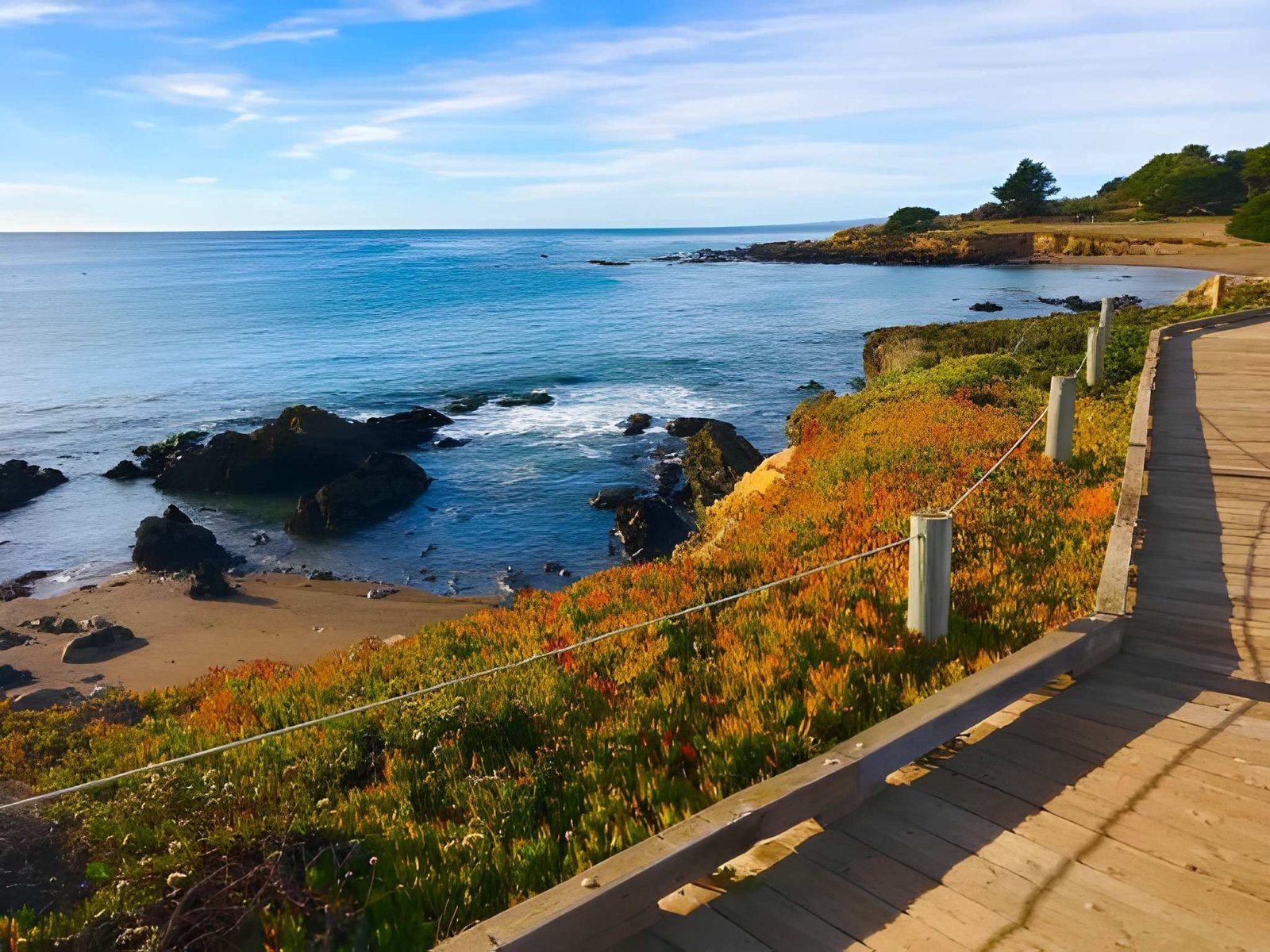
I’m walking the Moonstone Beach Boardwalk at sunset, watching waves crash against offshore rocks while actual moonstones glitter in the sand at my feet, and I’m thinking about all the travelers who speed past Cambria on their way to Big Sur or Hearst Castle without realizing what they’re missing. After visiting this Central Coast village seven times over the past five years—from quick overnight stops to week-long stays—I’ve learned that Cambria delivers that authentic California coastal experience at prices that won’t require a second mortgage.
Cambria sits along Highway 1 in San Luis Obispo County, roughly halfway between San Francisco and Los Angeles. With only 6,000 permanent residents, this village combines dramatic coastline, Monterey pine forests, Victorian architecture, excellent restaurants, and proximity to both Hearst Castle and wine country. What makes Cambria special isn’t any single attraction—it’s the combination of natural beauty, creative culture, and that slow-paced atmosphere where the biggest decision you’ll make is whether to watch sunset from the beach boardwalk or your hotel balcony.
Most people know Cambria as “that place near Hearst Castle,” which is both accurate and selling it short. Yes, the famous castle sits just eleven miles north, and yes, many visitors use Cambria purely as a convenient base for castle tours. But this village has developed its own identity—an artists’ colony vibe, a restaurant scene that punches well above its small-town size, and coastal beauty that rivals more famous destinations without the crowds or costs.
This complete travel guide shares everything I’ve learned about experiencing Cambria properly—when to visit for the best weather, where to stay from budget motels to oceanfront luxury, which restaurants actually deserve your time, what to do beyond the obvious tourist stops, and how to combine Cambria with nearby attractions for the perfect Central Coast escape.
When to Visit Cambria: Seasonal Realities and Planning
Cambria’s coastal location creates relatively stable temperatures year-round, but seasonal differences matter more than you might expect.
Spring in Cambria, particularly late February through May, represents my favorite visiting season. The hills surrounding town turn impossibly green after winter rains, creating a landscape dramatically different from summer’s brown grasslands. Wildflowers bloom throughout Fiscalini Ranch Preserve and along coastal bluffs. Temperatures range from the mid-50s to mid-60s, perfect for hiking and beach walks without overheating.
The weather during spring can be unpredictable. You might get gorgeous sunny days perfect for exploring, or you might encounter cool, overcast conditions with occasional drizzle. I’ve experienced both during April visits—one year we hiked in t-shirts under blue skies, another we spent afternoons by the fireplace reading while rain drummed outside. This uncertainty keeps spring crowds moderate compared to summer, but it also means you need flexible expectations and layered clothing.
Summer brings the biggest crowds to Cambria, particularly on weekends when Los Angeles and Bay Area visitors descend on the Central Coast. Temperatures stay comfortable—usually in the 60s near the coast—but morning fog is common and can persist through early afternoon. Unlike Paso Robles just thirty miles inland where summer temperatures exceed 95 degrees, Cambria stays cool and often cloudy.
Despite the fog, summer has advantages. All businesses operate at full capacity with extended hours. The longer daylight allows earlier morning beach walks and later evening explorations. Cambria’s Scarecrow Festival in October draws crowds, but summer weekends see consistent tourism that keeps restaurants and shops bustling. If you don’t mind fog and can accept that “beach day” might mean walking rather than sunbathing, summer works fine.
Fall, specifically September through October, delivers what locals call Cambria’s best weather. September extends summer’s comfortable temperatures while reducing summer’s fog. October frequently brings warm, clear days with that golden California light that makes photography effortless. The ocean remains relatively calm, wildlife viewing peaks as migration season begins, and elephant seals start arriving at nearby rookeries.
I try to visit Cambria in early October when weather is most reliable and crowds have thinned post-Labor Day. Hotel rates drop slightly, restaurant reservations become easier to secure, and the beach boardwalk provides peaceful morning walks rather than navigating around tourists. The Cambria Scarecrow Festival typically runs through October, adding creative displays throughout the village without overwhelming the town.
Winter in Cambria, from November through early February, sees the lowest hotel rates and smallest crowds. Temperatures range from the high 40s to low 60s, with occasional rain systems bringing several consecutive days of wet weather. This is storm-watching season when dramatic waves crash against coastal rocks and gray whales migrate offshore.
Winter’s appeal is entirely about value and solitude. You’ll pay 30-40% less for hotels compared to summer peaks, restaurants seat you immediately, and the beach boardwalk becomes yours alone during morning walks. The trade-off is weather unpredictability and some businesses reducing hours or closing entirely. If you’re willing to accept potentially rainy conditions and can appreciate Cambria’s cozy atmosphere—fireplaces, wine by the hearth, dramatic stormy seas—winter delivers authentic experience at budget prices.
Getting to Cambria: Access and Transportation
Cambria sits along Highway 1 approximately 35 miles north of San Luis Obispo, 45 miles south of Big Sur, and equidistant from San Francisco (230 miles) and Los Angeles (230 miles). This Central Coast location provides easy access from multiple directions.
From Los Angeles, the most direct route follows Highway 101 North to San Luis Obispo, then Highway 1 North for the final scenic stretch. Total driving time is approximately three and a half to four hours depending on LA traffic. The coastal approach via Highway 1 through Malibu, Santa Barbara, and Pismo Beach adds beautiful ocean views but extends driving time to five-plus hours.
From San Francisco or the Bay Area, take Highway 101 South to San Luis Obispo, then Highway 1 North to Cambria—about four to four and a half hours total. The alternative via Highway 1 through Big Sur provides spectacular coastal scenery but requires five-plus hours and remains subject to closures from landslides and storm damage. Always check Highway 1 Big Sur status before attempting this route.
San Luis Obispo County Regional Airport (SBP) sits thirty-five miles south in San Luis Obispo, offering flights from San Francisco, Los Angeles, Denver, Phoenix, and Seattle on Alaska, American, and United airlines. This small regional airport provides stress-free car rental pickup and a scenic forty-minute drive to Cambria via Highway 1. The closest major airports are San Jose (three and a half hours) and LAX (three and a half hours).
Once in Cambria, you’ll need a car for exploring. The village itself is somewhat walkable—Main Street stretches about two miles through East and West Villages—but attractions like Moonstone Beach, Fiscalini Ranch Preserve, and day trips to Hearst Castle or elephant seal rookery require driving. Uber and Lyft operate sporadically with limited availability, making them unreliable for transportation.
Parking in Cambria is generally free and readily available except during peak summer weekends when lots near Moonstone Beach fill by mid-morning. Most hotels provide on-site parking, restaurants have adjacent lots, and street parking is abundant throughout the village.
Where to Stay in Cambria: From Budget to Oceanfront Luxury
Cambria accommodations divide into three geographic areas: Moonstone Beach (oceanfront hotels with premium prices), Main Street (walkable village locations), and outlying properties (more affordable options requiring short drives).
The Moonstone Beach hotel strip along Moonstone Beach Drive offers the classic Cambria lodging experience—oceanfront or ocean-view rooms, direct beach boardwalk access, and that quintessential Central Coast atmosphere. These properties range from mid-range to upscale, with rates typically $200-400 per night depending on season and specific hotel.
Cambria Beach Lodge sits right on Moonstone Beach Drive, offering 32 rooms with contemporary design, ocean views from most rooms, and walking access to the beach boardwalk. Rooms include fireplaces, comfortable beds, and minimalist decor that feels stylish without pretension. Rates run $250-350 per night. The property attracts couples seeking romantic coastal escapes rather than families, creating a quieter atmosphere.
I stayed at Cambria Beach Lodge on my fourth Cambria visit and appreciated the location, modern aesthetic, and those morning coffee moments sitting on the balcony watching waves. The rooms aren’t huge, but the quality and location justify the cost if oceanfront access matters to you.
White Water boutique hotel provides Cambria’s most upscale Moonstone Beach option, with Scandinavian-inspired design, ocean-view suites featuring soaking tubs and fireplaces, and complimentary morning pastries. Rates start around $400 per night and climb from there. This adults-only property emphasizes romance and relaxation over family-friendly amenities.
FogCatcher Inn offers more affordable Moonstone Beach access, with rooms starting around $180-250 per night. The property’s architecture recalls New England coastal inns, with white clapboard siding and rooms overlooking either ocean or gardens. The quality doesn’t match newer boutique properties, but the location and price point provide value for budget-conscious travelers wanting beach proximity.
In the village area along Main Street, several bed-and-breakfasts and small inns provide walkable access to restaurants and shops. The Rigdon House operates as a classic B&B in a restored 1870s home, offering seven rooms with Victorian charm and included breakfast. Rates run $175-275 per night. El Colibri Hotel & Spa provides more contemporary lodging with spa services, pool, and stylish rooms at $200-350 per night.
For budget travelers, Cambria Pines Lodge offers the most affordable option with reliable quality—a large property with 152 rooms set among Monterey pines about a mile from Main Street. Rooms range from basic lodge accommodations to suites with fireplaces, with rates $140-220 per night. The property includes pool, restaurant, and substantial grounds, making it popular with families.
I stayed at Cambria Pines Lodge on my first Cambria visit when I was budget-conscious and just needed clean, comfortable lodging. The property delivered exactly that—nothing fancy, but good beds, hot showers, and forest setting that felt appropriately Central Coast. The location requires driving to beach or village, but rates significantly undercut oceanfront properties.
Vacation rentals through Airbnb and VRBO range from basic cottages ($150-250 per night) to luxury oceanfront homes ($400-600+ per night). Rentals work well for longer stays or groups who can split costs and want kitchen access for meal preparation. Availability varies dramatically by season, with peak summer weekends booking months in advance.
What to Do in Cambria: Beyond Hearst Castle
Cambria’s appeal centers on natural beauty, creative culture, and that slower rhythm that makes you forget about schedules and obligations.
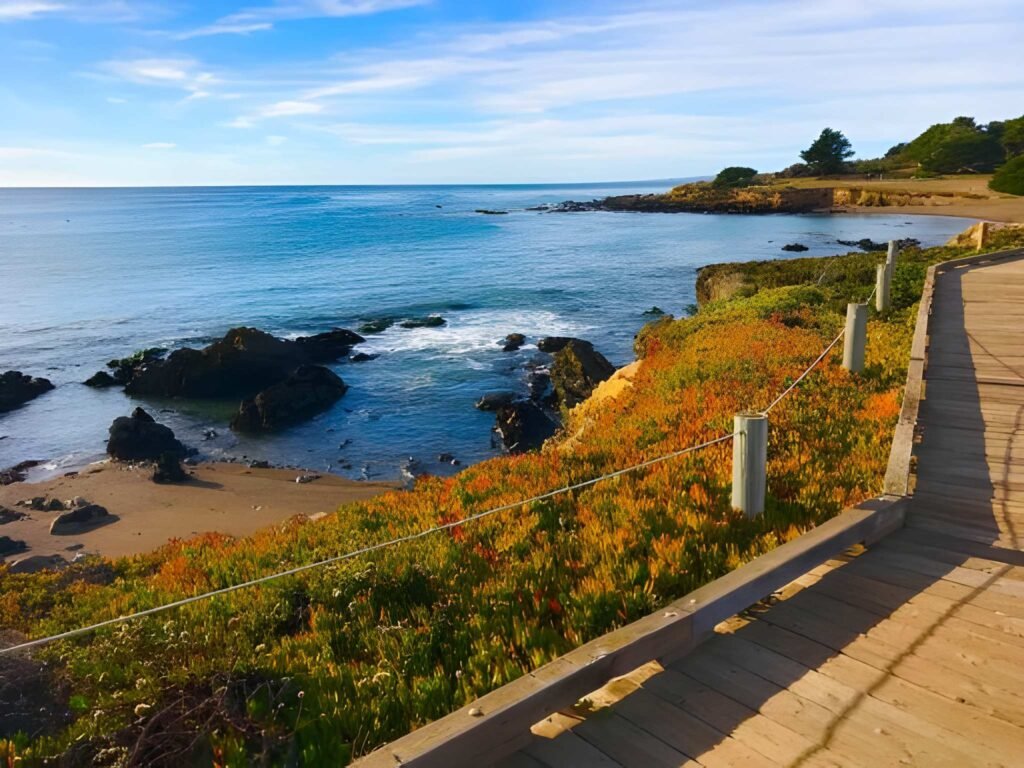
The Moonstone Beach Boardwalk provides Cambria’s signature experience—a wooden boardwalk running about 1.5 miles along dramatic coastline north of the village. The path is accessible and mostly flat, winding along bluffs above rocky shores where waves crash constantly. Benches positioned every few hundred feet invite you to sit and watch the ocean for hours.
I walk sections of this boardwalk every single Cambria visit, usually in early morning when fog still clings to the water and I have the path mostly to myself. The name comes from the small, translucent white stones that wash up on beaches here—actually not moonstones but a form of quartz worn smooth by waves. Beach access points along the boardwalk allow you to descend to sandy areas for closer examination.
Fiscalini Ranch Preserve protects 437 acres of coastal bluff, grasslands, and Monterey pine forest just east of Moonstone Beach. The preserve offers multiple trail options ranging from easy coastal bluff walks to longer inland loops through forest and meadow. All trails are free and accessible from several parking areas along Windsor Boulevard.
The Bluff Trail runs about one mile along clifftops overlooking the ocean, providing spectacular views and excellent whale watching during migration seasons (December-April). This easy, mostly flat path works for all fitness levels. The longer East-West Trail circles through the preserve’s inland sections, passing through pine forest and open grassland where you might spot deer. Total loop distance is about 3.5 miles with gentle elevation changes.
I’ve hiked Fiscalini Ranch trails three times during different seasons. Spring brings wildflowers to the grasslands and green hills. Fall offers clear weather and that golden light. Winter delivers dramatic waves and migrating whales visible from the bluff. The preserve never feels crowded even during busy weekends, providing peaceful escape from more touristy areas.
The Piedras Blancas Elephant Seal Rookery sits about seven miles north of Cambria along Highway 1, where a viewing area with interpretive signs allows close observation of these massive marine mammals. Elephant seals are present year-round, but different seasons bring different activities. December through March is birthing and breeding season when thousands of seals crowd the beaches. April through August, juveniles and females return to molt. September through November, males arrive to establish dominance.
I’ve visited the rookery four times during different months. The January visit delivered the most dramatic scenes—hundreds of elephant seals covering the beach, massive males fighting for dominance, newborn pups nursing, and that incredible cacophony of seal sounds. The rookery is free, requires no reservation, and provides guaranteed wildlife viewing unlike whale watching where sightings aren’t certain.
Downtown Cambria divides into East Village and West Village along Main Street, each with distinct character. East Village features Cambria’s oldest buildings, including Victorian structures from the 1870s housing shops and restaurants. West Village offers more contemporary businesses with art galleries, wine tasting rooms, and boutiques.
Gallery hopping provides pleasant hours browsing local art, pottery, photography, and crafts. The quality varies, but several galleries showcase genuinely talented artists drawing inspiration from coastal landscapes. Vault Gallery, Seekers Collection, and Moonstone Gallery all feature work worth examining.
Linn’s Farm Store and Restaurant sits on the eastern edge of town, selling fresh produce, local products, and those famous olallieberry pies that appear on every Cambria restaurant recommendation list. Olallieberries—a cross between blackberries and loganberries—grow particularly well in this region and have become Cambria’s signature local food. I’ve tried the pie three times at various restaurants. It’s good, though the hype exceeds the reality unless you’re particularly enthusiastic about berry pies.
Nitt Witt Ridge, also called Poor Man’s Castle, provides one of Cambria’s most unusual attractions—a ramshackle folk art environment built from 1928-1992 by local eccentric Arthur “Captain” Beal using salvaged materials including beer cans, abalone shells, car parts, and driftwood. The property sits on a hillside above East Village and requires guided tours ($15 per person) booked in advance. The experience is quirky rather than beautiful, but it offers insight into Cambria’s creative, individualistic culture.
Where to Eat in Cambria: Restaurant Guide
Cambria’s restaurant scene significantly exceeds expectations for a town this size, offering everything from casual cafes to upscale dining using Central Coast ingredients.
Robin’s Restaurant has been serving eclectic global cuisine since 1985 in a vintage home surrounded by gardens. The menu draws inspiration from various international traditions—Thai green curry, Indian rogan josh, Mediterranean-influenced dishes—all prepared with seasonal local ingredients. Dinner runs $25-40 per person. The heated garden patio provides pleasant outdoor dining, or the indoor dining room offers cozy fireside atmosphere.
I’ve eaten at Robin’s three times during different Cambria visits. Quality remains consistently good, the international menu offers variety unusual for small-town California, and reservations are essential for weekend dinners. The Thai green curry and short ribs both impressed, while the vegetarian lasagna satisfied my non-meat-eating dining companion.
Sea Chest Restaurant & Oyster Bar delivers Cambria’s most iconic dining experience—oceanfront location on Moonstone Beach Drive, exhibition-style oyster bar, massive seafood portions, and that old-school seafood restaurant atmosphere complete with no reservations and cash-only payment. The restaurant opens at 5:30 PM and lines often form before 5 PM, with waits extending 60-90 minutes during peak summer weekends.
The strategy locals use: arrive early (by 4:45 PM), add your name to the list, then walk across the street to the Moonstone Beach Boardwalk with wine and watch sunset while waiting. The restaurant welcomes bringing your own wine during the wait. Once seated, portions are enormous—the cioppino serves two easily, the calamari steak is legendary, and oyster selections showcase the best of Central Coast waters.
I’ve eaten at Sea Chest twice, once with minimal wait on a winter Wednesday, once enduring 75-minute weekend wait. Both experiences delivered excellent seafood, though portions were so large we couldn’t finish despite best efforts. Bring cash or use their ATM, and don’t arrive expecting quick service—this is an experience to savor slowly.
Madeline’s Restaurant operates in Cambria’s West Village, serving French-influenced California cuisine for lunch and dinner. The menu features dishes like duck breast, lamb shank, filet mignon, and Louisiana seafood gumbo, accompanied by extensive Central Coast wine list. Dinner runs $30-50 per person. The intimate dining room creates romantic atmosphere.
Brydge Restaurant occupies a converted historic home just off Main Street, offering tapas-style small plates emphasizing organic, micro-seasonal produce. The constantly rotating menu makes each visit different—roasted beets with chevre and hazelnuts, heritage polenta, seasonal salads, locally-caught fish. Plates run $12-20 each, with most diners ordering 3-4 plates. Reservations recommended for dinner.
For more casual dining, Linn’s Restaurant serves breakfast, lunch, and dinner with emphasis on comfort food and those olallieberry baked goods. Breakfast runs $12-18 per person, lunch $15-25, dinner $20-35. The easy-breezy Central Coast California atmosphere makes this family-friendly without being bland.
The Hidden Kitchen operates on weekends from an outdoor setup, serving blue corn waffles with sweet and savory toppings, smoothies, and healthy breakfast options. It’s cash-only, lines form early, but the quality justifies the wait. This is where I go for breakfast on Sunday mornings—simple, fresh, delicious.
Day Trips from Cambria
Cambria’s Central Coast location provides access to several worthwhile day trip destinations.
Hearst Castle sits eleven miles north in San Simeon, the opulent 165-room estate built by newspaper magnate William Randolph Hearst from 1919-1947. Tours run $25-45 per person depending on which tour you choose, and reservations are essential during peak season. The castle itself is overwhelming—European art and antiques, massive swimming pools, dramatic hilltop location overlooking the Pacific.
I’ve toured Hearst Castle once, taking the Grand Rooms Tour which covers the main social areas. The scale and opulence impressed, though the experience feels more like visiting a museum than understanding how people actually lived here. If you have any interest in architecture, California history, or over-the-top wealth, it’s worth seeing once. If historic homes don’t particularly excite you, the photos from overlooks might suffice.
Paso Robles wine country sits about forty-five minutes inland via Highway 46, offering over 250 wineries producing Rhône varieties, Zinfandel, and Cabernet Sauvignon at prices significantly lower than Napa or Sonoma. A day trip allows visiting 3-4 wineries, lunch at one of Paso’s excellent restaurants, and return to Cambria for dinner. This combines wine tasting with coastal lodging at more affordable rates than staying in wine country itself.
Morro Bay, twenty miles south, provides a working harbor town atmosphere dominated by Morro Rock—a 576-foot volcanic plug rising from the ocean. The town offers waterfront restaurants, kayaking, seafood markets, and that authentic Central Coast character without tourist polish. The drive from Cambria takes thirty minutes via Highway 1.
Big Sur lies approximately forty-five miles north via Highway 1, though this route remains subject to closures from landslides and requires checking current status before attempting. If open, the drive provides access to dramatic coastal scenery, but reaching Big Sur’s most famous spots (Bixby Bridge, McWay Falls) requires 90+ minutes from Cambria. For a taste of Big Sur without full commitment, drive to Ragged Point (25 miles north) for cliff views and a short waterfall trail.
Frequently Asked Questions About Cambria
Is Cambria worth visiting? Yes, especially if you want California coastal beauty without Big Sur or Carmel prices. Cambria offers dramatic beaches, excellent restaurants, proximity to Hearst Castle and wine country, and authentic small-town atmosphere. It’s perfect for romantic getaways, quiet coastal escapes, and Central Coast road trip stops.
How many days should I spend in Cambria? Two to three days provides ideal Cambria experience. One night works for Hearst Castle visitors needing lodging, while a long weekend allows beach walks, Fiscalini Ranch hiking, restaurant exploration, and day trips to Paso Robles or elephant seal rookery without rushing.
What is the best time to visit Cambria? September through October offers the best weather—warm, clear days with minimal fog and fewer crowds than summer. Spring (late February-May) brings green hills and wildflowers with unpredictable weather. Winter delivers lowest rates and storm watching but frequent rain.
Is Cambria expensive? Cambria is significantly more affordable than Big Sur, Carmel, or Napa while offering comparable coastal beauty. Hotel rates range $140-400 per night depending on location and season. Restaurants are reasonably priced ($20-40 per person for dinner). Overall daily costs run $200-350 per couple including lodging, meals, and activities.
Can you swim at Cambria beaches? Swimming at Cambria beaches is generally not recommended due to cold water (low-to-mid 50s even in summer), strong currents, and rocky coastline. The beaches work better for walking, tide pooling, and watching waves. Most visitors enjoy beaches from the boardwalk rather than swimming.
How far is Cambria from Hearst Castle? Hearst Castle sits eleven miles north of Cambria via Highway 1, about fifteen minutes driving. This proximity makes Cambria the most convenient base for castle tours while offering better lodging options and restaurants than San Simeon.
Is there a downtown in Cambria? Yes, Main Street runs through Cambria’s East Village and West Village for approximately two miles, lined with shops, restaurants, galleries, and cafes. The downtown is walkable but spread out, with most visitors driving between East and West Villages rather than walking the full distance.
When can you see elephant seals near Cambria? Elephant seals are present year-round at Piedras Blancas Rookery seven miles north of Cambria. December-March brings birthing and breeding season with the largest numbers and most dramatic activity. April-August sees molting season. September-November brings males establishing dominance before breeding season.
Do you need a car in Cambria? Yes, a car is essential for Cambria. While the village itself is somewhat walkable, accessing Moonstone Beach, Fiscalini Ranch Preserve, Hearst Castle, and other attractions requires driving. Uber and Lyft operate sporadically with limited availability.
What is Cambria known for? Cambria is known for Moonstone Beach boardwalk, proximity to Hearst Castle, elephant seal viewing, olallieberry pie, artistic community, Monterey pine forests, and that authentic Central Coast small-town atmosphere between Big Sur and San Luis Obispo.
Why Cambria Keeps Calling Me Back
I’ve returned to Cambria seven times because it delivers Central Coast California at its most accessible and authentic. This isn’t wilderness like Big Sur or luxury like Carmel—it’s something more approachable. A place where excellent restaurants don’t require weeks-advance reservations, where oceanfront hotels don’t cost $600 per night, and where beach walks provide solitude rather than navigating around tourists.
Every Cambria visit follows a similar rhythm: morning walks on the Moonstone Beach Boardwalk watching waves and hunting for those translucent white stones, afternoons exploring Fiscalini Ranch trails or browsing galleries, dinners at Robin’s or Sea Chest, evenings by the fireplace with local wine. It’s not about constant activity or checking off attractions—it’s about slowing down enough to appreciate coastal beauty and small-town character.
The village works best when you embrace what it is rather than wishing it were something else. This isn’t a resort destination with spas and golf courses. It’s not a nightlife town with clubs and bars. Cambria is a quiet coastal village where the best experiences involve nature, food, and letting go of urgency.
Pack your layers, make restaurant reservations for weekends, and prepare for one of California’s most underrated coastal destinations. Cambria is waiting with dramatic beaches, excellent food, and that Central Coast magic that makes you understand why some visitors never leave.
