
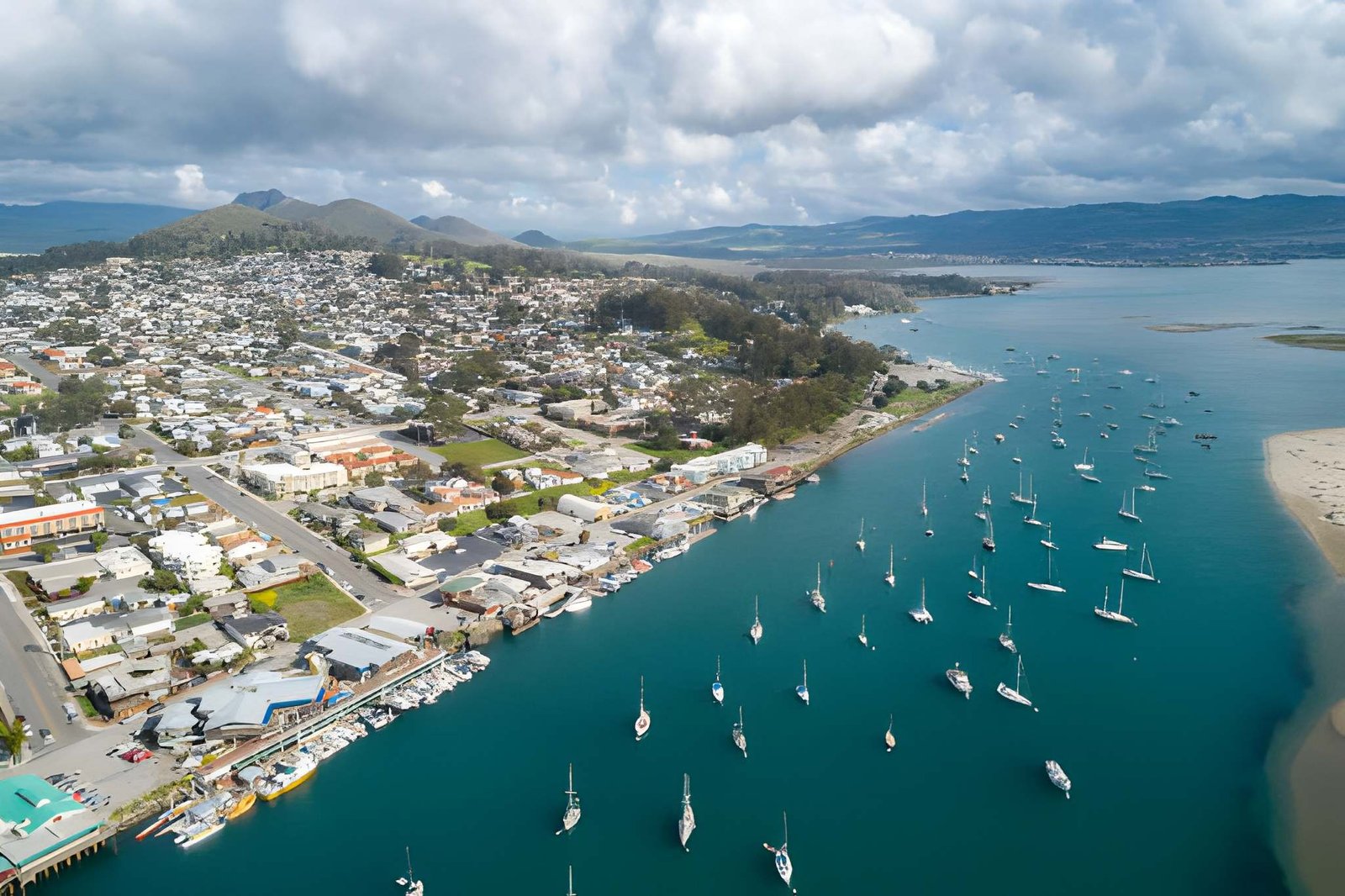
I’m kayaking through Morro Bay’s calm estuary waters watching a sea otter crack open a clam on its belly while that massive volcanic rock rises 576 feet behind me, and I’m thinking about how many Highway 1 road trippers blow right past this place without stopping. After visiting Morro Bay eight times over the past six years—from quick lunch breaks during coastal drives to full weekend escapes—I’ve learned that this working harbor town delivers authentic Central Coast California without the tourist crowds or inflated prices you’ll find in more famous destinations.
Morro Bay sits along Highway 1 in San Luis Obispo County, dominated by Morro Rock—an ancient volcanic plug that serves as both the town’s landmark and the last of the “Nine Sisters,” a chain of volcanic peaks stretching from San Luis Obispo to Morro Bay. With only 10,000 residents, this fishing village maintains its working waterfront character while offering excellent seafood restaurants, kayaking through protected bay waters, bird watching recognized as among California’s best, and proximity to dramatic coastal hiking at Montaña de Oro State Park.
What makes Morro Bay different from picture-perfect villages like Carmel or Mendocino is its authenticity. This isn’t a carefully preserved Victorian town catering to tourists—it’s a real working harbor where commercial fishing boats unload daily catches, where locals outnumber visitors even during summer, and where the Embarcadero waterfront balances tourist restaurants with bait shops and maritime businesses. This complete travel guide shares everything I’ve learned about experiencing Morro Bay—when to visit for the best weather and wildlife viewing, where to stay and eat without wasting money on mediocre tourist traps, what activities actually deserve your time, and how to combine Morro Bay with nearby Central Coast destinations.
When to Visit Morro Bay for the Best Experience
Morro Bay’s coastal location creates relatively mild weather year-round, but seasonal differences significantly impact what you’ll experience.
Spring in Morro Bay, particularly March through May, brings wildflowers to surrounding hills and excellent bird watching as migratory species pass through. The Morro Bay Winter Bird Festival in mid-January attracts serious birders from across California, but spring migration brings even more variety. Temperatures range from the mid-50s to mid-60s, with morning fog common but usually burning off by afternoon.
I visited Morro Bay in late April once and spent mornings kayaking through the estuary spotting dozens of bird species, then afternoons hiking Montaña de Oro under clear skies. The weather felt perfect—cool enough for comfortable hiking without the summer crowds that would arrive months later. Spring does bring occasional rain that can disrupt outdoor plans, but storms typically pass quickly, leaving freshly washed landscapes and dramatic cloud formations.
Summer in Morro Bay sees the biggest crowds and most consistent tourism, particularly on weekends when Bay Area and Southern California visitors arrive. Temperatures stay comfortable—usually in the 60s near the waterfront—though inland areas like Baywood-Los Osos can reach the 70s. Morning fog is frequent, often not clearing until noon or early afternoon.
Despite summer’s crowds, the season has advantages for water activities. The bay’s protected waters remain calm for kayaking and paddleboarding. Whale watching tours operate at full capacity. All restaurants and shops maintain extended hours. The Morro Bay Harbor Festival (first weekend in October) draws massive crowds, but summer weekends see consistent activity keeping the waterfront lively.
Fall, specifically September through November, represents Morro Bay’s sweet spot. September extends summer’s comfortable weather while reducing summer’s crowds. October delivers gorgeous days with clear skies and that golden California light perfect for photography. November transitions toward winter with increasing rain probability, but early November often produces beautiful weather at significantly reduced hotel rates.
I time my Morro Bay visits for early October when harvest season brings activity to nearby wine country, weather is most reliable, and the Embarcadero feels vibrant without overwhelming tourist saturation. The local farmers market on Saturday afternoons provides authentic community atmosphere, and restaurants seat you without long waits.
Winter brings Morro Bay’s quietest season and lowest prices. Temperatures range from the high 40s to low 60s, with rain falling intermittently rather than constantly. This is peak season for gray whale migration (December-April), when these massive mammals pass close enough to shore for viewing from land or via boat tours.
Winter’s advantage is value and solitude. Hotel rates drop 30-40% below summer peaks, restaurants welcome walk-ins enthusiastically, and the bay’s wildlife—otters, seals, birds—remain active regardless of season. The trade-off is occasional multi-day rain systems and some businesses reducing hours. But between storms, winter can deliver crisp, clear days with spectacular visibility and that authentic fishing village atmosphere unfiltered by summer tourism.
Getting to Morro Bay and Getting Around
Morro Bay sits along Highway 1 approximately 13 miles northwest of San Luis Obispo, 45 miles north of Santa Barbara, and roughly equidistant from San Francisco (230 miles) and Los Angeles (200 miles). This Central Coast location provides straightforward access from multiple directions.
From Los Angeles, the fastest route follows Highway 101 North through Santa Barbara and San Luis Obispo, then Highway 1 North for the final scenic stretch. Total driving time runs three to four hours depending on LA traffic. The coastal approach via Highway 1 through Oxnard, Ventura, and Santa Barbara adds spectacular ocean views but extends driving time to four-plus hours.
From San Francisco or the Bay Area, take Highway 101 South to San Luis Obispo, then Highway 1 North to Morro Bay—approximately four to four and a half hours total. The Big Sur coastal route via Highway 1 provides dramatic scenery but requires checking current road status, as landslides frequently close sections.
San Luis Obispo County Regional Airport (SBP) sits just fifteen miles southeast in San Luis Obispo, offering flights from San Francisco, Los Angeles, Denver, Phoenix, and Seattle. This small regional airport provides easy car rental pickup and a scenic twenty-minute drive to Morro Bay. The closest major airports are San Jose and LAX, both three and a half to four hours away.
Once in Morro Bay, you’ll want a car for exploring beyond the Embarcadero waterfront. The Embarcadero itself is highly walkable—about a mile stretch lined with restaurants, shops, and waterfront access. But reaching Morro Bay State Park, Montaña de Oro, or nearby towns requires driving. Uber and Lyft operate with limited availability, making them unreliable for regular transportation.
Parking in Morro Bay is generally free and abundant except during major events like the Harbor Festival. The Embarcadero has multiple public lots and street parking. Most businesses provide adjacent parking, making the town easy to navigate by car.
Where to Stay in Morro Bay: Waterfront to Budget Options
Morro Bay accommodations cluster along the Embarcadero waterfront and spread into surrounding neighborhoods, with options ranging from basic motels to upscale bay-view hotels.
The 456 Embarcadero Inn occupies prime waterfront real estate right on the Embarcadero, offering rooms with bay views, fireplaces, and direct access to waterfront walking. Rates run $200-350 per night depending on season and room type. This is where I stayed on my anniversary—waking up to Morro Rock views and watching sea otters play in the bay from our balcony created exactly the romantic coastal escape we wanted.
Inn at Morro Bay sits within Morro Bay State Park, surrounded by eucalyptus trees with views across the bay to Morro Rock. The property offers contemporary rooms, an on-site restaurant, a heated pool, and golf course access. Rates range $250-400 per night. The location trades Embarcadero proximity for peaceful park setting and dramatic sunset views.
Anderson Inn provides boutique luxury just off the Embarcadero, with fireplaces in every room, wine and cheese in the afternoon, and continental breakfast included. The property emphasizes romance and adult atmosphere—this isn’t where you bring kids. Rates run $300-500 per night. I recommend this for special occasions when the splurge justifies the elevated experience.
For more affordable options, Sundown Inn operates as a family-run motel on Main Street, about three blocks from the waterfront. They’ve been welcoming guests for over 35 years, offering clean, basic rooms at $120-180 per night. The property lacks luxury amenities but delivers solid value with friendly service and convenient location.
Harbor House Inn provides mid-range waterfront lodging at $180-280 per night, with rooms overlooking the bay and walking access to Embarcadero restaurants. The quality sits between budget motels and upscale inns—comfortable beds, basic amenities, and that key ingredient of bay views without luxury prices.
Estero Inn offers nautical-themed rooms with porthole windows and fireplace suites at $200-350 per night. The property sits on the south end of the Embarcadero, providing quieter location while maintaining waterfront access. The themed design either charms or feels kitschy depending on your taste—I found it fun rather than tacky.
Vacation rentals through Airbnb and VRBO scatter throughout Morro Bay and surrounding areas, ranging from basic cottages ($150-250 per night) to luxury bay-view homes ($400-600+ per night). Rentals work well for longer stays or groups who can split costs and want kitchen access.
What to Do in Morro Bay: Beyond the Obvious Tourist Stops
Morro Bay’s appeal centers on its estuary ecosystem, working harbor atmosphere, and proximity to dramatic coastal landscapes rather than traditional tourist attractions.
Kayaking through Morro Bay Estuary provides the quintessential Morro Bay experience. The bay’s protected waters remain calm even when ocean conditions get rough, making this accessible for beginners. Multiple outfitters along the Embarcadero rent kayaks and paddleboards, with Central Coast Kayaks and Rock Kayak offering rentals ($20-30 for two hours) and guided tours ($65-85 per person for 2-3 hour tours).
I’ve kayaked Morro Bay four times—twice on my own, twice with guides. The guided tours taught me to spot wildlife I’d have missed otherwise: sea otters using tools to crack open shellfish, harbor seals hauled out on mudflats, dozens of bird species feeding in shallow waters. Paddling under the watchful presence of Morro Rock while otters play nearby creates memories that last far longer than visiting typical tourist attractions.
Morro Rock itself is off-limits for climbing—it serves as a protected nesting site for peregrine falcons. But you can walk to its base via a short path from the north side, getting close enough to appreciate the rock’s massive scale and photograph it from various angles. The best Morro Rock views actually come from elsewhere: the Embarcadero waterfront, Morro Bay State Park’s golf course, or from kayaks on the bay.
Montaña de Oro State Park sits about ten miles south of Morro Bay, protecting 8,000 acres of dramatic coastal bluffs, sandy beaches, coastal dunes, and tide pools. The park’s name—”Mountain of Gold”—refers to golden wildflowers that cover hillsides in spring, but any season delivers spectacular coastal scenery.
The Bluff Trail runs about four miles along clifftops overlooking the Pacific, providing panoramic ocean views and access to secluded coves. This relatively easy path works for most fitness levels. The Valencia Peak Trail climbs more strenuously to a 1,347-foot summit with 360-degree views encompassing ocean, hills, and distant mountains. Allow two to three hours for the 4-mile round trip with 1,100 feet elevation gain.
I hiked Valencia Peak on a clear October morning and spent thirty minutes at the summit watching the Pacific stretch endlessly west while hawks circled overhead. The climb challenges, particularly the final steep section, but the views justify the effort. Spooner’s Cove at the park’s entrance provides easy beach access and excellent tide pooling during low tides.
Morro Bay State Park, just south of town, offers more accessible hiking through eucalyptus groves and along the bay’s eastern shore. The park includes a natural history museum with interactive exhibits ($3 adults, $2 children), a golf course, and the Heron Rookery where great blue herons nest from January through July. The park’s network of easy trails provides pleasant walking without the challenge of Montaña de Oro’s coastal climbs.
The Morro Bay Farmers Market operates Saturday afternoons year-round on Main Street, offering fresh local produce, baked goods, olive oil, jams, and crafts from local artisans. This is where I go to experience Morro Bay’s community atmosphere beyond tourism—locals shopping for dinner ingredients, kids running around, live music creating festive energy.
For bird watching, Morro Bay ranks among California’s premier destinations. The Audubon Society has identified this area as globally significant for bird conservation, hosting over 200 species throughout the year. The Morro Bay National Estuary attracts shorebirds, waterfowl, and wading birds, while nearby wetlands provide habitat for everything from great blue herons to snowy plovers.
Even casual observers can spot dozens of species during short walks along the Embarcadero or through state park trails. Serious birders should visit the Estuary Nature Center (free admission) for current sighting reports and trail recommendations. The annual Morro Bay Winter Bird Festival in mid-January brings guided walks, boat tours, and presentations from ornithologists.
Where to Eat in Morro Bay: Fresh Seafood and Local Favorites
Morro Bay’s restaurant scene centers on fresh seafood from local boats, with quality ranging from excellent to disappointingly mediocre tourist-trap fare.
Dorn’s Original Breakers Cafe has been serving breakfast and lunch on the Embarcadero since 1942, offering classic American comfort food with waterfront views. The buttermilk pancakes have achieved legendary status among locals, while the corned beef hash and seafood omelets satisfy heartier appetites. Breakfast runs $12-18 per person, lunch $15-25. Arrive early on weekends—the waterfront patio fills quickly.
I’ve eaten breakfast at Dorn’s three times, always ordering those pancakes everyone raves about. They deliver—fluffy, generous portions, perfectly cooked. The patio seating provides views of the rock and bay while pelicans dive for fish just offshore. Service can be slow when busy, but the atmosphere and food quality justify patience.
Taco Temple serves fresh Mexican food emphasizing seafood tacos and burritos at reasonable prices. The fish tacos showcase whatever’s fresh from local boats, while the California burrito stuffed with carne asada and fries appeals to heartier appetites. Lunch and dinner run $12-20 per person. This is my go-to for casual, satisfying meals without waterfront restaurant prices.
The Galley Seafood Grill & Bar offers upscale seafood dining with views overlooking the harbor. The menu features local fish prepared with California cuisine techniques, clam chowder served in sourdough bread bowls, and prime steaks for non-seafood eaters. Dinner averages $35-55 per person. Reservations recommended for weekend dinners, though the bar accepts walk-ins.
Bayside Cafe serves breakfast, lunch, and dinner emphasizing American comfort food with California coastal influences. The clam chowder wins awards year after year, the fish and chips use fresh catch from Morro Bay boats, and the portions satisfy without overwhelming. Breakfast runs $10-16, lunch and dinner $18-35 per person.
Frankie and Lola’s Front Street Cafe provides locally-sourced, sustainable cuisine for breakfast and lunch. The menu changes with seasonal availability but might include farm-fresh omelets, creative salads, and sandwiches on housemade bread. Breakfast averages $12-18, lunch $14-22 per person. The commitment to local ingredients and sustainable practices creates food worth seeking out.
Giovanni’s Fish Market operates as Morro Bay’s premier seafood market, family-owned for over 30 years and selling whatever’s fresh off local boats. You can purchase fish to cook yourself, or order fish and chips, crab cakes, and seafood cocktails from their prepared foods counter. Prices reflect market rates—reasonable for the quality and freshness.
I stop at Giovanni’s every Morro Bay visit to buy fish for grilling at our vacation rental or to get recommendations on what’s particularly fresh that week. The staff knows their seafood and provides honest guidance rather than just trying to sell whatever costs most.
Windows on the Water Restaurant combines upscale California coastal cuisine with panoramic bay views from its second-floor location. The menu emphasizes seasonal ingredients, local seafood, and wine pairings from Central Coast vineyards. Dinner runs $40-65 per person. This is Morro Bay’s splurge restaurant—great for special occasions when views and atmosphere matter as much as food.
Day Trips from Morro Bay
Morro Bay’s Central Coast location provides easy access to several worthwhile day trip destinations.
Cambria sits just twenty miles north via Highway 1, offering Victorian architecture, Moonstone Beach boardwalk, art galleries, and upscale dining. The towns make natural combinations—Morro Bay for kayaking and working harbor atmosphere, Cambria for romantic coastal village charm. Allow a full day to experience both properly.
Hearst Castle perches dramatically on a hilltop eleven miles north of Cambria, the opulent 165-room estate built by newspaper magnate William Randolph Hearst. Tours run $25-45 per person and require advance reservations. The drive from Morro Bay takes about forty-five minutes via Highway 1. Combining Hearst Castle with Cambria lunch creates a perfect Central Coast day trip.
San Luis Obispo, fifteen miles southeast, offers charming downtown centered around the historic Mission San Luis Obispo de Tolosa, the famous Bubblegum Alley, and Thursday night farmers market that transforms downtown into a street fair. The college town atmosphere (Cal Poly is here) brings energy, excellent restaurants, and craft breweries.
Paso Robles wine country sits about forty-five minutes inland via Highway 41, offering over 250 wineries producing Rhône varieties, Zinfandel, and Cabernet Sauvignon at prices well below Napa or Sonoma. A Paso wine tasting day trip combined with Morro Bay coastal lodging provides perfect Central Coast balance—wine country days, ocean nights.
Pismo Beach, twenty miles south, stretches for miles with wide sandy beaches perfect for walking, surfing, and those famous Pismo clams. The Monarch Butterfly Grove (November-February) hosts thousands of migrating monarchs clustering in eucalyptus trees. The drive takes thirty minutes via Highway 1.
Los Osos and Baywood, immediately adjacent to Morro Bay’s southern edge, technically feel like the same area but maintain distinct small-town characters. Sweet Springs Nature Preserve in Los Osos provides beautiful hiking with bay views, while Baywood’s waterfront offers quieter alternative to Morro Bay’s Embarcadero.
Frequently Asked Questions About Visiting Morro Bay
Is Morro Bay worth visiting? Yes, especially if you appreciate working harbor towns, excellent kayaking, fresh seafood, and authentic Central Coast atmosphere without tourist crowds. Morro Bay delivers outdoor activities, wildlife viewing, and that real California coastal experience at more affordable prices than famous destinations.
How long should you spend in Morro Bay? A full day allows kayaking, waterfront walking, and seafood lunch. Two to three days provides time for Montaña de Oro hiking, exploring nearby towns like Cambria or Cayucos, and experiencing Morro Bay’s slower rhythm. Most visitors combine Morro Bay with other Central Coast destinations for 3-5 day trips.
What is the best time to visit Morro Bay? September through October offers the best combination of warm weather, clear skies, and fewer crowds. Spring (March-May) brings wildflowers and bird migration with unpredictable weather. Summer sees the biggest crowds and morning fog. Winter delivers lowest rates and whale watching but occasional rain.
Can you swim at Morro Bay beaches? Swimming in the bay itself isn’t recommended due to harbor traffic, but Morro Strand State Beach north of the rock provides ocean swimming (though water stays cold year-round in the low-to-mid 50s). Most water activities focus on kayaking, paddleboarding, and surfing rather than swimming.
How far is Morro Bay from San Francisco? Morro Bay sits approximately 230 miles south of San Francisco, requiring four to four and a half hours driving via Highway 101 South and Highway 1 North. The coastal route via Highway 1 through Big Sur takes longer but provides spectacular scenery when roads are open.
Is Morro Bay better than Pismo Beach? They offer different experiences. Pismo Beach provides wide sandy beaches, warmer weather, and more developed tourism infrastructure. Morro Bay delivers working harbor atmosphere, better kayaking, more wildlife viewing, and that authentic fishing village character. Choose Pismo for beach time, Morro Bay for bay activities and authenticity.
Can you climb Morro Rock? No, Morro Rock is off-limits to climbing and access beyond the base. The rock serves as protected nesting habitat for peregrine falcons and other birds. You can walk to the rock’s base and photograph it from various locations around the bay.
What wildlife can you see in Morro Bay? Sea otters, harbor seals, sea lions, over 200 bird species, gray whales (December-April migration), occasional dolphins, and abundant tide pool creatures. The bay’s protected estuary ecosystem supports diverse marine life easily viewed from kayaks, the Embarcadero, or hiking trails.
Do you need a car in Morro Bay? A car is essential for reaching Morro Bay and exploring beyond the Embarcadero. The waterfront itself is walkable, but accessing Montaña de Oro State Park, nearby towns, or day trip destinations requires driving. Uber and Lyft operate sporadically with limited availability.
How much does it cost to visit Morro Bay? Budget travelers can visit for $100-150 per day including basic lodging, casual meals, and free activities like hiking. Mid-range visitors spend $200-300 per day with nicer hotels, restaurant meals, and paid activities like kayaking tours. Morro Bay costs significantly less than more famous California coastal destinations.
Why Morro Bay Keeps Drawing Me Back
I’ve returned to Morro Bay eight times because it delivers authentic California coastal experience without the polish or prices of more famous destinations. This isn’t carefully preserved Victorian charm or luxury resort atmosphere—it’s a real working harbor where fishing remains an actual industry, where locals outnumber tourists most of the year, and where that massive volcanic rock creates a sense of place unlike anywhere else on the California coast.
What I love most about Morro Bay is how it balances tourism with authentic community. The Embarcadero welcomes visitors with restaurants and kayak rentals, but walk a few blocks inland and you’ll find locals getting coffee, kids walking to school, and regular life happening independent of tourism. The harbor still functions as commercial fishing port, with working boats sharing space alongside recreational vessels.
Every visit reminds me why the Central Coast captures something special. The combination of dramatic natural beauty—that rock, the bay’s protected waters, Montaña de Oro’s cliffs—with unpretentious small-town character creates experiences that feel increasingly rare along California’s developed coastline. Whether you’re kayaking through calm bay waters spotting otters, hiking coastal trails with waves crashing below, or simply sitting on the Embarcadero watching fishing boats return with their catches, Morro Bay provides that authentic connection to California’s maritime heritage.
Pack layers regardless of season, make kayaking reservations in advance during summer, and don’t rush. Morro Bay rewards slow exploration, letting the working harbor rhythm reset your pace. This charming town has been welcoming visitors for over a century while maintaining its fishing village soul, and it continues delivering that rare combination of natural beauty, wildlife viewing, and authentic coastal atmosphere.
