
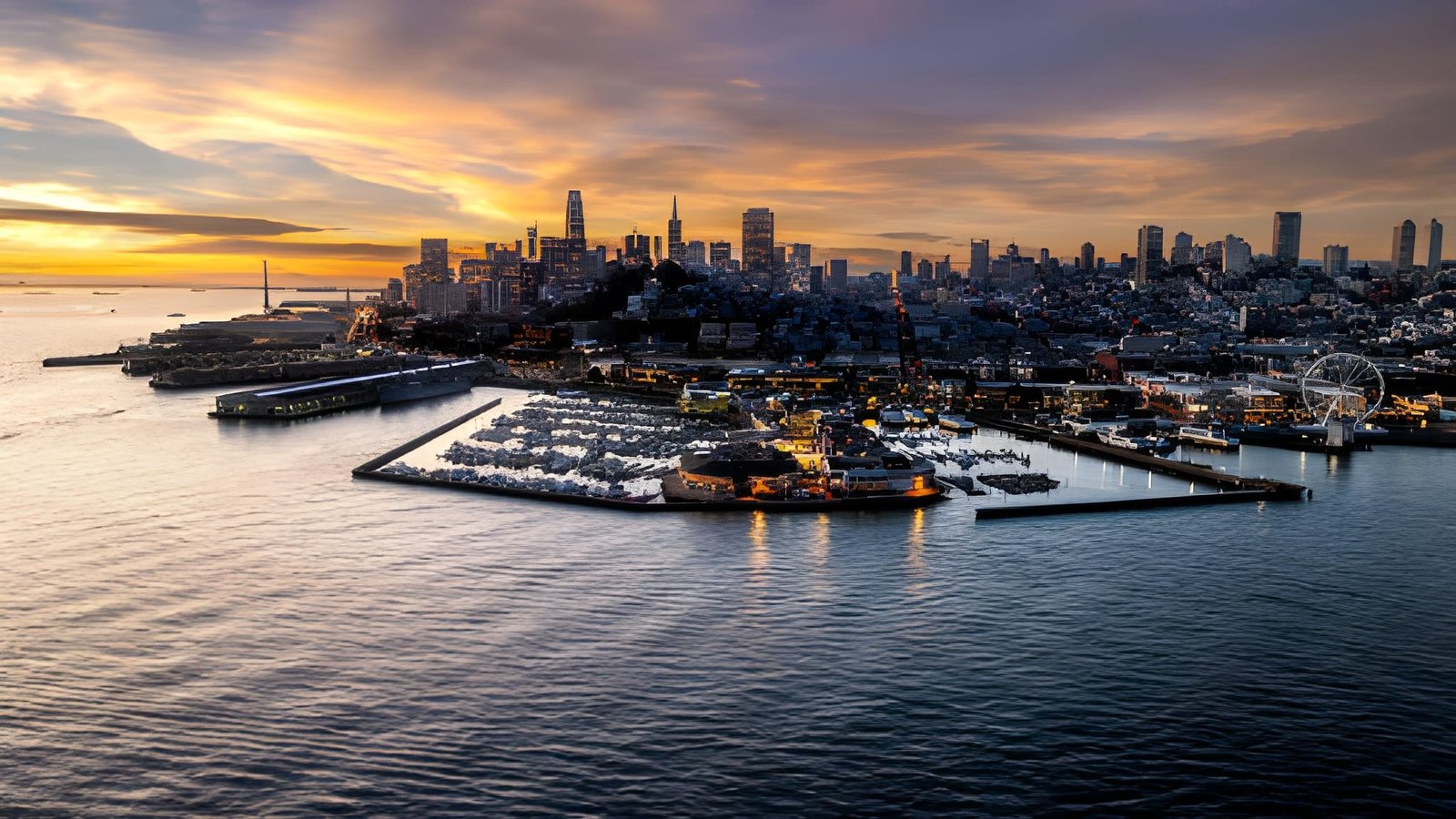
I spent my first night in San Francisco in a budget hotel near Union Square, convinced I’d found the perfect central location. The next morning, I walked outside to discover the neighborhood felt oddly lifeless corporate, touristy, missing the soul I’d expected from this legendary city. It took me three more visits, staying in different neighborhoods each time, before I finally understood something crucial: where you stay in San Francisco completely transforms your experience of the city.
San Francisco is a collection of distinct villages, each with its own personality, microclimate, and rhythm of daily life. The foggy, bohemian vibe of the Haight feels worlds away from the polished sophistication of Pacific Heights. The historic Italian charm of North Beach shares nothing with the tech-forward energy of SoMa. Most first-time visitors make the same mistake I did choosing convenience over character, central location over authentic experience.
After years of exploring San Francisco from different home bases, staying with friends in various neighborhoods, and eventually spending extended time in the city, I’ve developed strong opinions about where visitors should actually stay. This guide shares those hard-won insights, helping you choose the San Francisco neighborhood that matches your travel style, budget, and the kind of experience you’re actually seeking.
Quick Neighborhood Finder: Match Your Style
Before diving deep into each area, here’s how to quickly narrow down where to stay in San Francisco based on what matters most to you.
If you’re visiting San Francisco for the first time and want easy access to major attractions, Union Square and Fisherman’s Wharf offer the most convenient locations. You’ll find the highest concentration of hotels, the best public transit connections, and walking distance to cable cars, Chinatown, and the waterfront. The trade-off is authenticity—these neighborhoods cater primarily to tourists rather than locals.
For travelers seeking genuine San Francisco character and willing to sacrifice some convenience, Nob Hill and Hayes Valley deliver the charm you’re imagining. Tree-lined streets with Victorian architecture, neighborhood cafes where locals actually gather, and that distinct San Francisco atmosphere that makes you feel like you’re discovering something special rather than checking boxes on a sightseeing list.
Families traveling with children should consider the Marina District or the Presidio. Both offer more space, easier parking if you’re driving, proximity to family-friendly attractions like the Exploratorium and Golden Gate Bridge, and a safer, more residential feel that makes navigating with kids significantly less stressful.
Budget-conscious travelers will find the best value in the outer neighborhoods like the Sunset and Richmond Districts. Hotels cost thirty to fifty percent less than downtown options, parking is easier, and you’re positioned perfectly for exploring Golden Gate Park and Ocean Beach. The compromise is distance you’ll rely more heavily on public transit or rideshares to reach central San Francisco attractions.
The safest neighborhoods for staying in San Francisco are Nob Hill, the Marina, the Presidio, and the outer Richmond and Sunset Districts. These areas have significantly lower crime rates and feel comfortable for walking at night. Union Square and Fisherman’s Wharf are generally safe but require more awareness, especially after dark.
Nob Hill: Where San Francisco’s Soul Lives
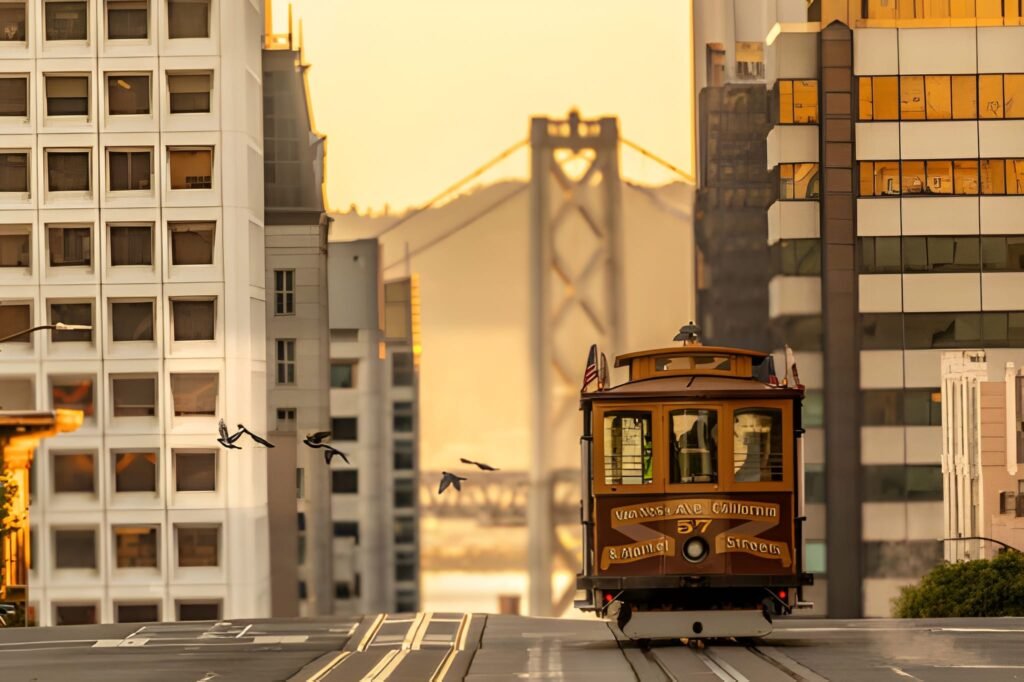
Walking up Hyde Street on a foggy morning, watching the cable car climb past Victorian mansions while the Golden Gate Bridge peeks through the mist, I finally understood why people romanticize San Francisco. Nob Hill captures everything magical about this city the dramatic hills, the historic architecture, the sense that you’re experiencing something genuinely special rather than manufactured for tourists.
Nob Hill sits atop one of San Francisco’s most prominent hills, offering views that make you catch your breath around nearly every corner. The neighborhood earned its name in the late 1800s when wealthy railroad barons built mansions here, and while the 1906 earthquake destroyed most of those original estates, the area retained its prestigious character. Today, it blends residential charm with enough hotels, restaurants, and bars to make it practical for visitors.
The California Street cable car runs straight through the heart of Nob Hill, connecting you to the Financial District and Embarcadero. The Powell-Hyde cable car line traces the neighborhood’s eastern edge, providing access to Fisherman’s Wharf. Walking down the hill to North Beach, Chinatown, or Russian Hill takes ten to fifteen minutes, though walking back up requires either determination or catching that cable car.
Living here means accepting the reality of hills. If you have mobility concerns, the constant uphill climbs become exhausting. But for those who can handle the elevation, the neighborhood rewards you with incredible views, beautiful architecture, and a genuine sense of living in San Francisco rather than just visiting it. Grace Cathedral anchors the neighborhood’s spiritual center, while Huntington Park provides a peaceful green space with panoramic city views.
The restaurant scene along Polk Street, which runs along Nob Hill’s eastern slope, offers everything from casual neighborhood spots to upscale dining. I’ve spent countless evenings wandering down Polk, discovering new wine bars and cafes that locals actually frequent. The neighborhood has enough activity to feel lively without the overwhelming tourist crowds that plague Fisherman’s Wharf or Union Square.
Parking in Nob Hill presents genuine challenges. Street parking limits non-residents to two hours, and finding any space at all requires patience and luck. Most hotels charge forty to sixty dollars nightly for parking, making this a better neighborhood for visitors without cars. The good news is you genuinely don’t need a car here—everything worth seeing in central San Francisco is accessible via cable car, bus, or a pleasant walk.
The Stanford Court Hotel sits right on California Street where all three cable car lines converge, making it the most convenient hotel in the neighborhood. They recently completed a full renovation, and the rooms now offer modern amenities while maintaining historic charm. The location couldn’t be better for exploring San Francisco without a car. Room rates typically run two hundred to four hundred dollars per night depending on season.
Petite Auberge, a French-inspired bed and breakfast on Bush Street, offers more intimate accommodations with complimentary breakfast and evening wine. The building dates to the early 1900s, and staying here feels like discovering a hidden European gem in the heart of San Francisco. They include coffee from local roaster Equator and serve breakfast with fresh pastries daily. Parking costs fifty dollars per night, so arrive without a car if possible.
The Holiday Inn on Van Ness provides the most affordable option for staying in Nob Hill, though it sacrifices charm for practicality. The location right on Van Ness Avenue means excellent bus connections but significant traffic noise. Still, rooms cost one hundred fifty to two hundred fifty dollars per night, making it reasonable by San Francisco standards, and the proximity to both Polk Street and Pacific Heights makes up for the lack of Victorian character.
Union Square: Convenience Over Character
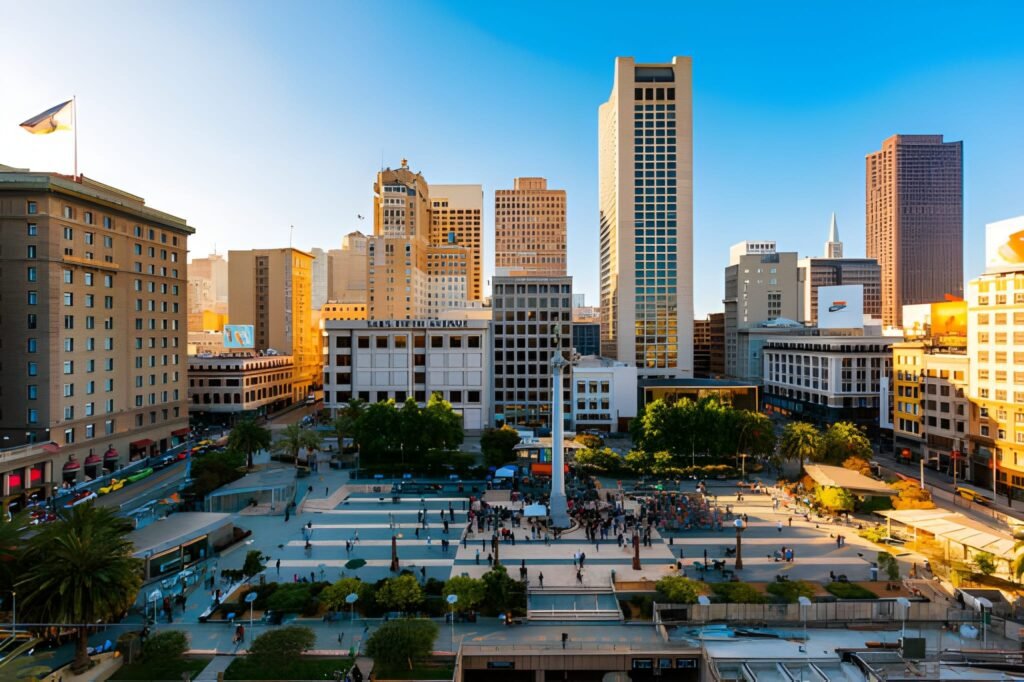
I’ve made peace with Union Square. It’s not where I’d choose to stay if I’m seeking authentic San Francisco experiences, but I understand its appeal for certain travelers. Sometimes you need convenience more than charm, central location more than local flavor. Union Square delivers on those practical priorities better than any other San Francisco neighborhood.
The square itself sits at the city’s geographic heart, equidistant from North Beach, the Embarcadero, Fisherman’s Wharf, and the Mission District. This central position means you’re never more than a fifteen-minute transit ride from major attractions. The Powell Street BART station provides direct airport access, connecting you to San Francisco International Airport in roughly thirty minutes for ten dollars. No other neighborhood offers this combination of accessibility and transit connections.
Walking through Union Square feels decidedly corporate. Major chain stores line the streets Macy’s, Saks Fifth Avenue, the Apple Store—and chain restaurants dominate the dining scene. The Cheesecake Factory has a prominent location here, which tells you everything you need to know about the neighborhood’s priorities. It’s not inherently bad, just utterly lacking the neighborhood character that defines most of San Francisco.
The main advantage Union Square offers is hotel selection. You’ll find more accommodation options here than anywhere else in the city, ranging from budget-friendly options to luxury properties. This competition keeps prices relatively reasonable, and the concentration of hotels means you’re likely to find availability even during busy seasons when other neighborhoods book solid.
One critical consideration: the Tenderloin lies immediately west of Union Square, starting around Jones Street. This neighborhood has San Francisco’s highest crime rates and most visible homelessness and drug activity. I’ve walked through the Tenderloin many times during daylight hours without incident, but it’s not pleasant, and I wouldn’t venture there after dark. When choosing Union Square hotels, stick to properties on the eastern side of the neighborhood, closer to the Financial District and away from the Tenderloin boundary.
The CitizenM Hotel represents my top Union Square recommendation. This Dutch chain strips away unnecessary hotel frills—no enormous lobbies, no room service, no pretense—focusing instead on comfortable beds, blackout curtains, and modern technology. Every room is identical: a king bed, climate controls via iPad, and clever space-saving design. Rooms cost one hundred fifty to three hundred dollars nightly, and the consistency means you know exactly what you’re getting.
The Palihotel San Francisco offers more design personality, with exposed brick walls, vintage-inspired furniture, and a general aesthetic that feels more boutique than corporate. The location on the northern edge of Union Square puts you closer to Nob Hill and Chinatown, slightly removed from the most touristy Union Square blocks. Rooms include mini-fridges and Smeg appliances that add visual interest.
For travelers seeking traditional luxury, the Westin St. Francis has anchored Union Square since 1904. The hotel offers two distinct experiences- historic rooms in the original building with period details, or modern accommodations in the tower with city views. The location directly on Union Square means you’re steps from cable cars and BART, though you’ll pay premium rates of three hundred to five hundred dollars nightly.
Fisherman’s Wharf: Tourist Central with Good Reason
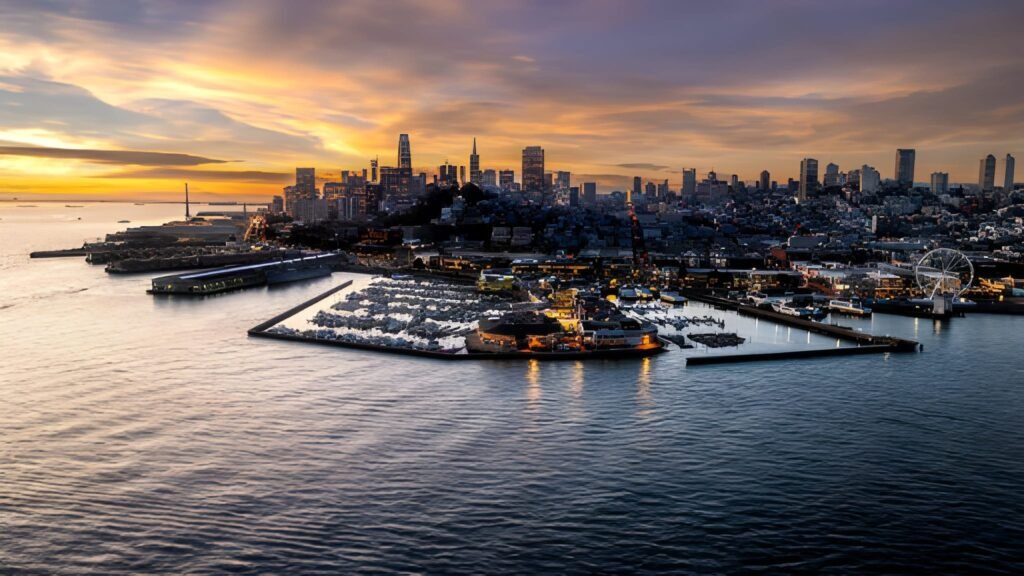
I used to dismiss Fisherman’s Wharf entirely, assuming it was pure tourist trap without redeeming qualities. Then I actually spent time there, watching sea lions bark at Pier 39, eating clam chowder in sourdough bread bowls, and wandering through Musee Mecanique’s vintage arcade games. Sometimes tourist destinations earn their popularity for legitimate reasons.
Fisherman’s Wharf occupies San Francisco’s northeastern waterfront, stretching roughly from Pier 39 to Ghirardelli Square. The neighborhood exists primarily for visitors—very few San Francisco residents actually live here. This tourism focus means everything caters to out-of-town guests: hotels, restaurants, shops, and attractions all designed with travelers in mind rather than local life.
The concentration of family-friendly activities makes Fisherman’s Wharf particularly appealing for travelers with children. The sea lions at Pier 39 fascinate kids of all ages. The Aquarium of the Bay offers close encounters with marine life. Multiple boat tours depart from here, including ferries to Alcatraz Island and bay cruises under the Golden Gate Bridge. In-N-Out Burger sits right on the waterfront for California fast-food initiations.
Walking along the Embarcadero from Fisherman’s Wharf takes you past Fort Mason, the Palace of Fine Arts, and eventually to the Ferry Building. This waterfront path offers some of San Francisco’s most scenic urban walking, even if the neighborhood itself feels manufactured. The proximity to North Beach and Russian Hill means you’re ten minutes from more authentic San Francisco neighborhoods when you need a break from tourist crowds.
The isolation presents Fisherman’s Wharf’s biggest challenge. Sitting at the northeastern tip of the peninsula means you’re far from many San Francisco attractions. Getting to the Mission District, Haight-Ashbury, or Golden Gate Park requires significant transit time. The neighborhood also sits distant from BART stations, so airport access requires either a bus connection or rideshare service.
The Argonaut Hotel, housed in a historic warehouse building at the quiet western end of Fisherman’s Wharf, offers the neighborhood’s most characterful accommodations. The nautical theme feels appropriate given the waterfront location, and rooms feature exposed brick walls and maritime-inspired decor. The location near the cable car turnaround and Ghirardelli Square puts you in the less congested end of Fisherman’s Wharf.
Hotel Zephyr takes the nautical theme even further, with rooms designed to evoke luxury yachts. The courtyard features fire pits and games, creating a resort-like atmosphere. The hotel sits close to Pier 39, making it convenient for families wanting easy access to sea lions and waterfront attractions. Parking costs around forty dollars daily expensive but typical for San Francisco hotels.
Budget travelers should consider the HI Fisherman’s Wharf Hostel at Fort Mason, just west of Fisherman’s Wharf proper. This hostel offers both private rooms and dormitory-style accommodations at significantly lower rates than hotels. The Fort Mason location provides more peaceful surroundings than commercial Fisherman’s Wharf while maintaining proximity to attractions. Private rooms cost around one hundred to one hundred fifty dollars nightly.
The Marina: Where Parking Actually Exists
The Marina District feels like a different city entirely. Wide streets, abundant parking, motel-style accommodations with dedicated lots—these features seem almost impossible elsewhere in San Francisco. For travelers arriving with cars or those who simply want more breathing room than downtown neighborhoods provide, the Marina offers a refreshing alternative.
This neighborhood stretches along San Francisco’s northern waterfront between the Presidio and Fisherman’s Wharf. Most hotels cluster along Lombard Street, the main thoroughfare connecting the Golden Gate Bridge to downtown. Lombard here bears no resemblance to the famous crooked block—it’s a wide, busy street lined with motels offering exterior-facing rooms and dedicated parking lots.
Chestnut Street and Union Street form the Marina’s main commercial corridors, lined with restaurants, bars, boutiques, and cafes. These streets attract a younger, affluent crowd—the Marina has a reputation as San Francisco’s “yuppie” neighborhood, and walking around confirms that stereotype. It’s clean, safe, and somewhat homogeneous, lacking the diversity and edge that characterizes more interesting San Francisco neighborhoods.
The proximity to both the Golden Gate Bridge and Fisherman’s Wharf makes the Marina convenient for visitors planning to explore these iconic spots. Crissy Field, the waterfront park stretching from the Marina to Fort Point beneath the bridge, offers some of San Francisco’s best views and easiest beach access. The Palace of Fine Arts provides Instagram-worthy architecture within walking distance of most Marina hotels.
The main downside is isolation from central San Francisco. Getting to Union Square, the Mission, or Haight-Ashbury requires transit connections or significant driving. The Marina feels more like a beach community than an urban neighborhood, which appeals to some travelers but disappoints those seeking classic San Francisco experiences.
The Marina Motel charms me every time I drive past. Each room has its own garage—an absolutely unheard-of amenity in San Francisco. The motel wraps around a central courtyard, so rooms facing inward avoid Lombard Street’s traffic noise. The 1950s motor court aesthetic has been preserved beautifully, and free parking makes this appealing for road-trippers exploring California’s coast. Rooms cost one hundred fifty to two hundred fifty dollars nightly.
Cow Hollow Motor Inn and Suites offers more space with suite options featuring kitchens and fireplaces. The underground parking garage protects your car from San Francisco’s notorious break-ins. The location near Chestnut Street means walkability to restaurants and shopping. Rooms run slightly cheaper than comparable downtown options at one hundred to two hundred dollars per night.
For travelers not bringing cars, the Marina makes less sense unless you specifically want the neighborhood’s residential atmosphere and waterfront access. But for those arriving by car or planning day trips up the coast to Muir Woods, Point Reyes, or Napa Valley, the Marina’s parking availability and highway access provide genuine advantages.
Japantown and Alamo Square: Residential Charm
These neighboring areas offer something increasingly rare in San Francisco—genuine residential neighborhoods where visitors can experience daily life rather than curated tourist experiences. Japantown centers around the Japan Center mall and surrounding blocks, while Alamo Square encompasses the area around the famous Painted Ladies Victorian houses.
Fillmore Street runs through both neighborhoods, creating one of San Francisco’s best shopping and dining corridors. I’ve spent countless afternoons wandering Fillmore, ducking into boutiques, grabbing coffee at small cafes, and discovering restaurants that actually cater to locals rather than tourists. This is where you experience the San Francisco that residents actually inhabit.
The location sits roughly halfway between downtown and Golden Gate Park, making it reasonably central without the intensity of Union Square or Fisherman’s Wharf. You’re a ten-minute bus ride from the Financial District and Embarcadero, fifteen minutes from the park. The trade-off for this middle ground is fewer hotels and accommodation options compared to more tourist-focused neighborhoods.
Alamo Square itself offers one of San Francisco’s most iconic views—the Painted Ladies Victorian houses with downtown’s skyline rising behind them. I’ve visited dozens of times and still find the view remarkable, particularly at sunset when golden light illuminates the houses while fog rolls through the skyscrapers beyond. The park provides a peaceful green space perfect for morning coffee or afternoon reading.
Japantown’s center, the Japan Center mall, contains shops, restaurants, and the spectacular Peace Pagoda. The area celebrates Japanese culture authentically rather than as theme-park kitsch. Ramen shops, izakayas, and Japanese grocery stores serve actual residents from San Francisco’s Japanese community alongside curious visitors.
Hotel Kabuki in Japantown offers the most substantial accommodation option in this area. The modern design incorporates Japanese aesthetic elements without feeling overly themed. Rooms feature clean lines, Japanese soaking tubs in some categories, and peaceful ambiance despite the urban location. The hotel includes a good fitness center and evening wine hour. Rooms typically cost two hundred to three hundred fifty dollars nightly.
The Kimpton Hotel Enso, also in Japantown, provides another solid option with Kimpton’s signature amenities including complimentary wine hour, pet-friendly policies without fees, and transparent pricing without surprise resort charges. The courtyard offers a surprisingly peaceful retreat from city energy.
The Grove Inn near Alamo Square offers bed-and-breakfast accommodations just a block from the Painted Ladies. This small property provides only a handful of rooms, creating an intimate experience. The Victorian building maintains period charm while offering modern comforts. The main drawback is parking—street parking only, with the usual San Francisco challenges.
Hayes Valley: Hip Without Trying Too Hard
Hayes Valley earned its reputation as San Francisco’s cool neighborhood through organic evolution rather than manufactured branding. This small district between the Civic Center and Alamo Square transformed from a sketchy area beneath an elevated freeway to one of the city’s most desirable neighborhoods after the freeway came down following the 1989 earthquake.
Walking down Hayes Street, the neighborhood’s main drag, you’ll discover independent boutiques, wine bars, coffee roasters, and restaurants that prioritize creativity over conformity. This is where San Francisco’s design-conscious residents shop, eat, and socialize. The neighborhood feels genuinely local despite increasing popularity with visitors who’ve discovered its charms.
The proximity to the Civic Center puts you walking distance from the War Memorial Opera House, Davies Symphony Hall, and San Francisco City Hall. The Asian Art Museum occupies a beautiful Beaux-Arts building that’s worth visiting even if you’re not particularly interested in Asian art. On the practical side, this central location provides good transit connections to other parts of the city.
One consideration: the Civic Center area has struggled with homelessness, drug activity, and general urban disorder. Walking through Civic Center Plaza at night doesn’t feel particularly safe, and the BART station there sees its share of problems. Hayes Valley itself is generally fine, but the proximity to these challenging blocks means you’ll encounter some of San Francisco’s urban difficulties.
The boutique accommodations in Hayes Valley lean toward vacation rentals rather than traditional hotels. The neighborhood’s residential zoning limits hotel development, which ironically makes it feel more authentic. Airbnb and Vrbo options let you rent apartments or rooms in Victorian houses, experiencing the neighborhood as a temporary resident rather than a hotel guest.
For traditional hotel experiences, you’re better off staying in nearby neighborhoods like Nob Hill or Union Square and visiting Hayes Valley for dining and shopping. The lack of hotel infrastructure makes the neighborhood impractical as a home base despite its considerable charms.
Dining in Hayes Valley deserves special mention. Zuni Cafe, a San Francisco institution, anchors the neighborhood’s culinary scene with its famous roast chicken and oysters. Rich Table offers innovative contemporary cuisine that’s earned national recognition. Biergarten provides casual German-inspired food and beer in an outdoor setting perfect for warm afternoons. The neighborhood’s restaurant density means you could eat somewhere different for every meal during a week-long visit.
The Mission District: Where San Francisco Gets Real
The Mission District pulses with an energy completely distinct from anywhere else in San Francisco. This is where you experience the city’s Latino heritage, its radical political history, its artistic soul, and unfortunately, some of its urban challenges. The Mission feels genuinely alive in ways that more polished neighborhoods can’t replicate.
Valencia Street and Mission Street form the neighborhood’s parallel main drags, each with distinct character. Valencia leans hipster with craft cocktail bars, boutique shops, and independent bookstores. Mission Street stays grittier and more authentically Latino, with taquerias, produce markets, and shops serving the neighborhood’s working-class residents. Walking between them provides a crash course in San Francisco’s economic and cultural complexity.
The neighborhood’s famous murals transform ordinary buildings into canvases telling stories of social justice, Latino identity, and community history. Balmy Alley and Clarion Alley showcase some of the best street art in America. Walking these alleys with attention to the artwork’s messages provides insights into the neighborhood’s values and struggles.
Mission Dolores, the neighborhood’s namesake, represents San Francisco’s oldest surviving structure. The adobe mission church dates to 1791, predating American control of California. The adjacent cemetery contains graves from the earliest days of Spanish settlement. Standing in this peaceful space while the city bustles outside creates a powerful historical perspective.
The food in the Mission is legitimately world-class. Taquerias here serve what many consider the definitive San Francisco-style burrito—large, stuffed with rice and beans alongside the meat, wrapped in foil for structural integrity. La Taqueria and El Farolito inspire passionate loyalty among locals. Beyond Mexican food, the Mission offers everything from Ethiopian to Peruvian to cutting-edge contemporary cuisine.
Here’s the difficult reality: the Mission has the highest property crime rates in San Francisco and significant violent crime compared to other neighborhoods. Walking around during daylight feels generally safe thanks to constant foot traffic, but I wouldn’t wander the neighborhood late at night, especially alone. The 16th Street and 24th Street BART stations have particular problems with drug activity and aggressive panhandling.
Very few hotels exist in the Mission because it’s primarily residential. The Inn San Francisco, a Victorian bed-and-breakfast near Mission Dolores Park, provides the most established accommodation option. The building maintains beautiful period details including a hot tub in the English garden and period furnishings. Rooms cost two hundred to three hundred dollars nightly.
Most visitors should stay elsewhere and visit the Mission for dining and exploring during daytime hours. The neighborhood offers incredible experiences but makes a challenging home base given the safety considerations and lack of accommodation options. Budget a full afternoon and evening for Mission exploration, eating excellent food, admiring murals, and experiencing San Francisco’s most vibrant cultural neighborhood.
Richmond and Sunset: Where Locals Actually Live
The Richmond and Sunset Districts occupy San Francisco’s entire western side, stretching from Golden Gate Park to Ocean Beach. These residential neighborhoods feel almost suburban compared to downtown’s urban intensity. Wide streets, single-family homes, easy parking, and significantly cheaper accommodations make them appealing for certain travelers despite the distance from central attractions.
The Richmond spreads north of Golden Gate Park while the Sunset occupies the southern side. Both share similar characteristics—residential streets lined with pastel-colored houses, neighborhood-oriented businesses, and a distinctly local rather than touristy atmosphere. Fog blankets both neighborhoods regularly during summer months, creating the microclimate San Franciscans call “Karl the Fog.”
Clement Street in the Richmond and Irving Street in the Sunset function as main commercial corridors with restaurants, shops, and services. The Richmond’s Clement Street has evolved into a secondary Chinatown with excellent Chinese and Southeast Asian restaurants. The Sunset’s Irving Street feels more classically neighborhood-oriented with bakeries, hardware stores, and family restaurants.
Golden Gate Park forms both neighborhoods’ eastern boundary, providing immediate access to the de Young Museum, California Academy of Sciences, Japanese Tea Garden, and countless acres of trails and gardens. Ocean Beach stretches along the western edge, offering beachcombing, surfing, and dramatic sunset views. The Lands End trail showcases some of San Francisco’s most spectacular coastal scenery.
The Sunset and Richmond trade convenience for affordability and authenticity. Hotels here cost thirty to fifty percent less than downtown equivalents, parking is dramatically easier, and you experience San Francisco as locals actually live it. The compromise is distance—getting to Fisherman’s Wharf, the Ferry Building, or North Beach requires thirty to forty-five minutes on public transit.
The Ocean Park Motel in the Sunset offers unique charm with its 1930s retro aesthetic. Each room has been individually decorated with period-appropriate furniture and color schemes. The location sits just blocks from Ocean Beach and right on the N-Judah light rail line that connects directly to downtown. A hot tub and small playground make it family-friendly. Rooms cost one hundred to one hundred sixty dollars nightly—genuine value by San Francisco standards.
Seal Rock Inn in the Richmond sits across from Lands End trail and the Sutro Baths ruins. The location provides immediate access to some of San Francisco’s most beautiful coastal scenery. Rooms feature dated decor—this is definitely budget-friendly rather than boutique—but the value and location compensate. The Geary bus line connects directly to downtown from right outside the hotel.
These outer neighborhoods work best for travelers with cars planning day trips around the Bay Area, families wanting more space and easier logistics, or budget-conscious visitors willing to spend more time on transit in exchange for lower accommodation costs and genuine neighborhood experiences.
Practical Planning Guide
Understanding San Francisco neighborhoods is only part of choosing where to stay. Practical considerations like budget, transportation, and safety all influence which neighborhood actually works best for your specific trip.
Budget varies dramatically between neighborhoods. Downtown hotels in Union Square, Nob Hill, and the Financial District typically cost two hundred to four hundred dollars per night for mid-range options. Fisherman’s Wharf runs slightly cheaper at one hundred fifty to three hundred dollars. The Marina, Hayes Valley, and outer neighborhoods offer the best value at one hundred to two hundred dollars nightly. Luxury properties anywhere in the city easily exceed four hundred to six hundred dollars.
Parking costs represent a hidden expense that catches many visitors off-guard. Downtown hotels charge forty to seventy dollars per night for parking, often without in-and-out privileges. Street parking downtown has two-hour limits and fierce competition. The Marina’s motel-style properties include free parking, as do many outer neighborhood options. If you’re bringing a car, factor parking costs into your accommodation budget or choose neighborhoods where parking is included.
Transportation access should heavily influence your neighborhood choice if you’re not renting a car. Union Square provides the only direct BART connection in tourist-friendly neighborhoods, though Nob Hill sits just uphill from the Powell Street BART station. The Mission has two BART stops on 16th and 24th Streets. Cable cars serve Nob Hill, Union Square, and Fisherman’s Wharf. Most neighborhoods have good bus connections, though routes often require transfers.
Safety considerations have shifted somewhat in recent years. The Tenderloin remains San Francisco’s most problematic neighborhood with high crime rates and visible drug activity. Union Square’s western blocks border the Tenderloin and require more awareness. The area around Civic Center has deteriorated with increased homelessness and disorder. Downtown generally feels less safe after dark than it did a decade ago.
The safest neighborhoods are Nob Hill, the Marina, the Presidio, and the outer Richmond and Sunset Districts. These areas have low crime rates and feel comfortable for evening walks. The Mission has higher property crime but feels safe during daylight due to foot traffic. Hayes Valley, Japantown, and North Beach fall somewhere in the middle—generally safe but requiring normal urban awareness.
Seasonal timing affects both pricing and experience. Summer months from June through September bring peak tourism, highest prices, and ironically, the most fog in neighborhoods near the ocean. September and October offer the best weather with warm temperatures and clear skies—locals call it our summer. Winter months from December through February bring rain, lower prices, and fewer crowds.
Booking strategies matter in a city with limited hotel inventory. Reserve accommodations six to eight weeks in advance for summer visits or major events. Last-minute bookings often mean either inflated prices or staying far from your preferred neighborhood. Tuesday through Thursday nights typically cost less than weekends. Many hotels offer better rates when booking directly rather than through third-party sites.
Where NOT to Stay in San Francisco
Every San Francisco guide should honestly address neighborhoods to avoid, not to disparage areas but to help visitors make informed decisions about safety and comfort.
The Tenderloin, bordered roughly by Geary Street, Market Street, Van Ness Avenue, and Mason Street, has San Francisco’s highest crime rates and most visible social problems. Open drug dealing, drug use, and mental illness characterize blocks throughout the neighborhood. Some excellent hotels sit within Tenderloin boundaries, but walking to and from them after dark feels uncomfortable for most visitors.
I’ve walked through the Tenderloin dozens of times during daylight without incident, but it’s not pleasant. You’ll see things that are distressing—people clearly in crisis, aggressive panhandling, sidewalks blocked by tents and belongings. The neighborhood’s hotels are often cheaper than elsewhere downtown, but that savings comes with real costs to your sense of safety and comfort.
Mid-Market Street between Fifth and Eighth Streets has deteriorated significantly. This stretch sees heavy foot traffic to and from BART stations, so you’ll likely pass through at some point, but avoid lingering. The hotels and businesses here struggle with the same issues plaguing the Tenderloin.
Parts of the Mission around 16th Street and 24th Street BART stations have serious problems with drug activity and property crime. The Mission’s interior residential streets feel generally safe, but the main commercial blocks have challenges. Don’t leave anything visible in parked cars anywhere in the Mission—car break-ins are epidemic.
The Bayview and Hunters Point neighborhoods in southeastern San Francisco have high violent crime rates and virtually no reason for tourists to visit. These areas sit far from attractions and lack the cultural or culinary draw that makes the Mission worth visiting despite its problems.
Making these honest assessments isn’t about fear-mongering or writing off entire neighborhoods. San Francisco remains a relatively safe city compared to many American urban centers. But visitors deserve accurate information to make informed decisions about where to stay and which areas to approach with more caution.
Final Recommendations: Choosing Your San Francisco Home Base
After all this analysis, you probably want straightforward recommendations. Here’s where I’d stay based on different traveler profiles and priorities.
For first-time visitors wanting convenient access to major attractions, I’d choose Nob Hill if budget allows. The neighborhood delivers authentic San Francisco character while maintaining proximity to Fisherman’s Wharf, Chinatown, cable cars, and downtown. The Stanford Court Hotel offers the best combination of location and value.
Budget-conscious travelers should seriously consider the Sunset or Richmond Districts. The Ocean Park Motel provides unique character at genuine value, and you’re positioned perfectly for exploring Golden Gate Park and the coast. Accept that you’ll spend more time on public transit reaching central attractions.
Families with children belong in the Marina District where parking is easier, accommodations more spacious, and the atmosphere more relaxed. The Marina Motel’s individual garages and courtyard layout work well for kids. You’re also close to family-friendly attractions like the Exploratorium and Crissy Field.
Business travelers need Union Square’s BART access and concentration of hotels. The CitizenM offers modern efficiency without unnecessary frills, and the location provides easy airport connections via BART.
Travelers seeking authentic San Francisco experiences should choose Hayes Valley or the Mission for dining and exploring, but stay in nearby Nob Hill or Alamo Square for safety and comfort. Visit the edgier neighborhoods during the day and return to more residential areas for sleeping.
Solo travelers should prioritize safety over adventure, choosing Nob Hill, the Marina, or outer neighborhoods where you’ll feel comfortable walking after dark. Union Square works if you stick to the eastern blocks near the Financial District.
Couples planning a romantic getaway should splurge on Nob Hill accommodations with city views. The neighborhood’s charm, excellent restaurants along Polk Street, and iconic San Francisco atmosphere create the perfect setting for a special trip.
The truth is that choosing where to stay in San Francisco requires balancing multiple factors—budget, safety, convenience, and the kind of experience you’re seeking. No neighborhood is perfect. Union Square offers convenience but lacks soul. Nob Hill delivers charm but challenges with parking. The Mission provides incredible food and culture but raises safety concerns. The outer neighborhoods offer value and authenticity but require more time reaching central attractions.
Understanding these trade-offs helps you choose the neighborhood that aligns with your actual priorities rather than some imagined ideal. San Francisco rewards visitors who look past the postcard views and engage with the city’s complex, fascinating, sometimes frustrating reality. Where you stay becomes the lens through which you experience everything else the city offers. Choose thoughtfully, and San Francisco will reward you with memories that last far beyond the typical tourist snapshots.
